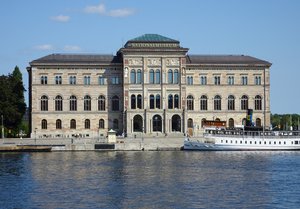
古斯塔夫·塞德斯特伦 肖像

27 幅最著名的 古斯塔夫·塞德斯特伦 作品,画廊精选

更新于 November 2026 · 基于我们的流行度评分排名(每件作品的搜索量、访问量及订单量) · 27 件 古斯塔夫·塞德斯特伦 作品收录于我们的目录中

简而言之

在 古斯塔夫·塞德斯特伦 留下的所有原作中,最著名的当属收藏于 斯德哥尔摩 国家博物馆 的《30th November. Sketch (1896)》。 紧随其后的是 Karl XII and Ivan Mazepa after The Poltava Battle 1709 (1709) 和 Gotthard Werner (1837-1903), artist (1870)。 我们的目录收录了 古斯塔夫·塞德斯特伦 的 27 件作品;画廊完整保留了 27 件享誉世界的杰作,并为每一件作品详细标注了创作日期、馆藏机构及其背后的故事。

1845 – 1933, 斯德哥尔摩 藏品最多:国家博物馆

古斯塔夫·塞德斯特伦 的十大名画:画廊精选

1
30th November. Sketch (1896) 作 古斯塔夫·塞德斯特伦

30th November. Sketch

1896 · Oil On Board · 国家博物馆, 斯德哥尔摩

The work titled 30th November. Sketch is a creation by the Swedish artist Gustaf Cederström. He rendered this piece about 1896. The sketch captures a moment of shadow and light, a fragment of a larger historical narrative held within the frame.

2
Karl XII and Ivan Mazepa after The Poltava Battle 1709 (1709) 作 古斯塔夫·塞德斯特伦

Karl XII and Ivan Mazepa after The Poltava Battle 1709

1709 · Oil On Canvas

In this historical oil painting, titled Karl XII and Ivan Mazepa after The Poltava Battle 1709, the artist Gustaf Cederström captures a moment of profound political and personal consequence. The work focuses on the interaction between King Charles XII of Sweden and Ivan Mazepa. This encounter occurs in the immediate aftermath of the Battle of Poltava, a significant conflict that reshaped the landscape of Northern and Eastern Europe.

3
Gotthard Werner (1837-1903), artist (1870) 作 古斯塔夫·塞德斯特伦

Gotthard Werner (1837-1903), artist

1870 · Oil On Canvas · 国家博物馆, 斯德哥尔摩

The man faces the right, his profile etched against a pale, nebulous background. He is a figure of quiet dignity, caught in a moment of stillness that feels heavy with thought. A full, textured beard descends from his chin, its coarseness rendered through deliberate, visible brushwork that catches the light. His hair, receding at the temples, flows back in soft, painterly strokes. The light strikes his forehead, the bridge of…

4
Självporträtt (1877) 作 古斯塔夫·塞德斯特伦

Självporträtt

1877 · Oil On Canvas · 瑞典国家肖像画廊, 斯特伦格纳斯

A man emerges from a void of deep black. He is caught in a moment of quiet gravity, his gaze fixed on a point just beyond the viewer. The light strikes the ridge of his forehead and the bridge of his nose, carving his features out of the darkness. It is a face of heavy lines and groomed textures. A thick, dark mustache dominates the lower half of his visage,…

5
Amy Jaeder, 1843-1912, gift med friherre Gustav Cederström (1878) 作 古斯塔夫·塞德斯特伦

Amy Jaeder, 1843-1912, gift med friherre Gustav Cederström

1878 · Oil On Canvas · 瑞典国家肖像画廊, 斯特伦格纳斯

The canvas holds Amy Jaeder, 1843-1912, gift med friherre Gustav Cederström, captured in a moment of quietude. This portrait was rendered by Gustaf Cederström, a man born in 1845 in Klara Church Parish, Sweden. The subject of this work was the artist's wife. Through his brush, she is fixed in a singular, steady gaze that defies the passing of years. He would live until 1933, leaving this likeness of her…

6
Epilogue (1874) 作 古斯塔夫·塞德斯特伦

Epilogue

1874 · Oil · 国家博物馆, 斯德哥尔摩

A heavy, white cloth spills from a dark wooden sideboard like a frozen wave. Beneath its luminous folds, a man lies prone upon the floor, his form partially swallowed by the gloom. The scene is a quiet tragedy of geometry and light. A sharp, directional glow strikes the pale fabric and the man's face, leaving the rest of the room to the deep blacks and muted browns of a somber…

7
The Artist's Wife on the Beach at Noirmoutier (1882) 作 古斯塔夫·塞德斯特伦

The Artist's Wife on the Beach at Noirmoutier

1882 · Oil · 国家博物馆, 斯德哥尔摩

In this 1882 oil painting, a woman sits upon a sandy beach near large, dark rock formations. She is positioned slightly to the left of the center, leaning her back against a heavy, muted brown boulder that anchors the composition. Her pale blue dress contrasts with the warm beige and tan tones of the sand. A lace parasol rests near her, its delicate texture rendered through fine, visible brushwork. The…

8
Recruiting Sergeants (1879) 作 古斯塔夫·塞德斯特伦

Recruiting Sergeants

1879 · Oil · 国家博物馆, 斯德哥尔摩

Created about 1879, Recruiting Sergeants by Gustaf Cederström captures a moment of profound tension during military recruitment. The scene centers on a pivotal interaction between three figures within a dimly lit, vaulted stone interior. A young man, appearing hesitant or distressed, stands before two older men, anchoring the narrative weight of the composition.

9
A Funeral in Alsike (1883) 作 古斯塔夫·塞德斯特伦

A Funeral in Alsike

1883 · Oil · 国家博物馆, 斯德哥尔摩

A freshly dug grave breaks the white skin of the landscape. The earth is dark, churned, and raw against the pale snow. Around this hollow, a group of mourners gathers, their heavy woolen coats absorbing the dim light of an overcast day. They stand in the stillness of a Swedish winter, their forms vertical and somber against the skeletal, reaching branches of a leafless tree. The air feels thick with…

10
Count and general Magnus Stenbock speaks to the people at the city hall of Malmö 1709 (1892) 作 古斯塔夫·塞德斯特伦

Count and general Magnus Stenbock speaks to the people at the city hall of Malmö 1709

1892 · Oil

The painting titled Count and general Magnus Stenbock speaks to the people at the city hall of Malmö 1709 is an oil work by the artist Gustaf Cederström. Created about 1892, the composition focuses on the Swedish field marshal and Royal Councillor, Magnus Stenbock. The scene captures a specific historical moment on 27 September 1709, when Stenbock addressed the citizens of Malmö. This gathering occurred during the Great Northern War,…

古斯塔夫·塞德斯特伦 系列持续更新,第 11 至 27 项

古斯塔夫·塞德斯特伦 的传世名作,按时期分类

令 古斯塔夫·塞德斯特伦 驻足的创作主题

这些原作中反复出现的四个主题,各有一个最杰出的范例。

收藏有 古斯塔夫·塞德斯特伦 原作的博物馆

收藏了本页大部分画作的 4 家博物馆。

博物馆 城市 古斯塔夫·塞德斯特伦 的作品 此列表中的画作
国家博物馆, 斯德哥尔摩国家博物馆 斯德哥尔摩 14 30th November. Sketch, Gotthard Werner (1837-1903), artist, Epilogue
瑞典国家肖像画廊, 斯特伦格纳斯瑞典国家肖像画廊 斯特伦格纳斯 3 Självporträtt, Amy Jaeder, 1843-1912, gift med friherre Gustav Cederström, Karl Emanuel Cederström, 1804-1892
芬兰国家美术馆, 赫尔辛基芬兰国家美术馆 赫尔辛基 1 Charles XII's Funeral Procession, Sketch
哥德堡美术馆, 哥德堡哥德堡美术馆 哥德堡 1 The Salvation Army. Miss Booth visiting a Paris Tavern.

古斯塔夫·塞德斯特伦 的年代演变:定义每个时代的原创之作

各年代作品统计

选择一个年代,探索定义该时代的原创杰作。

藏家关于 古斯塔夫·塞德斯特伦 作品的常见问题

古斯塔夫·塞德斯特伦 最著名的作品是哪一件?揭晓答案

30th November. Sketch (1896),国家博物馆, 斯德哥尔摩。紧随其后的是 Karl XII and Ivan Mazepa after The Poltava Battle 1709 (1709) 和 Gotthard Werner (1837-1903), artist (1870)。

创作 30th November. Sketch 时,古斯塔夫·塞德斯特伦 是多少岁?揭晓答案

51岁:30th November. Sketch创作于1896年,古斯塔夫·塞德斯特伦出生于1845年。

古斯塔夫·塞德斯特伦 最著名的十幅画作是什么?揭晓答案

30th November. Sketch, Karl XII and Ivan Mazepa after The Poltava Battle 1709, Gotthard Werner (1837-1903), artist, Självporträtt, Amy Jaeder, 1843-1912, gift med friherre Gustav Cederström, Epilogue, The Artist's Wife on the Beach at Noirmoutier, Recruiting Sergeants, A Funeral in Alsike 及 Count and general Magnus Stenbock speaks to the people at the city hall of Malmö 1709。上方排名显示了每件作品的创作年份及馆藏机构。

古斯塔夫·塞德斯特伦 留下了多少幅画作?揭晓答案

我们的目录收录了 27 件 古斯塔夫·塞德斯特伦 的作品,创作年代从 1870 年至 1933 年。

古斯塔夫·塞德斯特伦 的杰作收藏在哪些博物馆中?揭晓答案

多见于 国家博物馆 (斯德哥尔摩), 瑞典国家肖像画廊 (斯特伦格纳斯) 及 芬兰国家美术馆 (赫尔辛基)。上方的博物馆列表列出了所有相关机构。

古斯塔夫·塞德斯特伦 在哪些年份创作了最著名的作品?揭晓答案

在 1870s 期间:本页 27 件作品中有 9 件创作于该时期,其中包含 Gotthard Werner (1837-1903), artist 件作品。

古斯塔夫·塞德斯特伦 的首件与末件名作原件分别是哪几件?揭晓答案

在本页面中,最早的作品创作于 Gotthard Werner (1837-1903), artist (1870),最晚的创作于 Charles XII of Sweden and Ivan Mazepa after The Battle of Poltava (1933)。

古斯塔夫·塞德斯特伦 最常创作的主题是什么?揭晓答案

Man (11), Sky (7) 及 Soldiers (5),共计 27 件作品。

古斯塔夫·塞德斯特伦 最常用的技法是什么?揭晓答案

Oil On Canvas,共计 13 件(本页共有 27 件作品)。

哪些 古斯塔夫·塞德斯特伦 的作品在 国家博物馆 展出?揭晓答案

30th November. Sketch, Gotthard Werner (1837-1903), artist 及 Epilogue:国家博物馆, 斯德哥尔摩收藏了本页中 14 件作品。

古斯塔夫·塞德斯特伦:生平与作品

A Life Etched in History: The World of Gustaf Olof Cederström

Gustaf Olof Cederström, born in Stockholm in 1845, was a painter whose name became synonymous with historical narrative in Swedish art. His life’s work wasn't merely the depiction of past events; it was an immersive journey into them, fueled by a deep-seated fascination with his nation’s legacy and a talent for dramatic composition. Cederström’s lineage itself hinted at the duality that would define his career—his father, Carl Emanuel Cederström, was a naval officer embodying duty and discipline, while his mother, Theresine, nurtured an artistic sensibility within the home. This early exposure to both worlds laid the foundation for a life spent bridging the gap between rigorous historical accuracy and compelling visual storytelling. A pivotal moment in young Gustaf’s imagination occurred with the discovery of an ancestor's participation in the Skirmish at Bender, sparking a lifelong obsession with Swedish history that would permeate his canvases.

From Military Aspirations to Artistic Pursuit

Initially following in his father’s footsteps, Cederström embarked on a military career, joining an infantry regiment in Värmland in 1864. However, the call of art proved too strong to ignore. He continued to pursue artistic studies alongside his military duties at the Royal Swedish Academy of Fine Arts, recognizing that his true vocation lay not on the battlefield but within the realm of creative expression. In 1870, he made the decisive break, resigning his commission and dedicating himself fully to painting. This commitment led him abroad, first to Düsseldorf under Ferdinand Fagerlin’s tutelage, then to Paris where he studied with Léon Bonnat. It was in Paris that Cederström truly found his artistic footing, absorbing the influences of the French academic style while developing a uniquely Swedish perspective on historical themes. He settled permanently in Paris in 1873, establishing himself within the vibrant international art scene.

Triumph and Recognition: The Funeral Transport of Charles XII

Cederström’s breakthrough arrived at the Exposition Universelle of 1878 with his monumental painting, Karl XIIs likfärd (The Funeral Transport of Charles XII). This work, depicting the solemn procession carrying the body of the Swedish king home after his death in battle, was an immediate sensation. The scene wasn’t simply a historical record; it was a powerfully emotive portrayal of national mourning and heroic sacrifice. The painting's dramatic lighting, meticulous detail, and palpable sense of grief resonated deeply with audiences, earning Cederström a medal and securing its purchase by the Russian Grand Duke Konstantin. Later returned to Sweden, it now resides in the Göteborgs konstmuseum as a testament to his skill. This success propelled him into the forefront of Swedish art, leading to his election as a member of the Royal Academy that same year and solidifying his reputation as a master of historical painting. His marriage to Amalia Katarina Jaeder further enriched his life, and their daughter Carola would also follow an artistic path.

A Legacy Beyond the Canvas

Cederström’s influence extended beyond his paintings. He was appointed Professor at the Academy in 1887 and later served as its Director from 1899 to 1911, shaping the next generation of Swedish artists. While he engaged with projects like historical murals for the Nationalmuseum—a commission ultimately relinquished due to artistic differences with Carl Larsson—his true passion remained focused on large-scale historical compositions. He continued to explore themes of Swedish identity and national narrative throughout his career, producing works that captured pivotal moments in the nation’s past. In later life, he turned to writing, publishing his autobiography, En gammal konstnärs minnen (An Old Artist's Memories) in 1926, followed by Gammalt och nytt (Old and New) in 1929. These writings offered invaluable insights into his artistic philosophy and the historical context that informed his work. Gustaf Olof Cederström passed away in 1933, leaving behind a rich legacy of paintings and writings that continue to inspire and captivate audiences today. His ability to breathe life into history, to transform events into emotionally resonant visual experiences, ensures his place as one of Sweden’s most important and beloved artists.