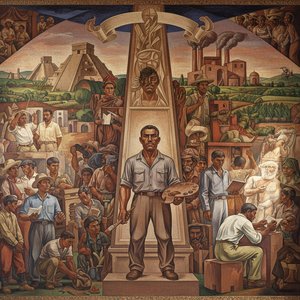
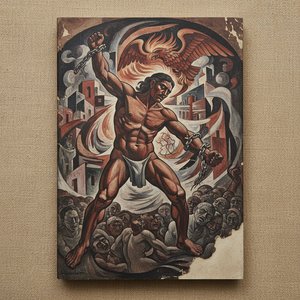
The Genesis of a Visionary
Born on the twelfth of February, 1890, in the serene surroundings of San Pedro de Güejar, Mexico, Eulalia Guzmán Barrón’s life was destined to be as profound as the ancient histories she would later uncover. Her early childhood, marked by a move to the sprawling metropolis of Mexico City at the age of eight, placed her at the epicenter of a nation undergoing a radical metamorphosis. Raised within an environment of deep intellectualism, she was nurtured by a family that valued the pursuit of knowledge above all else. This formative period instilled in her a sense of purpose that would eventually lead her to become a cornerstone of Mexican nationalist thought and a pioneer in the scientific exploration of her country's rich, buried past.Breaking Boundaries through Archaeology and Education
As Mexico navigated the turbulent yet transformative years following its Revolution, Guzmán Barrón emerged as a trailblazer who refused to be confined by the gendered expectations of her era. She became one of the first women to make significant strides in the field of archaeology, a discipline then almost exclusively dominated by men. Her expertise and unwavering dedication earned her the historic distinction of being the first woman to direct the National Museum of Archaeology and History in Mexico. In this capacity, she did far more than manage collections; she acted as a vital guardian of Mexico’s cultural identity. Parallel to her archaeological pursuits, she was a dedicated educator and researcher, utilizing her platform to advocate for feminist progress and to shape the pedagogical landscape of a developing nation. Her work was a seamless blend of scientific rigor and a passionate commitment to the intellectual empowerment of the Mexican people.A Lasting Impression on the Latin American Intellect
The reach of Eulalia Guzmán Barrón’s influence extended well beyond the borders of her homeland, connecting her to the broader currents of Latin American political and social evolution. Her life was intertwined with a legacy of profound scholarship, shared with her brother, the renowned Dominican historian and president, Juan Bosch. Through her dual roles as a researcher and a nationalist thinker, she helped forge a sense of pride and continuity in a post-revolutionary era. When she passed away in 1985, she left behind a legacy that was not merely written in textbooks or etched in stone, but lived through the very institutions she helped build and the feminist ideals she championed. Her life remains a testament to the power of intellect to bridge the gap between the ancient past and a progressive future.问答详情
Eulalia Guzmán Barrón 的艺术风格是如何随时间演变的?
您可以在艺术家的 艺术编年史 页面上查阅 Eulalia Guzmán Barrón 作品的编年史,其作品按创作顺序分章节依次呈现。
Eulalia Guzmán Barrón 还以哪些名称为人所知?
Eulalia Guzmán Barrón 也被称为 Eulalia Gaviño, Eulalia Guzman Barron, Eulalia Gavino。
在哪里可以按技法分类浏览 Eulalia Guzmán Barrón 的作品?
若要查找Eulalia Guzmán Barrón在特定媒介下的所有作品,请访问艺术家的全部媒介页面。