尤金·詹森 肖像

尤金·詹森 作品:画廊视角下的 36 幅名作

更新于 November 2026 · 基于我们的流行度评分排名(每件作品的搜索量、访问量及订单量) · 36 件 尤金·詹森 作品收录于我们的目录中

简而言之

在画廊看来,尤金·詹森 最著名的作品是 Naval Bathhouse (1907)。 Athletes (1912) 与 Ring gymnast I (1911) 共同构成了那组令人过目不忘的艺术三部曲。 在我们的目录中,尤金·詹森 共有 36 件作品,画廊为您精选了以下 36 件最著名的原作,并详细列出了每件作品的创作年份、馆藏机构及其独特之处。

1862 – 1915, 雅各布和约翰内斯教区 藏品最多:国家博物馆

画廊中 尤金·詹森 的十大名画

1
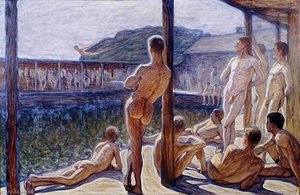
Naval Bathhouse (1907) 作 尤金·詹森

Naval Bathhouse

1907 · Oil On Canvas

In this 1907 oil on canvas, a group of thirteen nude men is gathered around a body of water. The figures are positioned at varying depths within the frame, with several individuals in the foreground and others receding toward the middle ground. These men are depicted in states of repose or quiet movement, some looking out toward the water while others face one another. The setting is a pool or…

2
Athletes (1912) 作 尤金·詹森

Athletes

1912 · Oil On Canvas · 国家博物馆, 斯德哥尔摩

The oil painting titled Athletes was created by the Swedish artist Eugene Jansson. Painted about 1912, the work captures a moment of physical tension. It features two nude male figures held in a dynamic, sculptural pose. The figures exist within a space that feels both heavy and light.

3
Ring gymnast I (1911) 作 尤金·詹森

Ring gymnast I

1911 · Oil On Canvas · 维多利亚州国立美术馆, 墨尔本

In the evocative masterpiece Ring gymnast I, created in 1911, the Swedish painter Eugène Jansson invites us into a realm where physical prowess meets profound artistic expression. The painting captures a moment of breathtaking suspended animation, depicting a male figure performing an acrobatic feat, his body contorted with grace and strength as he hangs from a rope. This is not merely a study of anatomy, but a celebration of the…

4
Still Life with Onions (1882) 作 尤金·詹森

Still Life with Onions

1882 · 国家博物馆, 斯德哥尔摩

Still Life with Onions is a somber and tactile oil painting that emphasizes volume and texture through a dramatic use of light and shadow. The composition is tightly cropped, focusing on three large onions and a ceramic vessel set against a dark, indistinct background. The color palette is earthy and muted, dominated by deep browns, ochres, burnt sienna, and creamy whites, with subtle blue accents appearing on the pottery.

5
Gripsholm castle (1881) 作 尤金·詹森

Gripsholm castle

1881 · Oil On Canvas

The castle rises from the surface of Lake Mälaren, a heavy silhouette anchored to its island. Two towers, crowned with domes of differing heights, reach toward a pale sky. Below, a single boat drifts near the shore, its presence a quiet punctuation in the stillness of the water. A lone figure moves upon the island, a small presence amidst the stone and the expanse of the lake. The scene is…

6
Dusk (1890) 作 尤金·詹森

Dusk

1890 · Oil

There is a specific, quiet moment when the daylight retreats from the streets of Stockholm, leaving behind a world painted in shades of indigo and cobalt. In this 1890 work, Dusk, we find ourselves observing the city at that precise transition. The sky is a deep, serene blue, casting a soft light over an urban landscape that feels both populated and profoundly solitary. Buildings rise in the background, their silhouettes…

7
Döbelns street (1889) 作 尤金·詹森

Döbelns street

1889 · Oil

A small village street, unpaved and composed of dirt, stretches through the center of the composition. Two figures walk along this rustic path, their presence adding a sense of scale to the surrounding architecture. In the background, several houses line the horizon, their forms contributing to the quiet charm of the settlement. A single lamp post stands to one side, a silent sentinel in the stillness. Further back, a third…

8
In the Park (1887) 作 尤金·詹森

In the Park

1887 · Oil

Painted in 1887, this work belongs to a period of transition in Swedish art. During this time, artists were moving toward more personal, psychological interpretations of the natural world. The piece reflects a quiet introspection, capturing a fleeting moment of peace within the landscape. It avoids the grandiosity of traditional landscape painting, opting instead for a grounded, intimate view of nature.

9
Stormy Night (1898) 作 尤金·詹森

Stormy Night

1898 · Oil On Canvas · 国家美术、建筑与设计博物馆, 奥斯陆

In "Stormy Night" by Eugene Jansson, the composition is dominated by a vast, swirling sky that occupies the upper two-thirds of the canvas. This expansive celestial space creates a sense of movement and cosmic energy above the terrestrial elements. A large, dark, rectangular structure sits horizontally across the middle ground, its form softened by shadow and light. Below this structure, a series of glowing, white or pale yellow orbs represent…

10
Summer Night (1898) 作 尤金·詹森

Summer Night

1898 · Oil On Canvas · 国家美术、建筑与设计博物馆, 奥斯陆

In Summer Night by Eugene Jansson, an urban night scene unfolds through a heavy, textured application of paint. The composition is dominated by a strong verticality that pulls the eye upward and inward. Two towering, dark building masses flank a narrow street, creating a deep, receding perspective that draws the viewer into the heart of the city. This one-point perspective looks down a narrow urban canyon, which creates a palpable…

尤金·詹森 的画作,排名第 11 至 36

尤金·詹森 的传世名作,按时期分类

令 尤金·詹森 驻足的创作主题

这些原作中反复出现的四个主题,各有一个最杰出的范例。

收藏有 尤金·詹森 原作的博物馆

收藏了本页大部分画作的 5 家博物馆。

博物馆 城市 尤金·詹森 的作品 此列表中的画作
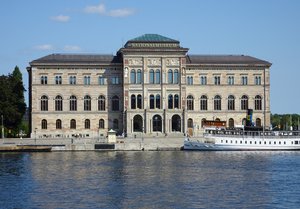
国家博物馆, 斯德哥尔摩国家博物馆 斯德哥尔摩 13 Athletes, Still Life with Onions, A Night in May
国家美术、建筑与设计博物馆, 奥斯陆国家美术、建筑与设计博物馆 奥斯陆 2 Stormy Night, Summer Night
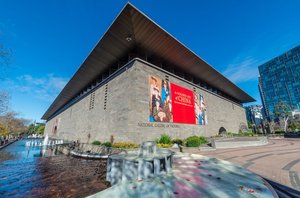
维多利亚州国立美术馆, 墨尔本维多利亚州国立美术馆 墨尔本 1 Ring gymnast I
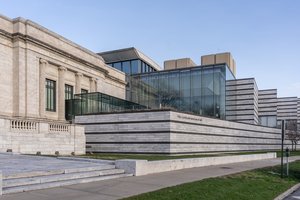
克利夫兰艺术博物馆, 克利夫兰克利夫兰艺术博物馆 克利夫兰 1 Evening Mood-Lidingö
底特律艺术学院, 底特律底特律艺术学院 底特律 1 Gymnast

尤金·詹森,每十年一件代表作

各年代作品统计

选择一个年代,探索定义该时代的原创杰作。

尤金·詹森 的画作:画廊解答

哪幅 尤金·詹森 的画作最为闻名?揭晓答案

Naval Bathhouse (1907)。紧随其后的是 Athletes (1912) 和 Ring gymnast I (1911)。

尤金·詹森 完成 Naval Bathhouse 时多大年纪?揭晓答案

45岁:Naval Bathhouse创作于1907年,尤金·詹森出生于1862年。

尤金·詹森 最受欢迎的 10 幅画作是哪些?揭晓答案

Naval Bathhouse, Athletes, Ring gymnast I, Still Life with Onions, Gripsholm castle, Dusk, Döbelns street, In the Park, Stormy Night 及 Summer Night。上方排名显示了每件作品的创作年份及馆藏机构。

尤金·詹森 创作了多少件作品?揭晓答案

我们的目录收录了 36 件 尤金·詹森 的作品,创作年代从 1881 年至 1914 年。

尤金·詹森 最著名的原作收藏于何处?揭晓答案

多见于 国家博物馆 (斯德哥尔摩), 国家美术、建筑与设计博物馆 (奥斯陆) 及 维多利亚州国立美术馆 (墨尔本)。上方的博物馆列表列出了所有相关机构。

尤金·詹森 是在什么时候创作出最著名的画作的?揭晓答案

在 1890s 期间:本页 36 件作品中有 16 件创作于该时期,其中包含 Dusk 件作品。

尤金·詹森 最早和最晚的代表作有哪些?揭晓答案

在本页面中,最早的作品创作于 Gripsholm castle (1881),最晚的创作于 Lifting Weights with One Arm (1914)。

尤金·詹森 最常创作的主题是什么?揭晓答案

Sky (16), Water (12) 及 Cityscape (7),共计 36 件作品。

尤金·詹森 最常用的创作媒介是什么?揭晓答案

Oil On Canvas,共计 22 件(本页共有 36 件作品)。

国家博物馆收藏了哪些尤金·詹森的原作?揭晓答案

Athletes, Still Life with Onions 及 A Night in May:国家博物馆, 斯德哥尔摩收藏了本页中 13 件作品。

尤金·詹森:艺术家

A Life Bathed in Blue: The Enigmatic World of Eugène Jansson

Eugène Fredrik Jansson, born in Stockholm in 1862, was a Swedish painter whose work occupies a unique and haunting space within the landscape of late 19th and early 20th-century art. He wasn’t merely documenting his surroundings; he was translating an internal emotional state onto canvas, one steeped in melancholy, longing, and a profound sensitivity to light and atmosphere. Jansson's life, marked by chronic illness and a quiet introspection, profoundly shaped his artistic vision, leading him to become known as “Blåmålaren” – the Blue Painter – for his evocative nocturnal scenes of Stockholm. His story is not one of flamboyant social circles or dramatic breakthroughs, but rather a slow, deliberate exploration of color, form, and the human condition, culminating in a body of work that continues to resonate with its quiet power.

Early Years and Artistic Formation

Jansson’s upbringing was relatively modest, his parents striving for cultural enrichment despite their position between the working class and lower middle class. This instilled in him an early appreciation for both art and music – he received piano lessons as a child. However, at fourteen, scarlet fever struck, leaving him with lasting health problems: impaired eyesight, hearing difficulties, and chronic kidney issues. These physical limitations undoubtedly contributed to his withdrawal from the bustling world and fostered a more internal focus. He initially studied at the Tekniska Skolan (now Konstfack) under Edvard Perséus, a portrait painter who provided foundational training. While accepted into the Royal Swedish Academy of Arts’ antique school in 1881, financial constraints prevented him from joining his peers in Paris, then the epicenter of artistic innovation. This meant Stockholm itself became his primary subject matter, and he remained largely within its confines for much of his career. His early works reflect this – assisting Perséus with portraits and experimenting with still lifes before discovering his signature style.

The Nocturnes: Painting the Soul of a City

It was in the 1890s that Jansson truly found his voice, embarking on a series of night scenes that would define his reputation. These weren’t simply depictions of Stockholm at night; they were explorations of mood and emotion rendered through an almost monochromatic palette dominated by shades of blue. He painted views over Riddarfjärden bay, as seen from his home on Södermalm, and streetscapes imbued with a sense of stillness and solitude. The brushstrokes are visible, expressive, contributing to the overall feeling of atmospheric haze and dreamlike quality. These paintings weren’t about precise representation; they were about capturing the *feeling* of being in Stockholm at night – the quiet hum of the city, the play of light on water, the sense of isolation amidst urban life. The influence of Impressionism is present, but Jansson pushed beyond its focus on fleeting moments of light to create something more deeply psychological. He wasn’t merely observing; he was internalizing and re-presenting his emotional response to the city around him.

A Shift in Focus: The Male Nudes

Around 1904, Jansson's artistic focus underwent a significant transformation. While continuing to paint nocturnes, he began to create a series of male nudes, often depicted in intimate settings or with symbolic objects. These paintings are remarkable for their frankness and sensitivity, challenging the conventions of the time. They weren’t overtly erotic but rather explorations of beauty, vulnerability, and the human form. The exact reasons behind this shift remain debated, but it's likely a combination of personal exploration and a growing interest in symbolism and psychological themes. These nudes were often painted in private, away from public scrutiny, reflecting a deeply personal artistic endeavor. They are characterized by soft lighting, delicate modeling, and an overall sense of quiet contemplation.

Legacy and Historical Significance

Eugène Jansson died in 1915, leaving behind a relatively small but profoundly impactful body of work. He didn’t achieve widespread recognition during his lifetime, remaining somewhat outside the mainstream art world. However, his paintings have gained increasing appreciation in recent decades, recognized for their unique aesthetic and psychological depth. His influence can be seen in later Scandinavian artists who explored themes of isolation, melancholy, and the beauty of the natural world. He stands as a testament to the power of individual vision – an artist who dared to paint not what he saw, but what he *felt*, creating a hauntingly beautiful and enduring legacy that continues to captivate audiences today. His paintings are more than just landscapes or portraits; they are windows into the soul, bathed in the evocative light of a Stockholm night.