Edward Ladell: A Victorian Master of Still Life
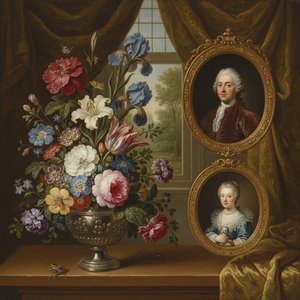
Edward Ladell (1821-1886) stands as a quietly significant figure in 19th-century British art, largely celebrated for his exquisitely rendered still life paintings. While he never achieved the widespread fame of some of his contemporaries, his meticulous technique and profound understanding of light and color secured him a respected place within the Royal Academy circles and ensured his works continue to be admired today, particularly within museums like the Art Institute of Chicago. Ladell’s legacy is one of quiet elegance, reflecting a deep appreciation for the beauty of everyday objects – fruit, flowers, glass, and domestic treasures – presented with an almost obsessive attention to detail.
Born in Hasketon, Suffolk, in 1821, Ladell's early life offers little in the way of readily available biographical information. He was the son of Christmas Ladell, a coachbuilder, suggesting a family rooted in craftsmanship and an appreciation for tangible objects. The precise details of his formative years remain shrouded in mystery, though it’s speculated that he may have received some initial artistic training through apprenticeships within the textile industry – a significant sector in the region at the time – perhaps learning to draw patterns and designs from printed fabrics. This early exposure to intricate detail and decorative motifs undoubtedly influenced his later work.
The Rise of a Painter: Technique and Influences
Ladell’s artistic journey began with a deliberate focus on still life, a genre deeply rooted in the traditions of the Dutch Masters. He meticulously studied the works of artists like Pieter Claesz and Willem Kalf, masters of capturing the subtle nuances of light, texture, and color within domestic settings. His paintings are characterized by an almost photographic realism – not in the sense of cold detachment, but rather a profound understanding of how light interacts with surfaces, creating a shimmering effect that brings each object to life. He was particularly adept at rendering reflections on glass and polished surfaces, a skill that demanded considerable technical mastery.
Crucially, Ladell’s work wasn't simply imitative; he infused his paintings with a distinctly Victorian sensibility. He frequently depicted objects arranged on a marble ledge draped with an oriental rug – a detail that speaks to the prevailing fascination with exoticism and luxury during the era. The inclusion of items like cobnuts, peaches, grapes, and wine glasses suggests a celebration of abundance and domestic comfort, reflecting the values of the middle class.
A Life of Exhibitions and Recognition
Ladell’s talent quickly gained recognition within the London art scene. He made his debut at the Royal Academy in 1856, an event that marked the beginning of a long and productive career as an exhibitor. He continued to submit works annually until his death in 1886, showcasing a remarkable consistency in style and subject matter. His paintings were consistently praised for their technical brilliance and atmospheric quality, earning him accolades from prominent critics of the time. He also exhibited at the British Institution and Suffolk Street, further solidifying his position within the established art world.
Beyond the Canvas: A Personal Life and Legacy
Despite his artistic success, details about Ladell’s personal life remain scarce. He married Juliana Roope in 1848 and they had one daughter, Kate Elizabeth, born in 1860. However, a significant gap appears in the record between 1865 and 1870, during which time he ceased to exhibit at the Royal Academy. The circumstances surrounding this period are unclear, but it’s likely linked to personal difficulties – perhaps related to his wife or daughter. He resumed exhibiting in 1878, demonstrating a resilience and dedication to his craft.
Edward Ladell's legacy is not one of flamboyant innovation, but rather of quiet mastery. His meticulous technique, profound understanding of light and color, and unwavering commitment to the still life genre have secured him a place as a significant figure in Victorian art. His works continue to be appreciated for their beauty, technical skill, and subtle reflections of the era’s values – a testament to the enduring appeal of everyday objects rendered with exquisite care.
问答详情
是否有关于 Edward Ladell 的生平年表?
您可以在艺术家的 艺术历程 页面上查阅 Edward Ladell 作品的编年史,其作品按创作顺序分章节依次呈现。
我可以通过色调来浏览 Edward Ladell 的作品吗?
按色调浏览 页面按色调将 Edward Ladell 的艺术作品进行了分类。
可以按心情浏览 Edward Ladell 的作品吗?
艺术家的 情境空间 页面按氛围分类展示了 Edward Ladell 的艺术作品。