1


更新于 November 2026 · 基于我们的流行度评分排名(每件作品的搜索量、访问量及订单量) · 20 件 De Scott Evans 作品收录于我们的目录中
简而言之
Free Sample, Take One (1891) 是 De Scott Evans 最受瞩目的画作;原作收藏于 代顿 的 Dayton Art Institute。 随后,目光会移向 Free Sample / Try One (1885) 和 Try One (1885)。 在 De Scott Evans 的 20 件作品中,这 19 件最为闻名;每一件都是独一无二的原作,并附有创作年份、馆藏机构及其经久不衰的原因。
这些原作中反复出现的四个主题,各有一个最杰出的范例。
收藏了本页大部分画作的 8 家博物馆。
| 博物馆 | 城市 | De Scott Evans 的作品 | 此列表中的画作 |
|---|---|---|---|
 耶鲁大学艺术馆 |
纽黑文 | 2 | Free Sample / Try One, Two Hanging Apple |
 Dayton Art Institute |
代顿 | 1 | Free Sample, Take One |
 伯明翰艺术博物馆 |
伯明翰 | 1 | Try One |
 水晶桥美国艺术博物馆 |
班顿维尔 | 1 | Daisies |
 Columbus Museum of Art |
哥伦布 | 1 | A New Variety, Try One |
 印第安纳波利斯艺术博物馆 |
印第安纳波利斯 | 1 | Scene on the Island of Jamaica |
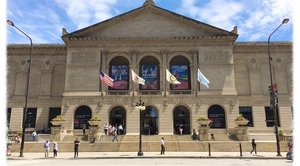 芝加哥艺术学院 |
芝加哥 | 1 | The Irish Question |
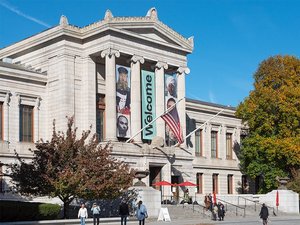 波士顿美术馆 |
波士顿 | 1 | A New Variety, Try One |
跨越 18 年的艺术生涯,从 1881 年到 1898 年:逐年呈现 De Scott Evans 最著名的原创作品。
选择年份以查看原作。
Free Sample, Take One (1891),Dayton Art Institute, 代顿。紧随其后的是 Free Sample / Try One (1885) 和 Try One (1885)。
44岁:Free Sample, Take One创作于1891年,De Scott Evans出生于1847年。
Free Sample, Take One, Free Sample / Try One, Try One, Daisies, Grandfather's Clock, Two Hanging Apple, A New Variety, Try One, The Connoisseur, A new variety try one 及 Scene on the Island of Jamaica。上方排名显示了每件作品的创作年份及馆藏机构。
我们的目录收录了 20 件 De Scott Evans 的作品,创作年代从 1881 年至 1898 年。
多见于 耶鲁大学艺术馆 (纽黑文), Dayton Art Institute (代顿) 及 伯明翰艺术博物馆 (伯明翰)。上方的博物馆列表列出了所有相关机构。
在 1885 期间:本页 19 件作品中有 3 件创作于该时期,其中包含 Free Sample / Try One 件作品。
在本页面中,最早的作品创作于 Grandfather's Clock (1881),最晚的创作于 A new variety try one (1898)。
Free Sample / Try One 及 Two Hanging Apple:耶鲁大学艺术馆, 纽黑文收藏了本页中 2 件作品。
De Scott Evans remains one of the most captivating enigmas in the annals of nineteenth-century American art, a painter whose true mastery was only fully realized through the ghostly echoes of his posthumous reputation. Born David Scott Evans in 1847 in the quiet landscape of Boston, Indiana, his life was marked by a profound dedication to the pursuit of visual truth. While he spent much of his career navigating the academic circles of Ohio and New York, it is his ability to manipulate the very fabric of perception that has secured his place in art history. Evans did not merely paint objects; he breathed a deceptive vitality into them, creating works so convincingly three-dimensional that they seemed to defy the flat confines of the canvas.
His artistic journey was shaped by a rigorous classical foundation, beginning with his studies under Professor Adrian Beaugureau at Miami University and later in Cincinnati. This early immersion in the principles of meticulous observation provided the technical scaffolding for what would become his signature style. However, it was his transformative sojourn to Paris in the late 1870s that truly refined his vision. Studying under the legendary Adolphe William Bouguereau, Evans absorbed the essence of the Beaux Arts tradition—a method defined by an unwavering commitment to anatomical precision and idealized beauty. This Parisian influence instilled in him a reverence for light and texture, allowing him to later execute trompe l'oeil works that could trick even the most discerning eye.
During his lifetime, Evans was primarily celebrated as a painter of genre scenes and elegant portraits, capturing the refined domesticity and fashionable grace of the Victorian era. He possessed a remarkable ability to render the soft textures of fabric and the subtle glow of skin, making him a sought-after chronicler of contemporary life. Yet, it is in the realm of trompe l'oeil—the art of "deceiving the eye"—where his most enduring magic resides. Decades after his tragic death, scholars began to attribute a series of breathtaking still lifes to him, works that utilized hyper-realistic detail to create startling illusions.
These masterpieces often featured mundane objects elevated to the level of high drama through sheer technical prowess. One might encounter a cupboard scene where almonds appear trapped behind splintered glass, or a composition where a simple string of pears seems to extend beyond the frame and attach itself to a physical nail on the wall. His skill in rendering the grain of weathered wood, the translucency of fruit, and the delicate sheen of paper was nothing short of miraculous. This mastery of texture and depth allowed him to play with the viewer's sense of reality, turning a simple viewing experience into a playful, intellectual game of perception.
The life of De Scott Evans was cut short by a maritime catastrophe that left a void in the American art world. In July 1898, while traveling aboard the ocean liner La Bourgogne bound for Paris, Evans and his three beloved daughters were lost when the ship collided with another vessel and sank in the North Atlantic. This sudden, violent end to his life added a layer of melancholy to his legacy, leaving behind a body of work that continues to haunt and delight collectors. Because he frequently utilized various pseudonyms—including D. Scott Evans, S. S. David, and Stanley S. David—his true identity was long obscured, much like the illusions he so expertly crafted.
Today, the significance of Evans lies in his unique position at the intersection of academic realism and playful deception. He stands as a bridge between the formal traditions of the nineteenth century and a more modern fascination with the boundaries of representation. His work serves as a poignant reminder that art possesses the power to transcend the physical plane, inviting us to question not only what we see, but how we perceive the very world around us. Through his rediscovered brilliance, Evans continues to command our attention, proving that even in death, an artist's vision can remain vibrantly, deceptively alive.