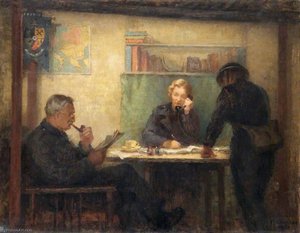
A Legacy of Likeness: The Life and Art of Catherine Ouless
Catherine Ouless, born in 1879 and passing in 1961, represents a fascinating intersection within the British art world – a skilled practitioner carrying forward a tradition of meticulous portraiture while navigating the shifting aesthetic landscapes of the late Victorian and early 20th centuries. Though often linked to her father, Walter William Ouless, Catherine’s own artistic voice deserves recognition for its quiet strength and dedication to realism. Her life story is one interwoven with family legacy, professional commitment, and a subtle but persistent presence in the realm of fine art portraiture. While biographical details remain somewhat sparse, the body of work attributed to her speaks volumes about her technical abilities and artistic sensibilities. She primarily worked in oil on canvas, focusing almost exclusively on portraits and landscapes, particularly those evocative of her native Dorset.The Ouless Family Tradition
Catherine’s connection to art was deeply rooted in her family. Her father, Walter William Ouless (1840-1919), was a highly successful portrait painter known for his depictions of prominent Victorian society figures. He established a thriving studio and built a reputation for capturing not just the physical likeness but also the character and social standing of his sitters. Catherine received her artistic training from him, absorbing his techniques and stylistic approach. This familial influence is undeniable in her early works, which often exhibit a similar level of detail and formality. However, to simply categorize Catherine as an imitator would be a disservice; she developed her own nuanced style within the established framework. It’s important to note that distinguishing between works by Walter William and Catherine can sometimes prove challenging, particularly for pieces lacking definitive provenance. The close working relationship and shared aesthetic contribute to this complexity, but increasingly scholarship is recognizing Catherine's distinct hand in a growing number of paintings.Developing a Distinct Artistic Voice
While initially mirroring her father’s style, Catherine gradually refined her technique and developed a more personal approach to portraiture. Her portraits are characterized by a delicate handling of light and shadow, creating a sense of intimacy and psychological depth. She possessed a keen eye for detail, rendering fabrics, textures, and facial features with remarkable precision. Unlike some of her contemporaries who embraced the looser brushwork of Impressionism or Post-Impressionism, Catherine remained committed to realism. This dedication wasn’t simply about technical skill; it was also about capturing the essence of her sitters – their personality, social status, and inner lives. Her landscapes, often depicting scenes around Dorset, share this same meticulous attention to detail and a quiet appreciation for the natural world. These works aren't grand vistas but rather intimate studies of light, atmosphere, and local scenery.Subject Matter and Style
- Portraits: Catherine Ouless’s primary focus was portraiture, catering to a clientele that included members of the gentry and middle class. Her portraits often depict women and children, rendered with sensitivity and grace.
- Landscapes: She also painted landscapes, primarily scenes from Dorset, England. These works showcase her ability to capture the subtle beauty of the English countryside.
- Technique: Ouless employed a traditional oil painting technique, characterized by meticulous detail and careful layering of paint. Her brushwork is generally smooth and refined, creating a realistic and polished finish.
- Influences: While heavily influenced by her father, Walter William Ouless, Catherine also drew inspiration from other Victorian portrait painters known for their realism and attention to detail.
Historical Significance and Lasting Appeal
Catherine Ouless’s work offers a valuable glimpse into the social and artistic values of late Victorian and early 20th-century Britain. Her portraits provide not only visual records of her sitters but also insights into their lives, status, and aspirations. While she may not have achieved the widespread fame of some of her contemporaries, her dedication to realism and her skillful technique ensured a steady stream of commissions throughout her career. Today, her paintings are increasingly sought after by collectors who appreciate her quiet mastery and the enduring beauty of her work. Her legacy lies in preserving a tradition of meticulous portraiture while subtly imbuing it with her own artistic sensibility. The rediscovery and re-evaluation of her oeuvre continue to shed light on the contributions of women artists working during this period, solidifying her place as a significant figure within British art history.问答详情
在哪里可以浏览 Catherine Ouless 的全部作品?
您可以在 Catherine Ouless 的 全部作品 页面上浏览其在 本站 上的所有作品。
Catherine Ouless 的艺术生涯是如何划分为不同时期的?
Catherine Ouless 的艺术生涯在 艺术历程 页面上按时期逐一展开:以横向时间轴的形式呈现作品,并按创作时期划分为不同的篇章。
是否有Catherine Ouless作品的时间线?
Catherine Ouless 的作品时间轴现已上线:在艺术家的 作品时间轴 页面中,所有作品均按创作日期排序。
Catherine Ouless 的作品受欢迎程度如何?
Catherine Ouless 拥有一个 统计数据 页面,其中展示了该艺术家在 本站 上的作品统计数据。