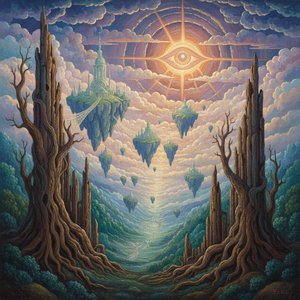
The Poet of Surrealist Disquiet
Alberto Savinio stands as a singular, multifaceted figure in the tapestry of twentieth-century art history, an intellectual force whose influence stretched far beyond the boundaries of a single medium. Born Andrea Francesco Alberto de Chirico in Athens in 1891, his early years were steeped in the evocative atmosphere of Greek antiquity and the complex identity of an Italian expatriate family. As the younger brother of the renowned metaphysical painter Giorgio de Chirico, Savinio was often viewed through the lens of familial connection, yet he possessed a restless, polymathic spirit that allowed him to forge a path entirely his own. His life was a continuous pursuit of philosophical depth, expressed through the equally diverse languages of painting, music, literature, and drama.
The foundations of Savinio’s artistic sensibility were laid amidst the ruins of ancient civilizations, a backdrop that fostered a lifelong preoccupation with myth, memory, and the irrational. While his early explorations focused on more traditional landscapes and portraits, he eventually gravitated toward the burgeoning Surrealist movement, finding in its tenets a way to articulate the profound psychological tensions of the modern era. However, Savinio was never a mere follower of trends; he approached the avant-garde with a critical, almost surgical precision. He famously championed a concept he termed sincerismo, a rejection of superficial imitation in favor of an authentic emotional and intellectual honesty that sought to bridge the gap between the dream world and philosophical reality.
A Symphony of Surrealist Thought
Savinio’s creative output was characterized by an extraordinary breadth of talent, making him a true Renaissance man of the modern age. In his visual art, he embraced the principles of automatism and unsettling juxtapos andions, creating imagery that felt both dreamlike and deeply symbolic. His paintings often utilized distortions and strange, disconnected elements to evoke a sense of metaphysical unease, much like the works of his brother, yet Savinio’s approach was uniquely colored by his deep understanding of musical structure and literary metaphor. This interdisciplinary nature meant that his canvases were not merely images, but compositions of thought, rhythm, and myth.
Beyond the easel, Savinio was a prolific writer and composer, contributing significantly to the intellectual landscape of Europe. His literary achievements include at least forty-seven books, ranging from autobiographical memoirs that explore the nuances of identity to complex essays on the philosophy of art. As a musician, he composed five operas, treating sound with the same symbolic weight as his visual motifs. This fusion of disciplines allowed him to create a cohesive universe where a musical motif could find its echo in a painted shadow or a line of prose. His work was heavily influenced by the giants of the era, including Apollinaire, Picasso, and Jean Cocteau, yet he maintained a distinct voice that resisted the easy categorization of the Surrealist label.
Legacy and Historical Significance
The historical significance of Alberto Savinio lies in his ability to synthesize the disparate elements of modernism into a singular, cohesive vision of human experience. He did not simply participate in the movements of his time; he interrogated them, providing a philosophical backbone to the more experimental impulses of Surrealism. His work dealt with the fundamental anxieties of the twentieth century—the fragmentation of identity, the weight of history, and the search for meaning in an increasingly irrational world.
Today, Savinio is recognized not just as a companion to the great de Chirico, but as a master of Metaphysical Art and a pioneer of intellectual Surrealism. His legacy is preserved in international collections such as the Albertina Museum in Vienna, where his works continue to provoke thought and wonder. To study Savinio is to encounter a mind that refused to be confined by borders or mediums, leaving behind a body of work that remains as hauntingly beautiful and intellectually stimulating as it was during his lifetime.