
 效果预览
效果预览
 购买印刷品
购买印刷品 分享
分享 分享
分享
 详情
详情

 下载
下载
 相似作品
相似作品 X射线
X射线 幻灯片播放
幻灯片播放23042


 展开详情
展开详情
购买高分辨率增强版数字图像,其品质远超在线预览。
每一份文件都由我们的内部专家使用先进工具与专业的后期润色技术精心打造。我们确保每一张图像都具备卓越的清晰度、精准的色彩还原度以及细腻的细节表现。
最终文件将在 72 小时内通过电子邮件交付,并针对专业、编辑及印刷用途进行了优化。其品质与顶级设计工作室、出版社和画廊所信赖的标准完全一致。
每份数字图像订单均包含
专业数字图像交付,品质保障
选择 OriginalUniqueArt.com,您获得的不仅仅是一张图像——您收到的是经过专业级增强、精雕细琢的数字艺术作品,并享有满意保证。以下是您的订单中自动包含的所有内容:

邮件快速送达
您的高分辨率数字图像文件将在下单后 72 小时内通过电子邮件发送给您 —— 即可立即使用。

AI 增强型数字文件
您的艺术品经过专业优化,结合先进的 AI 技术与人工修饰,确保呈现极致的细节、清晰度与色彩准确度。

终身免费重发服务
不小心删除了文件或找不到了?没关系——我们将随时为您免费重发。

无需进口费用,始终如一
即刻拥有您的艺术作品,无需支付任何关税、税费或运费——数字下载始终免税。

色彩精准保证
我们通过专业工具与色彩管理技术,确保您的数字图像尽可能真实地还原原作色彩。

60天满意保证
如果您对所购买的数字图像不满意,我们将在60天内为您进行修改或退还100%的款项——无需任何解释。

100% 退款保证
如果不满意?在收到数字文件后的60天内,我们为您提供全额退款——无需任何理由。

批量订单优惠
购买 3 张图片可享 10% 折扣 - 购买 5 张可享 15% 折扣 - 购买 10+ 张可享 20% 折扣。非常适合创意项目、画廊和机构使用。
藏品详情
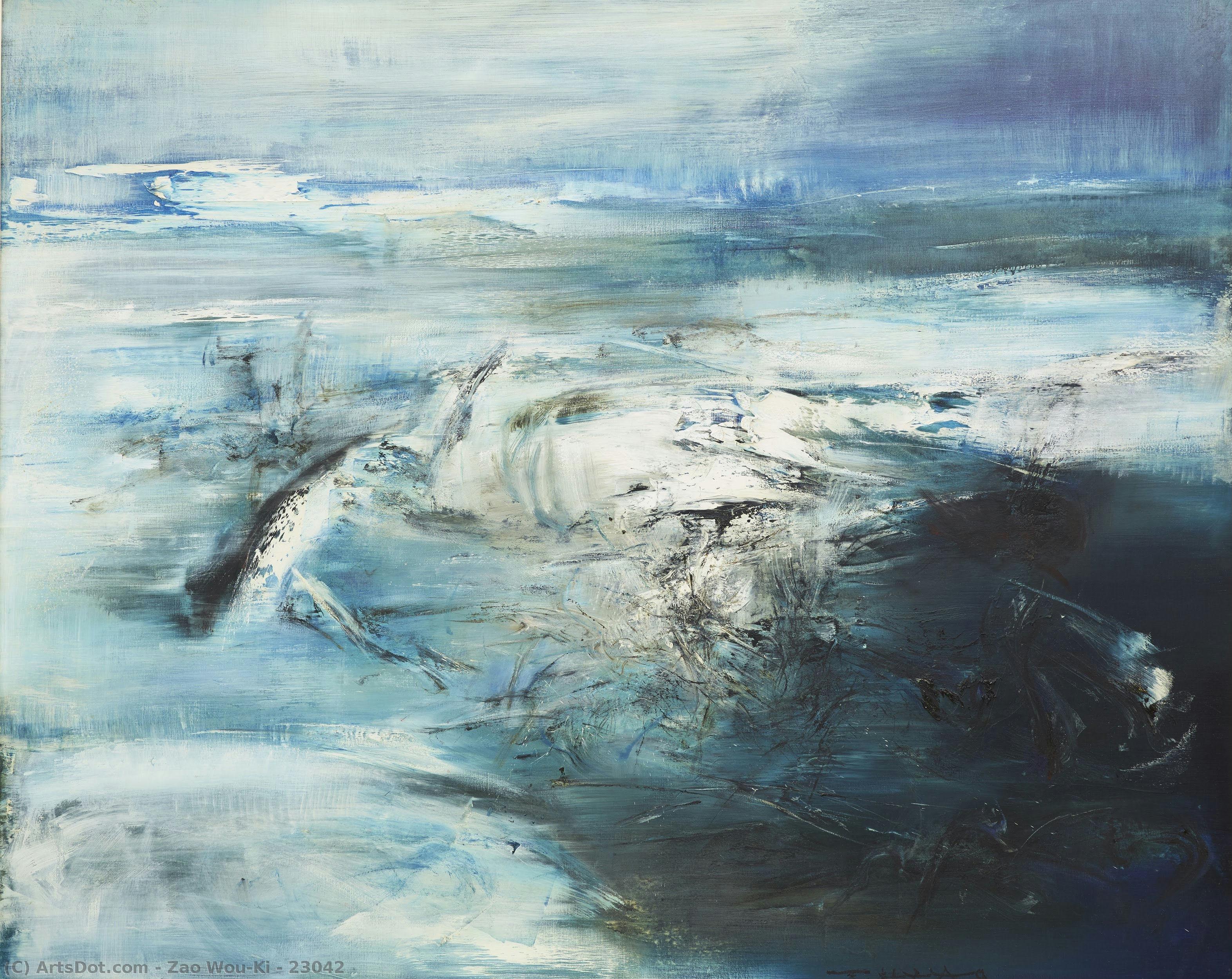
A Serene Encounter: Zao Wou-Ki's Evocative Horse Painting
The canvas breathes with an ethereal blue, a vast expanse that immediately draws the viewer into a world of quiet contemplation. At its heart resides a powerful image – a horse, rendered not in precise detail but as a vibrant presence within this atmospheric landscape. This untitled work (referred to here as "23042") exemplifies Zao Wou-Ki’s signature style: a lyrical abstraction that seamlessly blends Eastern and Western artistic traditions. The horse itself isn't depicted realistically; instead, it emerges from the blue depths with broad, gestural brushstrokes, suggesting movement and vitality without resorting to photographic accuracy. It stands upon what appears to be a rocky terrain—perhaps a beach or a cliff edge—its form echoing the contours of the surrounding environment. Above, clouds drift across the canvas, adding layers of depth and dimension, further enhancing the sense of spaciousness and tranquility. The overall impression is one of serene stillness, capturing a fleeting moment of beauty within nature's embrace.Bridging East and West: Zao Wou-Ki’s Artistic Journey
Born in Beijing in 1920, Zao Wou-Ki experienced firsthand the tumultuous shifts of 20th-century China before relocating to Paris in 1948. This journey profoundly shaped his artistic vision. Initially trained in traditional Chinese painting techniques, including calligraphy—a discipline emphasizing fluidity and expressive brushwork—Zao absorbed the influences of Western masters like Matisse and Klee during his time in France. He didn't simply adopt these styles; he synthesized them, creating a unique visual language that transcended cultural boundaries. The artist’s biography reflects the broader artistic landscape of the 1920s, an era marked by experimentation and a rejection of established norms. Movements like Dadaism and Surrealism challenged conventional notions of representation, paving the way for abstract expressionism—a style Zao would masterfully incorporate into his own work. His ability to fuse Eastern calligraphic principles with Western abstraction is what sets him apart, resulting in paintings that are both deeply personal and universally resonant.The Language of Gesture: Technique and Symbolism
Zao Wou-Ki’s technique is characterized by a remarkable freedom of gesture. He employed broad, sweeping brushstrokes, often applying paint directly from the tube, allowing colors to blend and bleed into one another organically. This approach creates a sense of dynamism and spontaneity, as if the painting were unfolding before our eyes. In "23042," the blue dominates—not as a static color but as an active force that permeates the entire composition. The horse, rendered in contrasting tones, emerges from this blue expanse, its form suggested rather than defined. While seemingly abstract, the image evokes powerful symbolism. Horses have long been associated with strength, freedom, and nobility across cultures. In Chinese art, they often represent power and good fortune. Here, within Zao Wou-Ki’s lyrical abstraction, the horse becomes a symbol of untamed spirit—a creature at peace within its natural environment. The clouds above could be interpreted as representing change or transition, adding another layer of complexity to the painting's meaning.An Emotional Resonance: Contemplation and Tranquility
Beyond its technical brilliance and symbolic depth, "23042" possesses a profound emotional resonance. The painting invites viewers to slow down, to breathe deeply, and to connect with a sense of quiet contemplation. The vastness of the blue canvas creates a feeling of spaciousness—a visual echo of the boundless expanse of nature. The horse’s serene posture suggests a moment of stillness amidst the constant flux of life. Zao Wou-Ki's work is not about depicting reality as it appears; rather, it seeks to capture the essence of experience—the feelings and emotions that lie beneath the surface. This painting offers an escape from the noise and chaos of modern life, inviting us into a world of beauty, tranquility, and profound introspection. It’s a testament to Zao Wou-Ki's ability to translate complex emotions into a visual language that speaks directly to the soul.艺术家简介
The Dawn of a New Aesthetic: Exploring the World of a 1920s Artist
The decade of the 1920s wasn’t merely a period; it was an explosion – an eruption of creativity, rebellion, and a profound shift in how art reflected and engaged with the world. Emerging from the shadows of the First World War, artists sought to dismantle established traditions and forge entirely new paths, driven by a desire to capture the dynamism and anxieties of a rapidly changing society. This era witnessed the birth of movements like Dadaism, Surrealism, and Art Deco, each offering a distinct lens through which to view reality – and often, to challenge it. While specific biographical details remain sparse for this artist, their work undeniably embodies the spirit of this transformative decade, reflecting its fascination with modernity, sexuality, and the unsettling beauty of the subconscious.Early Influences and Artistic Beginnings
The genesis of an artist’s style is rarely a singular event but rather a confluence of experiences, influences, and evolving perspectives. While precise details regarding this artist's early life are limited, it’s reasonable to assume that the tumultuous years following World War I profoundly shaped their artistic trajectory. The disillusionment with traditional values, coupled with the technological advancements – particularly in photography and mass media – created a fertile ground for experimentation. The rise of jazz music, with its improvisational spirit and rhythmic complexity, likely resonated deeply, mirroring the desire to break free from rigid structures. Furthermore, the burgeoning interest in psychology, spearheaded by figures like Sigmund Freud, fueled explorations into the hidden depths of the human psyche—a theme that would become increasingly prominent in their work. The influence of earlier movements such as Impressionism and Post-Impressionism is also likely present, providing a foundation upon which to build more radical departures.The Embrace of Modernity: Art Deco and Beyond
The 1920s witnessed the ascendance of Art Deco – a style characterized by its sleek geometric forms, luxurious ornamentation, and celebration of industrial progress. This artist’s work demonstrates a clear engagement with this movement, evident in their use of stylized patterns, bold colors, and an appreciation for machine-age aesthetics. However, it's crucial to recognize that the 1920s was a period of intense artistic pluralism, and many artists moved beyond simple adherence to any single style. There’s evidence suggesting an exploration of abstraction, influenced by movements like Cubism and Futurism, which sought to represent objects from multiple viewpoints simultaneously. This experimentation with form and perspective reflects the era's fascination with challenging conventional ways of seeing and understanding the world. The artist’s work also hints at a growing interest in representing interior spaces and psychological landscapes—a trend that would become increasingly significant in the subsequent decades.Key Themes and Symbolic Language
The art produced during this period frequently grappled with complex themes – often expressed through symbolic imagery and evocative color palettes. Sexuality, particularly female sexuality, emerged as a recurring motif, reflecting both societal shifts and the artist’s own personal explorations of identity. The depiction of nature—often rendered in highly stylized or abstracted forms—suggested a desire to connect with primal forces while simultaneously questioning the limitations of representation. The use of light and shadow played a crucial role in creating mood and atmosphere, adding layers of meaning to the compositions. Recurring motifs – perhaps related to personal experiences or cultural references – likely served as shorthand for deeper emotional and intellectual concepts. The artist’s ability to imbue their work with such layered symbolism speaks to a sophisticated understanding of both artistic technique and the complexities of human experience.Legacy and Historical Significance
While this artist may not be widely recognized by name, their contribution to the vibrant artistic landscape of the 1920s is undeniable. They were part of a generation that dared to challenge established norms and embrace new possibilities—a pivotal moment in art history. Their work stands as a testament to the era’s spirit of experimentation and its profound impact on subsequent movements. The influence of this artist can be seen in the development of Surrealism, Art Deco, and other styles that emerged in the wake of World War I. Ultimately, their legacy lies not only in the individual artworks they created but also in their role as a catalyst for change—a pioneer who helped to shape the course of modern art. Their exploration of themes like sexuality, modernity, and the subconscious continues to resonate with audiences today, reminding us of the enduring power of art to provoke thought and inspire emotion.
zao wou-ki
1920 - 2013

