

 实景预览
实景预览
 发送
发送 分享
分享
 详情
详情 指南
指南

 下载图片
下载图片
 相似作品
相似作品 X射线
X射线 幻灯片播放
幻灯片播放 统计数据
统计数据Attic Room


 阅读全文
阅读全文
手工油画复制品
由我们的艺术家按需定制,为您提供您所选尺寸及画框的布面手工油画。 ( 切换至版画销售渠道 切换至数字图像销售渠道)




P118B ¥10

P118H ¥10

P118W ¥10

P438Z ¥10

P508JH ¥12

P508YH ¥12

P805H ¥10

P805Z ¥10

P919BZ ¥10

P919G ¥10

P919XJ ¥10

P959ZH ¥10

P968JZ ¥12

W106C ¥8

W218G ¥10

W218JH ¥8

W218Y ¥10

W307PJ ¥10

W316G ¥10

W316PJ ¥8

W316Y ¥10

W398PJ ¥8

W4111J ¥10

W500HY ¥15

W500JH ¥15

W692G ¥12

W849H ¥8

W940BG ¥15

W953PJ ¥8




您可以从与原作比例一致的预设尺寸中进行选择。

请输入您需要的宽度和高度,以适配您的画框或墙面。由于作品为手工绘制,若您选择不同的尺寸比例,艺术家可能会在画面边缘多画一些或稍作裁剪 —— 由您决定。在开始绘画之前,我们会为您发送一份数字效果图供您确认。本页面上展示的图片并非最终实物 —— 只有效果图才能反映真实结果。
下单后,OriginalUniqueArt.com 团队将通过电子邮件联系客户获取具体要求,并提供效果预览图


 玻璃选项仅适用于110厘米以下的尺寸。

Attic Room
复制品材质
复刻品尺寸说明
-


总计金额
¥ 2016
A Sanctuary of Stillness: Exploring Ratcliffe's Attic Room
In the quiet corners of art history, certain works possess the unique ability to transform a mere space into a profound emotional experience. William Whitehead Ratcliffe’s Attic Room, painted in 1918, is one such masterpiece. This intimate portrayal of a domestic interior invites the viewer to step away from the clamor of the modern world and enter a realm of contemplative solitude. The painting captures a bedroom setting tucked within the eaves of an attic, where the soft, natural light filtering through a distant window breathes life into the humble objects scattered throughout the room. There is a palpable sense of peace in this composition, as if time itself has slowed to match the gentle rhythm of a resting soul.
The composition is masterfully arranged to guide the eye through a narrative of quiet companionship between objects. On the left, a bed serves as the anchor of the room, suggesting a place of rest and vulnerability. Nearby, a solitary chair waits, perhaps for a reader or a dreamer, adding a layer of human presence even in the absence of figures. The placement of two vases—one central and one toward the periphery—along with a delicate bottle, creates a rhythmic balance that speaks to the artist's training in the decorative arts. These elements are not merely decorations; they are the silent protagonists of a domestic drama, each contributing to an atmosphere of cozy, lived-in comfort.
Technique and the Camden Town Legacy
As a pioneer of the Camden Town Group, Ratcliffe brought a specific sensibility to his work—a dedication to capturing the vibrancy and immediacy of everyday life. In Attic Room, we see this through a technique that emphasizes texture and light. The way the light interacts with the surfaces of the furniture and the ceramic vessels suggests a profound understanding of how atmosphere is constructed through subtle tonal shifts. The brushwork, while controlled, retains a tactile quality that makes the fabric of the bed and the smoothness of the glass feel almost tangible to the viewer.
For the discerning collector or interior designer, this piece offers more than just visual beauty; it offers a mood. The painting’s palette and its focus on the "beauty in the mundane" make it an extraordinary choice for creating a focal point in a sophisticated living space. Whether placed in a sunlit study or a quiet corner of a bedroom, a high-quality reproduction of this work brings with it the historical weight of early twentieth-century English modernism. It serves as a window into a period where artists sought to find the extraordinary within the ordinary, making it an enduring inspiration for those who value art that speaks to the heart and elevates the home.
问答详情
"Attic Room" 的创作者是谁?
《Attic Room》被归为William Whitehead Ratcliffe的作品。
考虑到其色调,建议将"Attic Room"陈列在哪个房间?
凭借其Earthy的色调,William Whitehead Ratcliffe 的《Attic Room》非常适合布置在Bedroom中。其色彩搭配正是这一推荐的核心原因。
是否有面向学生的 William Whitehead Ratcliffe 的《Attic Room》 详情页?
William Whitehead Ratcliffe 的《Attic Room》 的 指南 页面提供了一份可打印的两页式学生资料单:包含作品及其身份信息表、将其置于艺术家生平中的年代轴、艺术家的其他作品、经测量的色板,以及四种格式的即用型引用文献。
艺术家简介
A Life Defined by Quiet Devotion
In the vibrant, often turbulent tapestry of early twentieth-century British art, certain names resonate with thunderous fame, while others whisper with a more profound, enduring grace. William Whitehead Ratcliffe belongs to that latter, more intimate category. A pioneer of the Camden Town Group, Ratcliffe was an artist whose life was characterized by a steadfast commitment to his craft, far removed from the pursuit of fleeting celebrity. Born on October 6th, 1870, in the tranquil village of Clenchwarton near Kings Lynn, Norfolk, his journey began in the modest surroundings of a draper’s assistant's family. Though his early years took him to the industrial landscape of Gorton, Manchester, the seeds of his artistic soul were sown through a disciplined pursuit of beauty and design.
Ratcliffe’s path was never one of sudden inspiration, but rather a gradual, deliberate unfolding of talent. While working as a clerk for a cotton merchant, he sought out evening classes at the Manchester School of Art. It was here that he encountered the influential Walter Crane, a master of the decorative arts who instilled in Ratcliffe a lifelong appreciation for the harmony between pattern and landscape. This early training in wallpaper design, gained while working for the Wallpaper Manufacturers’ Combine, would later manifest in his paintings as a unique sensitivity to texture, rhythm, and the quiet elegance of domestic objects.
The Crucible of Creativity: London and Letchworth
The turn of the century brought Ratcliffe to London, a move that would irrevocably alter the trajectory of his life. Drawn to the utopian ideals of the Garden City Movement, he settled in Letchworth Garden City in 1906. This experimental community became more than just a residence; it became a sanctuary for artistic experimentation and fellowship. It was within this setting that Ratcliffe formed a vital artistic circle alongside Harold Gilman and Richard Barry Parker. Under the mentorship and spirited encouragement of Gilman, Ratcliffe underwent a profound metamorphosis, turning his back on the commercial world of illustration to embrace the rigorous and rewarding pursuit of fine art.
Seeking to deepen his technical mastery, Ratcliffe enrolled at the Slade School of Fine Art in London. Studying under figures such as Frank Dobson, he refined his understanding of form and composition, blending the decorative sensibilities of his youth with a burgeoning interest in the immediacy of modern life. This period of formal education provided the structural foundation upon which he would build his most evocative works, allowing him to bridge the gap between the structured world of design and the fluid, emotive realm of painting.
A Legacy of Stillness and Light
The work of William Whitehead Ratcliffe is often characterized by a remarkable ability to find the extraordinary within the ordinary. As a member of the Camden Town Group, he shared their dedication to capturing the vibrancy of everyday existence, yet his approach often leaned toward a more contemplative, almost spiritual, stillness. His landscapes and interiors are not merely depictions of places, but explorations of atmosphere and emotion.
Consider the following hallmarks of his enduring artistic contribution:
- The Poetics of the Interior: In masterpieces such as Attic Room (1918), Ratcliffe transforms a simple domestic setting into a realm of profound solitude. Through the masterful use of soft, natural light filtering through eaves, he breathes life into humble objects—a bed, a chair, a solitary vase—creating a narrative of quiet companionship and peace.
- Landscape as Emotion: His depictions of the English countryside, such as Reflections, Ickleford, utilize Impressionistic brushwork to capture the tranquil beauty of rural life, emphasizing the tactile quality of the landscape.
- Architectural Essence: In works like Totnes, Devon (1931), he demonstrates a keen eye for the structural character of towns, capturing the idyllic harmony between architecture and the natural world.
Though he may not have shared the widespread fame of his contemporary Harold Gilman, Ratcliffe’s significance lies in his unwavering authenticity. He remained a full-time artist throughout his life, supported by the very community and family ties that nurtured his early growth. When he passed away in January 1955, he left behind a body of work that serves as a poignant reminder of the beauty found in the quiet corners of the world—a testament to an artist who found greatness not in the spotlight, but in the gentle rhythm of a life lived through art.

William Whitehead Ratcliffe
1870 - 1955
快速概览
- Full Name: William Whitehead Ratcliffe
- Nationality: British
- Date Of Birth: 1870
- Date Of Death: 1955
- Place Of Birth: Clenchwarton, Norfolk, UK
- Notable Artworks:
- Manor Farm, Norton
- Cottage Interior
- Artistic Movement Or Style: Camden Town Group
- Artists Who Influenced This Artist: ['Harold Gilman']
- Artists Or Movements Influenced By This Artist: ['Early 20th Century Art']
相关文章
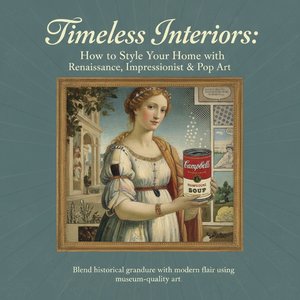
Beyond Ephemeral Trends: Cultivating Enduring Interior Aesthetics Through Renaissance Reverie, Impressionist Light, and Pop Art Vibrancy
Discover enduring interior aesthetics inspired by Renaissance artistry, Impressionist light & Pop Art vibrancy. Expert guidance for creating timeless, luxury homes. Explore art curation & design principles.
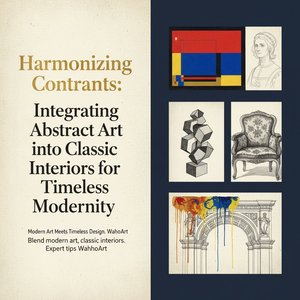
Harmonizing Contrasts: Integrating Abstract Art into Classic Interiors for Timeless Modernity
Elevate your classic home with abstract art! Discover expert tips for seamlessly blending modern pieces into timeless interiors. Find the perfect artwork & design advice at OriginalUniqueArt.
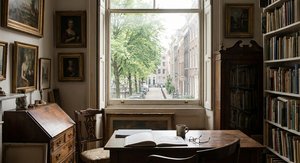
The Interior Gaze: Exploring Representations of Domestic Space in Art History
Explore the fascinating history of domestic interiors in art! From Dutch Masters to Impressionism, discover how artists captured home life & social meaning. Expert analysis and insights at OriginalUniqueArt.
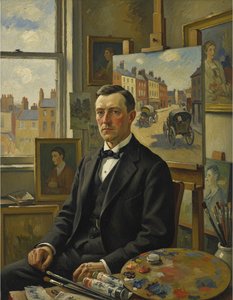
Robert Bevan: Pioneering British Post-Impressionism & the Camden Town Group's Intimate Vision
Explore the life & work of Robert Bevan, a pioneer of British Post-Impressionism and founding member of the Camden Town Group. Discover his vibrant landscapes and lasting impact on early 20th-century art.
Harmonizing History & Hue: A Guide to Matching Art Styles with Interior Architecture for Balanced Décor
Elevate your interior design with our expert guide to harmonizing art styles & architecture. Discover timeless pieces, color palettes, & custom artwork solutions for balanced, luxury spaces. Expert advice included!