 切换至版画销售渠道
 展开全文
展开全文







































 对于任何边长超过 105 厘米(约 41 英寸)的艺术品或复制品,画框将以拆解后的组件形式发货。此方法可确保安全送达并防止运输过程中的损坏。


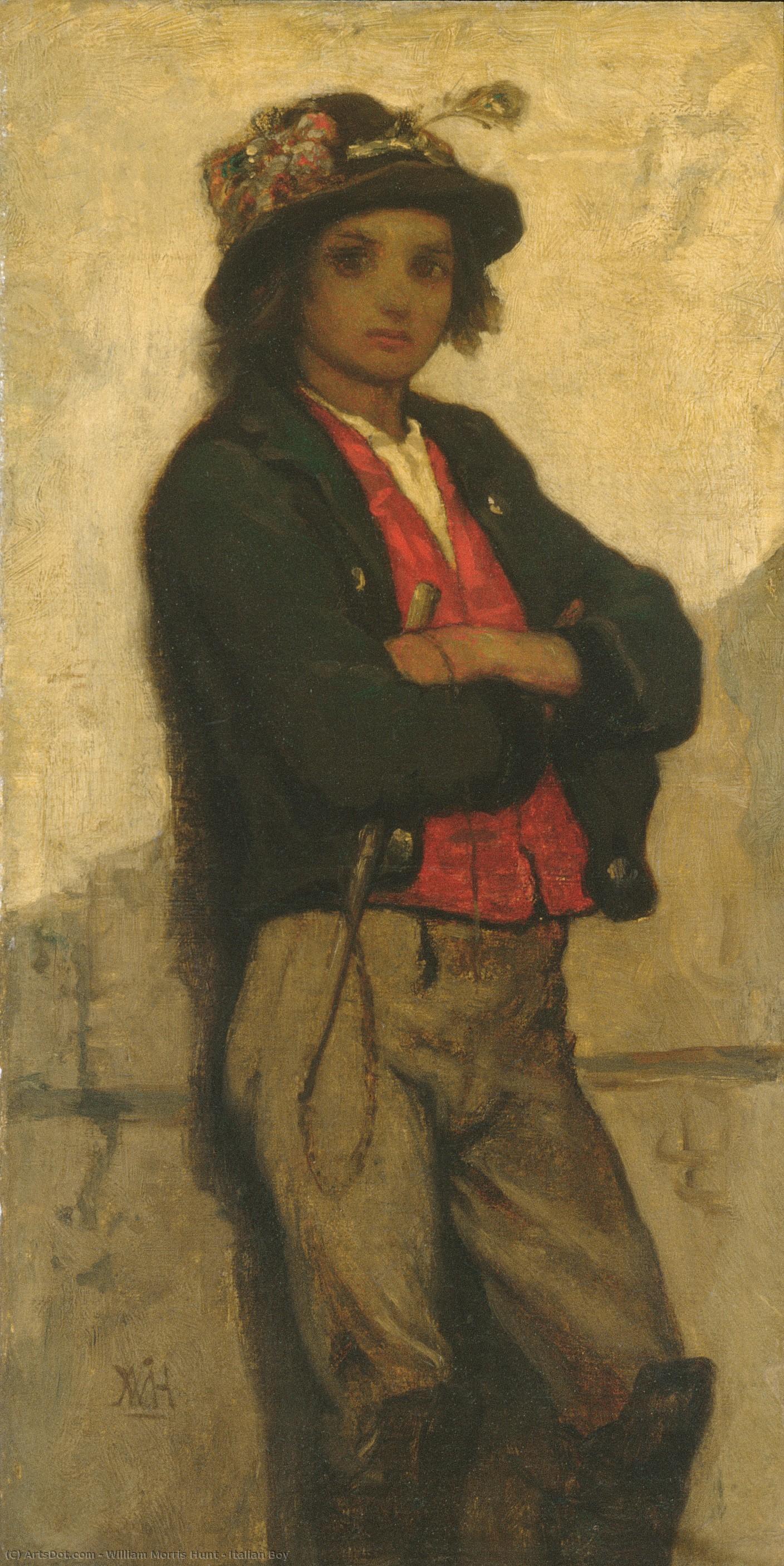
A Window into Victorian Sensibility: William Morris Hunt’s “Italian Boy”
William Morris Hunt’s “Italian Boy,” completed in 1866, transcends mere portraiture; it embodies the spirit of the Barbizon School and captures a moment of contemplative beauty within the burgeoning American art scene. Painted during a period marked by fascination with European artistic traditions – particularly Millet’s landscapes – Hunt sought to infuse his work with a palpable sense of atmosphere and psychological depth.
- Subject Matter: The painting depicts a young man, dressed in a striking scarlet jacket adorned with white buttons, posed confidently before a stone wall. This deliberate positioning suggests an awareness of artistic convention, echoing the compositional strategies favored by Barbizon painters who prioritized capturing natural light and texture.
- Style & Technique: Hunt’s masterful brushwork exemplifies the Barbizon aesthetic—characterized by loose, expressive strokes that prioritize tonal variation over meticulous detail. The artist skillfully renders the stone wall with subtle shading, creating a grounding element against which the youthful figure is presented. Notice how light dances across his skin and clothing, conveying an impression of warmth and serenity.
- Historical Context: Produced in Boston during Hunt’s formative years as an artist, “Italian Boy” reflects the broader cultural currents of Victorian America. The fascination with classical ideals and the desire for artistic refinement were prevalent at the time, influencing artists like Hunt to emulate European masters and explore themes of moral virtue and spiritual contemplation.
- Symbolism & Emotion: Beyond its formal qualities, the painting speaks volumes about human character. The young man’s gaze directs outwards, hinting at an inner life brimming with curiosity and introspection. The subdued palette—dominated by earthy tones—contributes to a mood of quiet dignity and understated grace.
Influence of Millet & European Landscape Painting
Hunt's artistic vision was profoundly shaped by Jean-François Millet, whose depictions of rural life resonated deeply with American artists striving for authenticity. Like Millet, Hunt sought to portray the human figure within its natural surroundings, prioritizing observation and tonal harmony over idealized representation. This commitment to capturing the essence of nature aligns perfectly with the Barbizon School’s core principles.
The Metropolitan Museum of Art's Acquisition
“Italian Boy” holds a prominent place in The Metropolitan Museum of Art’s collection, demonstrating its enduring appeal and scholarly significance. Its inclusion underscores the museum’s dedication to preserving and disseminating American art history—a testament to Hunt’s contribution to shaping the artistic landscape of his time.
A Legacy of Luminosity & Detail
William Morris Hunt's “Italian Boy” remains a captivating exemplar of Barbizon painting, showcasing his remarkable ability to convey emotion and atmosphere through masterful technique. Its luminous brushstrokes and subtle tonal gradations continue to inspire artists and collectors alike—a timeless portrait that embodies the quiet elegance and contemplative spirit of Victorian America.
常见问题与解答
哪家博物馆收藏了《Italian Boy》的原作?
威廉·莫里斯·亨特 的《Italian Boy》 目前正在 大都会艺术博物馆, New York City, United States of America 展出。此处列出的博物馆指代原作,而非复制品。
威廉·莫里斯·亨特 的《Italian Boy》 建议用于何种场景?
威廉·莫里斯·亨特 的《Italian Boy》 的建议用途为 Accent,同时也适用于其他场景。
针对我的房间,"Italian Boy" 应该打印成什么尺寸?
在Living Room中,建议将"Italian Boy"打印为Medium的大小。
 实景预览
实景预览
 分享
分享 分享
分享
 详情
详情 指南
指南

 下载作品
下载作品
 相似作品
相似作品 X射线
X射线 幻灯片播放
幻灯片播放 问答
问答 统计数据
统计数据





