切换至版画销售渠道
 展开全文
展开全文







































 对于任何边长超过 105 厘米(约 41 英寸)的艺术品或复制品,画框将以拆解后的组件形式发货。此方法可确保安全送达并防止运输过程中的损坏。


A Final Tableau of Moral Decay
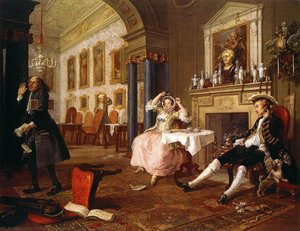
In the somber conclusion to William Hogarth’s monumental six-part narrative, A Harlot's Progress, plate 6 emerges as a chillingly visceral study in societal neglect and the tragic end of a life consumed by vice. This final installment of the 1732 series presents us with the grim reality of Moll Flaunders’ demise, moving beyond mere storytelling to offer a searing indictment of 1-8th century London life. The scene is set within a dimly lit, crowded interior that serves as a makeshift wake, where the boundaries between mourning and merriment are disturbingly blurred. As we gaze upon this tableau, we witness not just a funeral procession, but a profound moment of social critique, where the weight of a life lost to syphilis and poverty is met with a chillingly indifferent or even celebratory gathering of acquaintances.
The composition is masterfully dense, utilizing a crowded arrangement of figures that creates an almost claustrophobic atmosphere of chaos. A large, central table dominates the space, cluttered with the remnants of drink and food, around which individuals are positioned in various states of eating, drinking, and socializing. This juxtaposition—the presence of a coffin amidst the revelry of a tavern-like setting—is where Hogarth’s genius truly shines. Through this deliberate contrast, he highlights the hypocrisy of a society that continues its hedonistic pursuits even in the shadow of death, suggesting that the decay of the individual is inextricably linked to the moral rot of the collective.
The Mastery of Line and Monochrome
Technically, this artwork is a triumph of 18th-century printmaking, showcasing Hogarth’s unparalleled skill in etching and engraving on copper. Because the work is entirely monochromatic, it relies heavily on the sophisticated use of light and shadow to convey depth and emotion. The artist employs intricate linework, characterized by dense hatching and cross-hatching, to sculpt the forms of the figures and imbue the scene with a remarkable sense of texture. One can almost feel the heavy drape of coarse fabrics, the rough grain of wooden surfaces, and the weathered skin of the mourners through the precise control of these tonal variations.
The lighting within the piece is diffused and uneven, suggesting an interior space illuminated by flickering candles or oil lamps. This creates stark highlights and deep, swallowing shadows that add to the dramatic, theatrical intensity of the Rococo tradition. These shadows do more than just provide volume; they shroud the scene in a sense of mystery and gloom, reinforcing the theme of a life extinguished. For the collector or interior designer, this print offers a profound visual depth; its monochromatic palette allows it to serve as a sophisticated focal point that brings a sense of historical gravity and intellectual intrigue to any curated space.
A Legacy of Satire and Social Truth
Beyond its technical brilliance, A Harlot's Progress, plate 6 carries an immense emotional and symbolic weight. It is a work that demands reflection on the consequences of choice and the systemic failures of a society that allows such tragedies to unfold. The symbols scattered throughout the scene—the empty vessels, the disarrayed food, and the indifferent faces—all contribute to a narrative of loss and abandonment. Hogarth does not merely depict a death; he captures the echoes of a life lived on the fringes of respectability.
For those drawn to art that tells a story, this plate offers an unparalleled opportunity to own a piece of English art history. It is a work of profound narrative power, blending the meticulous observation of the Enlightenment with a biting, satirical edge that remains as relevant today as it was in 1732. To display such a reproduction is to invite a conversation about morality, history, and the enduring human condition into one's home.
常见问题与解答
如何描述 威廉·霍加斯特 的《A Harlot's Progress, plate 6》 的配色方案?
威廉·霍加斯特 的《A Harlot's Progress, plate 6》 采用了 Neutrals 色调,这一色调概括了作品整体的色彩特征。
在哪里可以找到关于“A Harlot's Progress, plate 6”的指南?
"A Harlot's Progress, plate 6" 的指南请参阅作品的 指南 页面 —— 这是一份可打印的信息单,包含了该作品的说明、署名以及详细信息表(艺术家、日期、媒介、原尺寸、馆藏)。
威廉·霍加斯特 的《A Harlot's Progress, plate 6》 的色彩特征是什么?
威廉·霍加斯特 的《A Harlot's Progress, plate 6》 的色彩特征:Neutrals 色调,以 Rosy Brown (#aeaeae) 为主导。
 实景预览
实景预览
 分享
分享 分享
分享
 详情
详情 指南
指南

 下载作品
下载作品
 相似作品
相似作品 X射线
X射线 幻灯片播放
幻灯片播放 问答
问答 统计数据
统计数据