
 实景预览
实景预览
 发送
发送 分享
分享
 详情
详情 指南
指南

 下载图片
下载图片
 相似作品
相似作品 X射线
X射线 幻灯片播放
幻灯片播放 统计数据
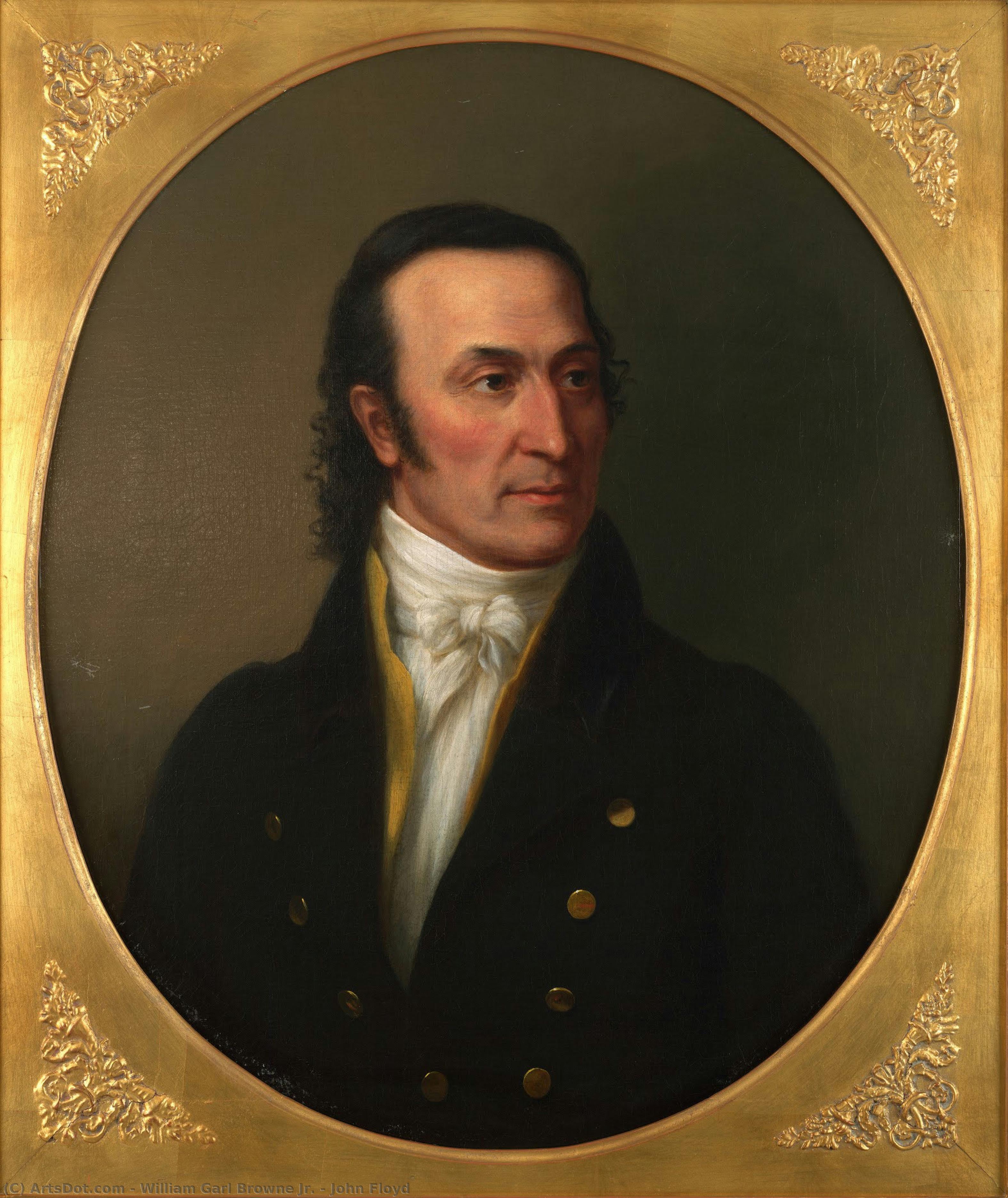
统计数据John Floyd


 阅读全文
阅读全文
艺术微喷/版画
博物馆级艺术微喷或帆布版画,制作高效,并提供多种饰面选择。 ( 订购此收藏品的纯手工复刻画作 切换至数字图像销售渠道)




































您可以从与原作比例一致的预设尺寸中进行选择。

请输入您所需的宽度和高度,以适配您的画框或墙面。由于印刷品只能进行裁剪,无法超出原图尺寸,因此若比例不一致,画面的一部分将会被裁切。在正式印刷之前,我们会为您发送一份数字效果图供您确认。本页面显示的图片并非最终裁剪后的效果——只有效果图才能展示真实的裁剪情况。


 玻璃选项仅适用于110厘米以下的尺寸。

John Floyd
艺术微喷/版画
复刻品尺寸说明
-


总计金额
¥ 537
艺术家简介
A Legacy of Likeness: The Life and Art of William Garl Browne Jr.
In the grand tapestry of nineteenth-century portraiture, few threads are as intricately woven into the fabric of American history as those left by William Garl Browne Jr. Born in Leicester, England, in October 1823, Browne was a man whose artistic destiny was inextricably linked to the shifting landscapes of both continents. He did not merely paint faces; he captured the very essence of an era defined by expansion, conflict, and the burgeoning identity of the American South. His journey from the traditional artistic circles of the United Kingdom to the battlefields and parlors of the United States allowed him to develop a style that was as much about psychological depth as it was about technical precision.
The foundations of his mastery were laid under the watchful eye of his father, William G. Browne Sr., an accomplished landscape and genre painter. This early immersion in the meticulous traditions of English art instilled in the younger Browne a profound reverence for detail and a luminous approach to color. As he traveled with his father to the United States, the young artist began to absorb the rugged vitality of the New World. His early exhibitions, including a notable appearance at the National Academy in 1840, hinted at a burgeoning talent that would soon transcend mere imitation, moving toward a realism that could convey the weight of command and the quiet dignity of civilian life.
The Crucible of Fame: From Mexico to the American South
The defining moment of Browne’s career arrived amidst the smoke and fervor of the Mexican-American War. In 1847, at the remarkably young age of twenty-four, Browne undertook a commission that would cement his place in the annals of historical art. Stationed at the U.S. Army headquarters in Mexico, he painted a series of portraits featuring General Zachary Taylor and his staff. These works were far more than mere military records; they were vibrant, breathing documents of leadership. When these portraits were exhibited in Washington, New York, and Baltimore, they ignited a national sensation. Critics were captivated by the lifelikeness of the subjects, noting how Browne managed to capture the moral fortitude and commanding presence of Taylor—a man who embodied the republican virtues of the age.
Following this meteoric rise to fame, Browne made a deliberate choice that would shape his entire oeuvre: he turned his gaze toward the American South. While his contemporaries might have sought the established art markets of the North, Browne found inspiration in the complex social hierarchies and storied landscapes of the Southern states. His itinerant career took him through North Carolina, Virginia, and beyond, where he became a prolific chronicler of the region's most influential figures. It is estimated that during his time in North Carolina alone, he produced over a thousand portraits, creating a vast, though often fragmented, visual record of Southern society.
Artistic Mastery and Historical Significance
The technique of William Garl Browne Jr. was characterized by a sophisticated use of light and a palette that felt both rich and naturalistic. Drawing inspiration from the meticulousness of artists like John Smart, he possessed an uncanny ability to render textures—the heavy wool of a military uniform, the delicate lace of a lady's gown, or the weathered skin of a veteran. His work often bridged the gap between formal portraiture and narrative storytelling, imbuing his subjects with a sense of their own personal histories.
Beyond the aesthetic beauty of his canvases, Browne’s historical significance lies in his role as a visual biographer of a vanishing world. His portraits of political leaders, such as Rutherford B. Hayes and John Buchanan Floyd, serve as windows into the character of the nineteenth-century leadership. Through his brush, we see the faces of those who navigated the turbulent waters of American politics and war. Though much of his work remains scattered due to his wandering life, the surviving pieces stand as a testament to a painter who possessed the rare gift of capturing not just the likeness of a person, but the very spirit of an age.

William Garl Browne Jr.
1823 - 1894 , United Kingdom
快速概览
- Full Name: William Garl Browne Jr.
- Nationality: British
- Date Of Birth: 1823
- Date Of Death: 1894
- Place Of Birth: Leicester, United Kingdom
- Notable Artworks:
- Zachary Taylor Portraits
- Rutherford B. Hayes Art
- Artistic Movement Or Style: Victorian Portraiture
- Artists Who Influenced This Artist:
- John Smart
- Ford Madox Brown
- Artists Or Movements Influenced By This Artist: ['Henry Lindley Fry']