

 实景预览
实景预览
 发送
发送 分享
分享
 详情
详情 指南
指南

 下载图片
下载图片
 相似作品
相似作品 X射线
X射线 幻灯片播放
幻灯片播放 统计数据
统计数据Still-Life
 Oil On Canvas
- WallArt
- Baroque
 1653
1653- Early Modern
 105.0 x 88.0 cm
 冬宫博物馆 (Hermitage Museum)
 阅读全文
阅读全文
艺术微喷/版画
博物馆级艺术微喷或帆布版画,制作高效,并提供多种饰面选择。 ( 订购此收藏品的纯手工复刻画作 切换至数字图像销售渠道)




P118B ¥10

P118H ¥10

P118W ¥10

P438Z ¥10

P508JH ¥12

P508YH ¥12

P805H ¥10

P805Z ¥10

P919BZ ¥10

P919G ¥10

P919XJ ¥10

P959ZH ¥10

P968JZ ¥12

W106C ¥8

W218G ¥10

W218JH ¥8

W218Y ¥10

W307PJ ¥10

W316G ¥10

W316PJ ¥8

W316Y ¥10

W398PJ ¥8

W4111J ¥10

W500HY ¥15

W500JH ¥15

W692G ¥12

W849H ¥8

W940BG ¥15

W953PJ ¥8




您可以从与原作比例一致的预设尺寸中进行选择。

请输入您所需的宽度和高度,以适配您的画框或墙面。由于印刷品只能进行裁剪,无法超出原图尺寸,因此若比例不一致,画面的一部分将会被裁切。在正式印刷之前,我们会为您发送一份数字效果图供您确认。本页面显示的图片并非最终裁剪后的效果——只有效果图才能展示真实的裁剪情况。


 玻璃选项仅适用于110厘米以下的尺寸。

Still-Life
艺术微喷/版画
复刻品尺寸说明
-


总计金额
¥ 538
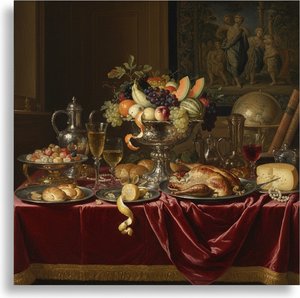
A Symphony of Light and Luxury
In the quiet, shadowed corners of the Dutch Golden Age, few masters could command the stage with as much dramatic flair as Willem Kalf. His 1653 masterpiece, Still Life with Lobster, Drinking Horn and Glasses, is not merely a painting of objects; it is a carefully orchestrated performance of light, texture, and prestige. As one gazes upon this canvas, they are immediately transported into an era of unprecedented maritime prosperity, where the spoils of global trade were celebrated through the meticulous brushstrokes of the pronkstilleven—the grand, opulent still life. The composition serves as a window into a world of sensory indulgence, where every glint of silver and every dewdrop on a peach tells a story of wealth, discovery, and the fleeting nature of earthly delights.
The artwork captures a moment of suspended animation, presenting an arrangement that feels both bountiful and profoundly intimate. A vibrant lobster, its shell a testament to Kalf’s ability to render organic complexity, rests amidst the soft, velvety skins of peaches and pears. These natural elements are juxtaposed against the hard, reflective surfaces of man-made treasures: a gleaming silver goblet, a sturdy drinking horn, and delicate glassware that catches the light with ethereal precision. This interplay between the perishable fruit and the enduring precious metals creates a tension that is central to the Baroque experience, inviting the viewer to linger on the exquisite details of each meticulously rendered form.
The Mastery of Chiaroscuro and Texture
Technically, Kalf’s work represents the pinnacle of seventeenth-century Dutch realism. He employs chiaroscuro—the dramatic use of intense light and deep shadow—to sculpt his subjects out of the darkness. This technique does more than provide depth; it breathes life into the inanimate. The way light spills across a silver vessel or pierces through a glass, casting long, evocative shadows across a richly patterned tablecloth, creates a palpable sense of three-dimensionality. For the discerning collector or interior designer, this mastery of contrast offers a profound visual weight that can anchor a room, providing a focal point that changes character as the ambient light of a space shifts throughout the day.
Beyond the play of light, Kalf’s true genius lies in his tactile virtuosity. He possesses an uncanny ability to translate the language of touch into oil on canvas. One can almost feel the cool, smooth surface of the bronze candlestick, the rougher texture of the drinking horn, and the soft, yielding flesh of the ripening fruit. This commitment to hyper-realistic detail ensures that a high-quality reproduction of this piece retains its soul, offering an immersive experience that celebrates the beauty of material existence. It is this level of craftsmanship that makes Kalf’s work eternally relevant for those seeking to infuse their environments with a sense of historical grandeur and sophisticated elegance.
Symbolism and the Soul of the Baroque
To look closely at Kalf’s arrangement is to read a silent poem about the human condition. In the seventeenth century, nothing was purely decorative; every element carried a weight of meaning. The lobster, often associated with luxury and abundance, serves as a symbol of the era's economic triumphs. Meanwhile, the drinking horn alludes to conviviality and social standing, reminding the viewer of the communal joys of the Dutch mercantile class. Yet, beneath this layer of opulence lies a subtle memento mori—a gentle reminder of mortality. The very ripeness of the fruit suggests an approaching decay, a poignant contrast to the enduring brilliance of the silver and gold.
This duality—the celebration of life’s richness alongside a contemplation of its transience—is what gives the painting its profound emotional resonance. It evokes a sense of quiet melancholy wrapped in a cloak of splendor. For those looking to decorate with art that possesses depth and narrative, Kalf’s work offers an unparalleled opportunity. A reproduction of this still life does not just adorn a wall; it invites conversation, stimulates the intellect, and brings a touch of timeless, scholarly prestige to any curated collection or thoughtfully designed interior.
问答详情
维勒姆·卡尔夫 的《Still-Life》的情感基调是什么?
维勒姆·卡尔夫 的《Still-Life》 传达出一种 Dramatic 的情感基调。
维勒姆·卡尔夫 的《Still-Life》 属于哪种艺术流派?
维勒姆·卡尔夫 的《Still-Life》 属于 Baroque 流派。该流派为这件作品提供了风格背景。
维勒姆·卡尔夫 的《Still-Life》 的创作媒介和创作日期是什么?
"Still-Life"创作于1653年,采用Oil On Canvas技法。
艺术家简介
沉浸于奢华之中:维勒姆·卡尔夫的世界
维勒姆·卡尔夫,这个名字与荷兰黄金时代那些极尽奢华的静物画密不可分。他于1619年出生在鹿特丹,出身于一个衣食无忧的家庭。他的父亲扬·扬斯·卡尔夫曾在市政政府担任职务,为年轻的维勒姆提供了既有安全感又接触到蓬勃发展的商业世界的成长环境,而后者深刻地影响了他的艺术创作。尽管关于卡尔夫早期训练的细节仍有些模糊,但人们知道他在1630年代于巴黎经历了一段艺术发展时期,沉浸在圣日耳曼德佩斯充满活力的佛兰芒艺术家群体中。这段塑造性的经历最初引导他关注小型乡村室内和静物——这些看似朴素的开端,最终却绽放成了如今令他声名远扬的宏大“富丽画”(pronkstilleven)。直到1638年双亲离世,促使他返回荷兰,为他成熟的艺术时期奠定了基础。从平凡的起点到精湛的展示
卡尔夫早期的巴黎作品展现了一位正在寻找自身立足点的艺术家。这些画作常常描绘简单的陈设——蔬菜、水桶和锅等日常厨房用具——背景则是昏暗的光线,人物形象只是暗示而非完全呈现。这种风格呼应了17世纪早期佛兰德斯流行的绘画传统,尤其让人联想到像大卫·特尼尔年青人这样的艺术家。然而,卡尔夫的抱负很快超越了这些朴素的构图。当他返回荷兰后,他开始了一场非凡的演变,朝着最终成为其标志性风格的方向发展:即“富丽画”,或称“炫耀性的静物”。这些作品不仅仅是物品的描绘;它们是精心构建的财富与精致的展示,展出着银器、精美瓷器、异国水果和闪烁玻璃器皿等奢华物件。幻觉的艺术与象征的共鸣
真正使卡尔夫的富丽画脱颖而出的是他对光线和质感的无与伦比的掌握。他拥有令人惊叹的天赋,能够以栩栩如生的写实主义描绘出银器的反光、玻璃的半透明感以及水果天鹅绒般的表面质地。他的构图绝非随意的堆砌;它们是经过精心策划的编排,旨在捕捉光影的相互作用,营造出深邃和戏剧性的氛围。虽然画作的基本结构——物品的排列——保持了相对的一致性,但每一件作品都证明了卡尔夫在变化质感和捕捉微妙光线效果方面的精湛技艺。然而,超越纯粹的技术辉煌之外,还存在着一种微妙的象征维度。他描绘的奢华物件不仅仅是美丽的;它们暗示着关于无常、财富以及世间享乐转瞬即逝的主题——这让人联想到荷兰绘画中盛行的“虚空画”(vanitas)传统。遗产与影响
维勒姆·卡尔夫的影响力远远超出了他自身丰硕的创作量。他的半色调静物画对法国艺术产生了显著的影响,尤其是在钦佩其光影运用技巧的莱奈兄弟圈子中。尽管个别作品可能不如一些同时代人的作品那样广为人知,但卡尔夫对这一题材的贡献是毋庸置疑的。他帮助定义了富丽画的范式,捕捉到了17世纪荷兰社会的精神面貌——那是一个经济空前繁荣、渴望展示财富与精致的新兴商人阶层蓬勃发展的时代。如今,他的画作点缀在全球著名的博物馆馆藏中,包括鹿特丹的博伊曼斯·范·伯宁根博物馆、华盛顿特区的国家美术馆以及盖蒂中心,确保着他作为荷兰静物大师的传奇精神持续激发着人们的敬畏与赞叹。他对细节的一丝不苟和对光线的精妙运用,至今仍是艺术卓越性的标志。进一步探索

维勒姆·卡尔夫
1619 - 1693 , 荷兰
快速概览
- Artistic Movement Or Style: 荷兰黄金时代,静物画
- Artists Or Movements Influenced By This Artist:
- 法国艺术
- 奈恩兄弟
- Artists Who Influenced This Artist:
- 西蒙·卢蒂休斯
- 彼得·克拉斯茨
- 维勒姆·克莱松·赫达
- Date Of Birth: 1619年
- Date Of Death: 1693年
- Full Name: 威廉·卡尔夫
- Nationality: 荷兰
- Notable Artworks:
- 带鹦鹉螺杯的静物
- 古井
- 银壶与瓷碗
- Place Of Birth: 荷兰,鹿特丹
相关文章

Golden Light & Dutch Skies: The Timeless Magic of Dutch Golden Age Landscapes
Discover the breathtaking beauty of Dutch Golden Age landscapes. Explore the mastery of light, chiaroscuro, and 17th-century realism through an expert art history lens, celebrating the enduring legacy of the Dutch Masters for discerning collectors and art lovers.
Abraham Hendricksz van Beyeren: Pioneering Dutch Still Life & the Banquet Tradition
Explore the captivating world of Dutch Golden Age still life with Abraham van Beyeren. Discover his innovative techniques, symbolic banquet scenes & lasting influence on art history. Learn about collecting these masterpieces.

光影交织的时代:荷兰黄金时代绘画艺术的兴盛与创新
深入探索荷兰黄金时代的绘画艺术:伦勃朗、维米尔等大师的技法与创新,了解巴洛克风格的独特演绎。OriginalUniqueArt提供手绘油画复制、艺术咨询及收藏建议,助您领略经典艺术之美。

荷兰黄金时代:十幅定义艺术史的巨作 | OriginalUniqueArt
探索荷兰黄金时代的艺术巅峰! 伦勃朗、维米尔等大师名作,带您领略巴洛克艺术的辉煌。高清画作、博物馆级品质,点亮您的家居空间。OriginalUniqueArt.com 提供精选艺术复制品和定制装饰方案。立即在线探索全系列!

荷兰黄金时代绘画:文化创新中的现实主义反思
深入探索荷兰黄金时代绘画的文化创新与现实主义反思。本文解读伦勃朗、维米尔等大师的作品,并结合玛莉特·韦斯特曼的图像学研究,揭示艺术史背后的社会语境与现代性意识觉醒。
