切换至版画销售渠道
 展开全文
展开全文







































 对于任何边长超过 105 厘米(约 41 英寸)的艺术品或复制品,画框将以拆解后的组件形式发货。此方法可确保安全送达并防止运输过程中的损坏。


Still Life (1945): A Testament to Emotion and Form
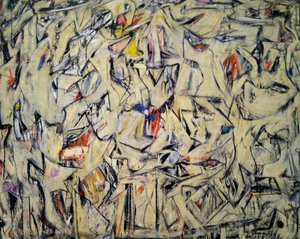
Willem de Kooning’s “Still Life” stands as an emblem of abstract expressionism, encapsulating the movement's core tenets—a rejection of representational art in favor of spontaneous gesture and emotional resonance. Painted in 1945, amidst the turbulent aftermath of World War II, this artwork transcends mere depiction; it embodies a profound exploration of psychological states and formal experimentation.
- Subject Matter: The composition centers around a woman’s nude torso bathed in a warm pink hue—a deliberate departure from traditional still life subjects. Alongside her is another figure, partially obscured, adding to the painting's enigmatic quality.
- Style and Technique: De Kooning employed a bold, energetic brushstroke technique characterized by thick impasto—heavy application of paint—creating palpable textural surfaces. The palette utilizes vibrant yellows, greens, and oranges, juxtaposed against the dominant pink background, generating visual dynamism.
- Historical Context: “Still Life” emerged during a pivotal moment in art history, coinciding with the ascendancy of Jackson Pollock and other pioneers of action painting. It reflects the broader anxieties and aspirations of postwar America—a desire to express inner turmoil while simultaneously asserting artistic freedom.
The painting’s symbolism is multilayered. The nude figure represents vulnerability and exposure, mirroring the psychological fragility experienced by artists grappling with existential questions during wartime. Simultaneously, the fragmented forms challenge conventional notions of perspective and spatial organization—a hallmark of de Kooning's stylistic innovation.
Influenced by Cubism and Surrealism, De Kooning fused geometric abstraction with dreamlike imagery, resulting in a distinctive visual language that captivated audiences worldwide. “Still Life” remains an enduring testament to the transformative power of art—a celebration of emotion and form intertwined within a single frame.
- Notable Influences: Cubism’s fragmentation of space provided inspiration for De Kooning's exploration of visual ambiguity, while Surrealism encouraged him to tap into subconscious impulses.
- Recognition: “Still Life” garnered critical acclaim upon its debut and cemented De Kooning’s reputation as one of the foremost artists of his era—a figure whose legacy continues to inspire contemporary creatives.
For those seeking a deeper understanding of Willem de Kooning's artistic vision, exploring Willem De Kooning on Wikipedia offers invaluable insights into his life and oeuvre.
常见问题与解答
在哪里可以找到关于“Still Life”的指南?
"Still Life" 的指南请参阅作品的 指南 页面 —— 这是一份可打印的信息单,包含了该作品的说明、署名以及详细信息表(艺术家、日期、媒介、原尺寸、馆藏)。
针对 威廉·德库宁 的《Still Life》,建议采用怎样的打印尺寸与方向?
对于“Still Life”,建议的打印设置尺寸为 大尺寸,方向为 竖幅。
威廉·德库宁 的《Still Life》 的色彩浓郁度如何?
威廉·德库宁 的《Still Life》 呈现出鲜艳夺目的色彩强度。
 实景预览
实景预览
 分享
分享 分享
分享
 详情
详情 指南
指南

 下载作品
下载作品
 相似作品
相似作品 X射线
X射线 幻灯片播放
幻灯片播放 问答
问答 统计数据
统计数据