
 效果预览
效果预览
 购买印刷品
购买印刷品 分享
分享 分享
分享
 详情
详情

 下载
下载
 相似作品
相似作品 X射线
X射线 幻灯片播放
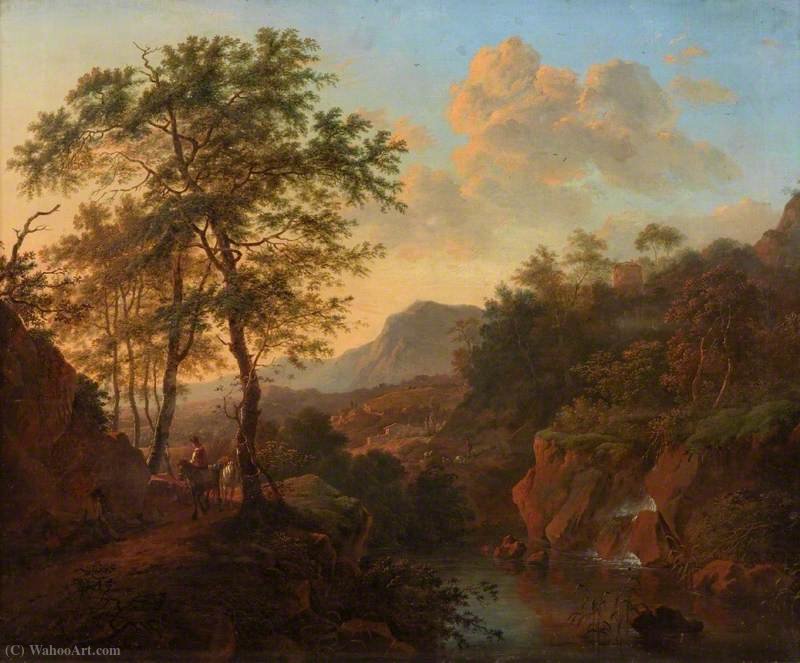
幻灯片播放River Scene with Figures

 展开详情
展开详情




































从与原作比例一致的预设尺寸中进行选择。

您可以输入自定义尺寸,以适配特定的画框或空间。如果所选尺寸与原图比例不符,我们将通过裁剪作品或添加手绘元素来扩展画面。数字样稿将在制作开始前发送给您确认。
请注意,屏幕预览无法准确反映实际的裁剪或扩展效果,只有样稿才能真实呈现最终的构图。
虽然我们提供定制尺寸服务,但为了保留原作比例,建议您从预设列表中选择尺寸。
下单后,OriginalUniqueArt.com 团队将通过电子邮件联系客户获取具体要求,并提供效果预览图。


 玻璃选项仅适用于110厘米以下的尺寸。

River Scene with Figures
复制材质
复制品尺寸
-


最终总价
$ 300
艺术家简介
A Tranquil Echo of Both and Lorraine
Willem de Heusch remains a figure shrouded in artistic mystery, yet his landscapes—particularly those imbued with the ethereal glow of twilight—hold an enduring fascination for art historians and collectors alike. Born in Utrecht, Netherlands, around 1625, scant biographical details survive, leaving scholars to reconstruct his life primarily through stylistic analysis and correspondence with fellow artists. His training is believed to have been overseen by Jan Both, a master whose distinctive style profoundly shaped de Heusch’s artistic vision—a vision that mirrored the aesthetic sensibilities of Claude Lorraine, marking him as a pivotal participant in the burgeoning Arcadian movement of the mid-17th century.
The essence of de Heusch's artistry lies in his ability to transport the viewer from the industrious streets of the Netherlands to the sun-drenched, idealized vistas of the Italian countryside. It is thought that he traveled through Italy between 1640 and 1645, a formative period that likely infused his palette with the warm, golden light characteristic of the Mediterranean. Upon his return to Utrecht by 1649, he did not merely bring back memories, but a transformed technique. He became a prominent figure in the local art scene, serving as a dean of the Utrecht guild alongside luminaries such as Cornelis Poppenburg and Jan Both. This period of stability allowed him to refine his specialty: the Italianate landscape, where wide expanses of country are punctuated by dramatic rock formations and the delicate, thin-leaved arborescence that defines the Arcadian ideal.
The Mastery of Light and Line
To gaze upon a work by de Heusch is to witness a masterful command over atmospheric perspective. His paintings are instantly recognizable for their ability to capture fleeting moments of sublime serenity, often focusing on the soft transitions of evening light. While some scholars note that his style is nearly indistinguishable from his mentor, Jan Both, particularly in the way they both utilized the influence of Claude Lorraine, de Heusch possessed a unique sensitivity to the textures of nature. His etchings, thirteen of which are known to exist, further demonstrate his skill as an engraver, echoing the same rhythmic beauty found in his oil paintings.
The technical brilliance of his work can be observed through several key elements:
- Atmospheric Depth: The use of hazy, distant horizons to create a sense of infinite space.
- Luminous Coloration: A palette designed to evoke the warmth of a setting sun, casting long, soft shadows across the landscape.
- Structural Detail: The meticulous rendering of rugged geological features and classical ruins that ground his idealized scenes in a sense of ancient history.
A Lasting Artistic Legacy
Beyond his individual technical achievements, Willem de Heusch played a vital role in the continuity of the Dutch landscape tradition. His influence was not limited to his own canvases but extended through familial and professional lineages. His nephew, Jacob de Heusch, became a notable painter in his own right, inheriting his uncle's talent and stylistic devotion to the Italianate manner. This connection underscores how the aesthetic values of the Utrecht school were preserved and passed down through generations, maintaining a standard of excellence that resonated across Europe.
Though he passed away in Utrecht in 1692, de Heusch’s contribution to the history of art remains profound. His works continue to reside in some of the world's most prestigious institutions, including the Louvre in Paris, the Städel in Frankfurt, and the Belvedere in Vienna. Through these enduring masterpieces, he continues to invite viewers into a world of quiet majesty, where the light of a long-lost Italian afternoon never truly fades.

Willem de Heusch
1625 - 1692 , Netherlands
艺术家简介
- Artistic Movement Or Style: Italianate landscapes; Arcadian art
- Artists Or Movements Influenced By This Artist: ['Jan Both']
- Artists Who Influenced This Artist:
- Jan Both
- Claude Lorraine
- Date Of Birth: c. 1625
- Date Of Death: 9 march 1692
- Full Name: Willem de Heusch
- Nationality: Dutch
- Notable Artworks:
- River Scene with Figures
- Two Shepherds And An Avenue
- Hilly Landscape with Figures
- Place Of Birth: Utrecht, Netherlands
相关文章

Demandes Commerciales
APS ofrece reproducciones de bellas artes y encargos personalizados desde 2004. Confían en nosotros corporaciones, hoteles y coleccionistas selectos para obras de arte de calidad museística, servicio discreto y soluciones artísticas completas. ¡Póngase en contacto con nosotros para obtener un presupuesto personalizado!

浪漫主义画派的十部巨作:定义风景画的艺术传奇
探索浪漫主义风景画的巅峰!本文精选十部经典名作,带您领略莫奈、库尔贝等大师的艺术魅力。感受色彩与光影的诗意,重温自然风光的震撼。OriginalUniqueArt.com为您提供博物馆级别的艺术复制品和个性化家居装饰方案。尽在OriginalUniqueArt.com!

戈雅大师25幅杰作:西班牙灵魂的艺术之旅| OriginalUniqueArt
探索戈雅大师的25幅杰作!深入了解西班牙绘画巨匠Francisco Goya的艺术世界,从洛可可到浪漫主义风格,感受黑加仑时代的情感力量。OriginalUniqueArt.com提供高品质油画复制品和家居装饰灵感。立即在线发现所有名画!

Masterpieces of Light: A Definitive Guide to the Landscapes of the Dutch Golden Age
Discover the luminous mastery of Dutch Golden Age landscapes. Our expert guide explores the atmospheric realism of masters like Van Goyen and Cuyp. Elevate your space with museum-quality, hand-painted oil reproductions from OriginalUniqueArt.com. Art history, beautifully realized.

Willem van de Velde the Elder: Master of Maritime Painting & Chronicler of the Dutch Golden Age
Discover the captivating maritime paintings of Willem van de Velde the Elder, a master chronicler of the Dutch Golden Age. Explore his unparalleled realism and lasting influence on naval art history.

