
 实景预览
实景预览
 发送
发送 分享
分享
 详情
详情 指南
指南

 下载图片
下载图片
 相似作品
相似作品 X射线
X射线 幻灯片播放
幻灯片播放 统计数据
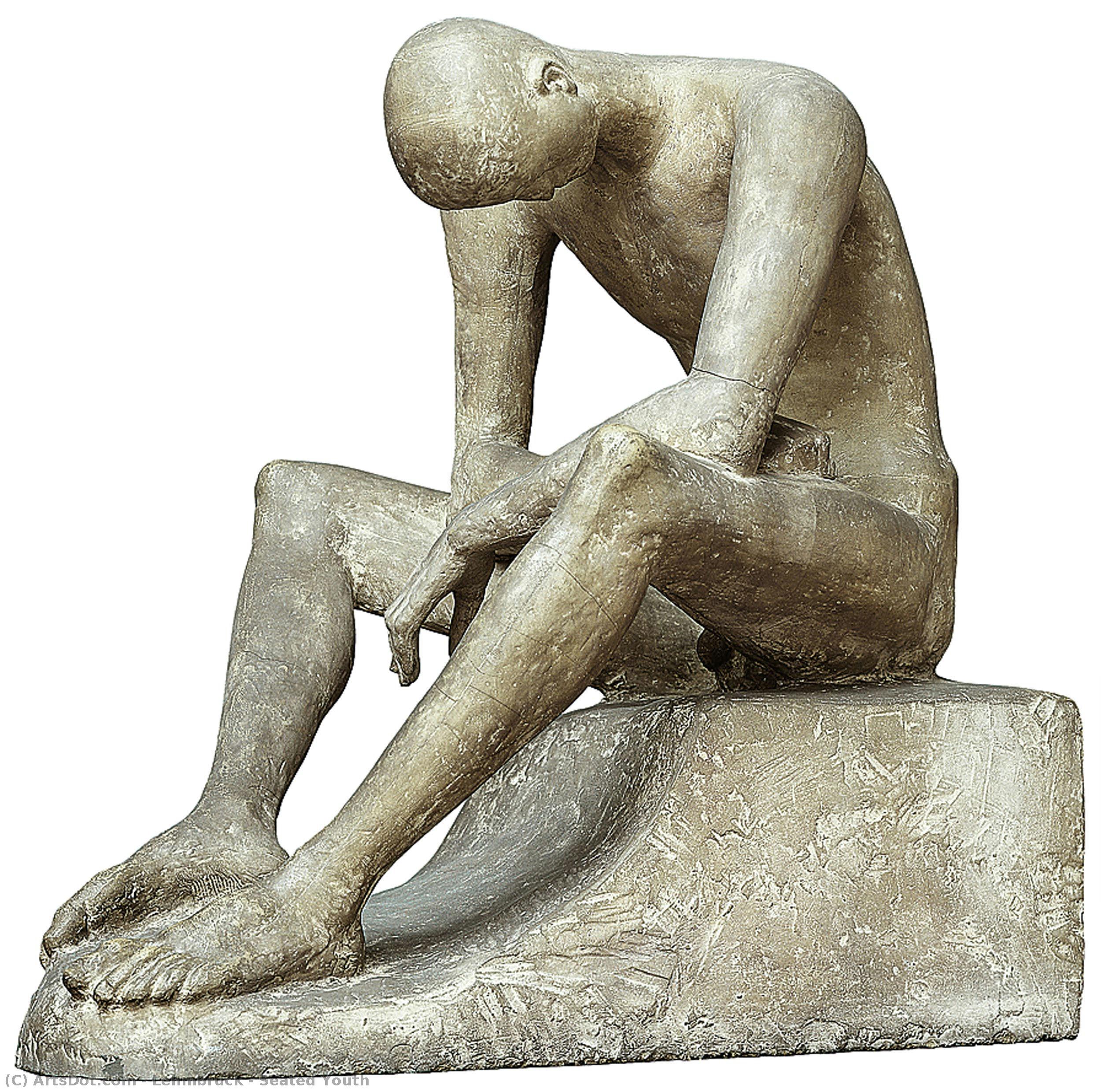
统计数据Seated Youth
 Expressionism
 1917
1917 50.0 x 104.0 cm
 施泰德美术馆
 阅读全文
阅读全文
手工油画复制品
由我们的艺术家按需定制,为您提供您所选尺寸及画框的布面手工油画。 ( 切换至版画销售渠道 切换至数字图像销售渠道)




P118B $10

P118H $10

P118W $10

P438Z $10

P508JH $12

P508YH $12

P805H $10

P805Z $10

P919BZ $10

P919G $10

P919XJ $10

P959ZH $10

P968JZ $12

W106C $8

W218G $10

W218JH $8

W218Y $10

W307PJ $10

W316G $10

W316PJ $8

W316Y $10

W398PJ $8

W4111J $10

W500HY $15

W500JH $15

W692G $12

W849H $8

W940BG $15

W953PJ $8




您可以从与原作比例一致的预设尺寸中进行选择。

您可以输入自定义尺寸,以适配特定的画框或空间。如果所选尺寸与原图比例不符,我们将通过裁剪作品或添加手绘元素来扩展画面。数字样稿将在制作开始前发送给您确认。
请注意,屏幕预览无法准确反映实际的裁剪或扩展效果,只有样稿才能真实呈现最终的构图。
虽然我们提供定制尺寸服务,但为了保留原作比例,建议您从预设列表中选择尺寸。
下单后,OriginalUniqueArt.com 团队将通过电子邮件联系客户获取具体要求,并提供效果预览图


 玻璃选项仅适用于110厘米以下的尺寸。

Seated Youth
复制品材质
复刻品尺寸说明
-


总计金额
$ 300
A Silent Echo of Grief: Wilhelm Lehmbruck’s “Seated Youth”
Wilhelm Lehmbruck's "Seated Youth," crafted in 1917, isn’t merely a sculpture; it’s a profound meditation on loss, isolation, and the quiet anguish of the modern soul. Born amidst the tumultuous backdrop of pre-war Europe, Lehmbruck, a figure deeply connected to the burgeoning Expressionist movement, channeled his own anxieties and observations into this remarkably poignant work. The piece immediately draws the viewer in with its strikingly elongated form – a young man rendered almost skeletal, slumped forward as if burdened by an unseen weight. This isn’t a heroic posture of strength or defiance; instead, it speaks to vulnerability, introspection, and a deep-seated melancholy that resonates powerfully even today. The sculpture's genesis is inextricably linked to the artist’s own struggles with depression and his experiences during World War I, a period marked by immense suffering and societal upheaval. This personal context imbues “Seated Youth” with an undeniable emotional intensity, transforming it from a simple representation of a figure into a potent symbol of human fragility.The Language of Distortion: Technique and Material
Lehmbruck’s mastery lies in his ability to convey complex emotions through the deliberate manipulation of form. Crafted primarily from composite tinted plaster – a material that lends itself beautifully to capturing subtle tonal variations – the sculpture is characterized by flowing, curvilinear lines that seem to defy rigid geometry. These aren't precise or idealized forms; rather, they are deliberately distorted and elongated, mirroring the artist’s own perception of reality as filtered through the lens of emotional distress. The surface texture is intentionally rough and uneven, a testament to Lehmbruck’s hand-worked technique – a deliberate rejection of polished perfection in favor of an honest, tactile representation. The use of negative space within the figure's elongated limbs further emphasizes this sense of isolation and vulnerability, creating a visual echo of the internal turmoil he sought to capture. The choice of plaster itself is significant; it allows for a remarkable degree of detail while maintaining a lightness that contributes to the sculpture’s ethereal quality.A Symbol of Modern Disquiet: Historical Context
“Seated Youth” emerged during a period of profound social and psychological change in Europe. The late 19th and early 20th centuries witnessed rapid industrialization, urbanization, and increasing anxieties about modernity – themes that profoundly influenced the Expressionist movement. Artists like Lehmbruck sought to break away from traditional academic conventions and explore subjective experience, capturing the emotional realities of their time. The sculpture’s somber mood reflects a growing sense of alienation and disillusionment in the face of these rapid changes. It's often interpreted as a response to the looming threat of war, a premonition of the devastation that would soon engulf Europe. The figure’s bowed head and downward gaze suggest a profound sadness, perhaps even despair, mirroring the collective anxieties of an era on the brink of conflict.The Weight of Silence: Emotional Impact
Ultimately, “Seated Youth” transcends its historical context to speak to universal human experiences – grief, loneliness, and the struggle to find meaning in a world often characterized by uncertainty. The sculpture’s power lies not in dramatic gestures or overt displays of emotion, but rather in its quiet intensity and subtle nuances. It invites viewers to contemplate their own feelings of isolation and vulnerability, prompting a deeper understanding of the human condition. The figure's stillness is profoundly moving; it suggests a silent plea for connection, a yearning for solace amidst the darkness. “Seated Youth” remains a remarkably resonant work, continuing to evoke empathy and introspection long after its creation – a testament to Lehmbruck’s extraordinary ability to capture the complexities of human emotion through the language of sculpture.艺术家简介
The Sculptor of Melancholy and Modern Expression
Wilhelm Lehmbruck (1881-1919) stands as a pivotal figure in German sculpture, embodying the spirit of Expressionism while retaining an undeniable connection to Naturalistic principles. Born in Duisburg, Germany—the fourth child of a miner—his formative years instilled within him a profound awareness of human suffering and resilience, themes that would permeate his artistic output throughout his tragically short life. Lehmbruck’s journey into art began with studies at the School of Applied Arts in Düsseldorf, fueled by a generous municipal stipend, allowing him to pursue his passion for sculpture alongside broader artistic explorations.
His early career saw him establishing himself as an illustrator for scientific publications, honing his observational skills and developing a meticulous attention to detail—qualities that would prove invaluable later in his sculptural endeavors. Formal training at the Düsseldorf Art Academy solidified his grounding in academic tradition, yet he quickly embraced the burgeoning avant-garde movement of Expressionism. Profoundly influenced by the emotive power of Auguste Rodin’s sculptures, Lehmbruck embarked on extensive travels across Europe—visiting England, Italy, the Netherlands, and Paris—seeking inspiration from diverse artistic landscapes. These expeditions broadened his perspective and fostered a deep appreciation for both classical aesthetics and contemporary psychological depth.
A Language of Elongated Emotion
Lehmbruck’s artistic trajectory gained momentum with exhibitions at the Deutsche Kunstausstellung in Cologne in 1906, marking his debut on the German art scene. As his style matured, he moved away from the heavy, muscular forms of traditional sculpture toward a unique aesthetic characterized by elongated, slender figures. This stylistic choice was not merely decorative; it served to amplify the emotional vulnerability and psychological weight of his subjects. His work often captures a sense of profound introspection and melancholy, as if the very bronze or stone is breathing with the weight of human existence.
The mastery of his technique allowed him to bridge the gap between Realism and Expressionism. While his figures remained rooted in a recognizable human anatomy, their proportions were stretched to convey spiritual and emotional states. This tension between the physical form and the intangible soul became his hallmark. His sculptures do not merely occupy space; they inhabit an emotional atmosphere, inviting the viewer to contemplate the fragility of life and the quiet dignity found within suffering.
Legacy and Historical Significance
Despite a life cut short by tragedy, Lehmbruck’s impact on modern sculpture remains monumental. He succeeded in creating a new vocabulary for the human figure that moved beyond the heroic or the purely decorative, focusing instead on the internal landscape of the individual. His ability to translate complex psychological states into tangible form ensured his place among the masters of early 20th-century art.
The enduring power of his work can be seen in several key themes and achievements:
- Innovation of Form: The introduction of elongated, attenuated limbs to represent spiritual yearning.
- Emotional Depth: A unique ability to capture the essence of human vulnerability and existential solitude.
- Artistic Synthesis: The seamless blending of Rodin's expressive influence with a distinctly German Expressionist sensibility.
- Enduring Influence: His role in transitioning sculpture from the academic traditions of the 19th century into the psychological complexities of the modern era.
Today, Lehmbruck is remembered not just as a sculptor of figures, but as a poet of form, whose works like the Fallen Man and Standing Woman continue to resonate with anyone who has felt the profound weight of the human condition.

wilhelm lehmbruck
1881 - 1919
快速概览
- Artistic Movement Or Style: Expressionism
- Artists Or Movements Influenced By This Artist: ['Ludwig Mies van der Rohe']
- Artists Who Influenced This Artist: ['Auguste Rodin']
- Date Of Birth: January 4, 1881
- Date Of Death: March 25, 1919
- Full Name: Wilhelm Lehmbruck
- Nationality: German
- Notable Artworks:
- Seated Youth
- Head of the Large Pensive
- Place Of Birth: Meiderich (Germany)
相关文章

The Enduring Legacy of Bronze: A Historical & Artistic Exploration for the Collector
Explore the rich history & enduring appeal of bronze sculpture with expert insights for collectors at OriginalUniqueArt. Learn about casting techniques, iconic artists, collecting tips & contemporary interpretations.

Bronze Sculptures That Defined Art History | OriginalUniqueArt
Journey through art history with our Top 10 bronze sculptures! Explore masterpieces by Rodin, Michelangelo & more. Discover stories behind iconic statues and find museum-quality reproductions for your home decor at OriginalUniqueArt.com.

青铜艺术的永恒遗产:历史、技艺与收藏家的鉴赏之道
探索青铜艺术的辉煌历史、精湛技艺与收藏价值。深入了解失蜡法铸造工艺,掌握青铜器鉴赏技巧,规避市场风险。OriginalUniqueArt.com为您提供专业的艺术咨询和定制服务。
The Enduring Legacy of Bronze Sculpture: A Collector's Guide to Form & Cultural Significance
Explore the rich history & enduring appeal of bronze sculpture with expert insights for collectors at OriginalUniqueArt. Learn about casting techniques, iconic artists, and collecting tips to build a discerning art collection.

Bronze Age to Modern Masters: 10 Sculptures That Redefined Art | OriginalUniqueArt
Journey through art history with 10 legendary bronze sculptures – from Michelangelo's David to Rodin’s Thinker. Explore the stories, techniques & timeless beauty of these masterpieces. Find museum-quality reproductions & elevate your home decor on OriginalUniqueArt.com.