

 效果预览
效果预览
 分享
分享 分享
分享
 详情
详情

 下载
下载
 相似作品
相似作品 X射线
X射线 幻灯片播放
幻灯片播放 统计数据
统计数据Friedrich der Große
 Acrylic On Canvas
- WallArt
- Romantic Realism
 1870
1870- 19th Century
 87.0 x 75.0 cm
 无忧宫
无忧宫
 展开详情
展开详情
手工油画复制品
由我们的艺术家按需定制,为您提供您所选尺寸及画框的布面手工油画。 ( 切换至版画销售渠道 切换至数字图像销售渠道)




P118B $10

P118H $10

P118W $10

P438Z $10

P508JH $12

P508YH $12

P805H $10

P805Z $10

P919BZ $10

P919G $10

P919XJ $10

P959ZH $10

P968JZ $12

W106C $8

W218G $10

W218JH $8

W218Y $10

W307PJ $10

W316G $10

W316PJ $8

W316Y $10

W398PJ $8

W4111J $10

W500HY $15

W500JH $15

W692G $12

W849H $8

W940BG $15

W953PJ $8




从与原作比例一致的预设尺寸中进行选择。

您可以输入自定义尺寸,以适配特定的画框或空间。如果所选尺寸与原图比例不符,我们将通过裁剪作品或添加手绘元素来扩展画面。数字样稿将在制作开始前发送给您确认。
请注意,屏幕预览无法准确反映实际的裁剪或扩展效果,只有样稿才能真实呈现最终的构图。
虽然我们提供定制尺寸服务,但为了保留原作比例,建议您从预设列表中选择尺寸。
下单后,OriginalUniqueArt.com 团队将通过电子邮件联系客户获取具体要求,并提供效果预览图。


 玻璃选项仅适用于110厘米以下的尺寸。

Friedrich der Große
复制材质
复制品尺寸
-


最终总价
$ 300
Wilhelm Camphausen's "Friedrich der Große": A Portrait of Power and Majesty
This compelling portrait by Wilhelm Camphausen, completed in 1870, offers a captivating glimpse into the persona of Frederick III, also known as “The Great,” one of Prussia’s most significant rulers. The painting immediately draws the eye to the subject's commanding presence – a man adorned with a distinctive feathered hat, reminiscent of a pirate’s emblem, yet undeniably regal in its execution. Camphausen masterfully captures Frederick’s gaze, directing it directly at the viewer, fostering an intimate and almost confrontational connection.
Artistic Style and Technique
- Realism with a Dramatic Flair: Camphausen's style is characterized by a meticulous realism blended with a deliberate theatricality. The attention to detail in the rendering of Frederick’s clothing – the rich fabrics, intricate embroidery, and precise folds – speaks to his commitment to historical accuracy.
- Color Palette & Light: The subdued color palette, dominated by browns, grays, and blues, creates an atmosphere of solemnity and gravitas, reflecting the weight of responsibility borne by the Prussian monarch. The strategic use of light emphasizes Frederick’s face and upper body, drawing attention to his expression and reinforcing his authority.
- Brushwork: Camphausen employs a smooth, controlled brushstroke, contributing to the painting's polished appearance and conveying a sense of stability and power.
Historical Context and Symbolism
Painted during a period of significant political and military upheaval in Europe, “Friedrich der Große” reflects the anxieties and ambitions of the era. Frederick III’s reign was marked by attempts to maintain Prussia's position amidst rising European powers. The inclusion of the feathered hat, a symbol often associated with piracy and rebellion, introduces an element of complexity – perhaps suggesting a willingness to challenge established norms or a subtle critique of aristocratic excess. The cane held in his hand is not merely a prop; it represents authority, experience, and strategic deliberation.
Connections to Camphausen’s Larger Oeuvre
This portrait shares stylistic similarities with Camphausen's other celebrated works, such as “Flight of Tilly” and “Prince Eugene of Savoy.” It echoes the artist’s fascination with historical battle scenes and his ability to imbue them with a sense of human drama. Notably, it is a reimagining of the larger "Friedrichs II." equestrian statue, suggesting a desire to capture the essence of the ruler beyond mere physical representation – embodying his character and legacy.
A Statement Piece for Your Collection
OriginalUniqueArt.com presents a meticulously crafted hand-painted reproduction of Wilhelm Camphausen’s “Friedrich der Große,” offering an exceptional opportunity to own a piece of art history. This artwork is perfect for collectors seeking a powerful and historically resonant addition to their collections, or for interior designers aiming to create a space that exudes confidence and sophistication. The detailed execution and evocative subject matter ensure this reproduction will be a focal point in any setting.
艺术家简介
The Master of Historical Drama: The Life and Legacy of Wilhelm Camphausen
In the grand tapestry of nineteenth-century European art, few threads are as intricately woven with the drama of conflict and the precision of history as those spun by Wilhelm Camphausen. Born in Düsseldorf, Germany, in 1818, Camphausen emerged from a period of profound political and social transformation, a time when the echoes of Napoleonic struggles still resonated through the German states. His journey into the heart of the canvas began under the esteemed guidance of masters such as Alfred Rethel and Friedrich Wilhelm Schadow, luminaries of the renowned Düsseldorf School. This rigorous academic foundation provided him with more than just technical proficiency; it instilled in him a profound respect for narrative clarity and a meticulous eye for the historical detail that would become his hallmark.
Camphausen’s early career was marked by an extraordinary ability to breathe life into the past, transforming static historical records into visceral, cinematic experiences. His ascent to prominence was swift, fueled by works that captured the imagination of both critics and the public alike. In 1841, he presented Flight of Tilly, a masterpiece that signaled his arrival as a formidable talent capable of capturing the chaotic essence of retreat and the psychological weight of battle. This talent for balancing historical accuracy with an unmistakable artistic flair allowed him to navigate the complexities of the genre, ensuring that his scenes were not merely chronicles of events, but emotional explorations of human endurance and the whims of fate.
A Witness to History through the Brush
As his reputation grew, so did the scale and significance of his subject matter. Camphausen possessed a rare gift for portraying the intersection of individual heroism and large-scale political upheaval. One of his most celebrated achievements, Prince Eugene of Savoy at the Battle of Belgrade (1843), now held in the prestigious Cologne Museum, serves as a testament to his ability to command the canvas with both grandeur and intimacy. Through his brush, the viewer is not merely an observer of history but a participant in its most pivotal moments. His later work, such as Flight of Charles II after the Battle of Worcester, further solidified his standing within the Berlin National Gallery’s esteemed collection, proving his mastery over the nuances of movement and historical atmosphere.
Beyond the studio, Camphausen’s life was deeply intertwined with the very conflicts he depicted. His commitment to the truth of the era led him to serve as an official war artist during the Franco-Prussian War of 1870, a role that demanded immense courage and a keen observational skill. Having previously been involved in the Schleswig-Holstein campaign of 1864, his work became a vital visual record of the Prussian military experience. This dual identity—as both an academic painter and a frontline chronicler—lent an unparalleled authenticity to his compositions, as he understood the grit, the dust, and the profound gravity of the battlefield firsthand.
Academic Eminence and Lasting Influence
The zenith of Camphausen’s professional life arrived in 1859 when he was appointed a professor of painting at the Düsseldorf Academy. This appointment was not merely a personal triumph but a recognition of his role as a pillar of German art education. As a teacher, he influenced a new generation of artists, passing down the traditions of the Düsseldorf School while encouraging the technical rigor necessary to tackle the demanding genre of historical painting. His legacy is characterized by several key contributions:
- The Synthesis of Accuracy and Emotion: He bridged the gap between dry historical documentation and the expressive potential of Romanticism.
- Academic Leadership: Through his professorship, he helped maintain the high standards of German academic art during a period of rapid stylistic change.
- Visual Historiography: His works serve as essential visual archives of 19th-century European military and political history.
Though he passed away in 1885, the impact of Wilhelm Camphausen remains etched in the annals of art history. He remains a pivotal figure whose work continues to invite us to look backward, not just to see what happened, but to feel the pulse of the eras that shaped the modern world. His ability to capture the fleeting moment of a soldier's flight or the heavy silence following a victory ensures that his name remains synonymous with the epic scale of human history.

Wilhelm Camphausen
1818 - 1885 , Germany
艺术家简介
- Artistic Movement Or Style: Düsseldorf School
- Artists Or Movements Influenced By This Artist: ['Düsseldorf School']
- Artists Who Influenced This Artist:
- Alfred Rethel
- Friedrich Wilhelm Schadow
- Date Of Birth: 1818-02-08
- Date Of Death: 1885-06-16
- Full Name: Wilhelm Camphausen
- Nationality: German
- Notable Artworks:
- Flight of Tilly (1841)
- Prince Eugene Belgrade (1843)
- Charles II Worcester (1846)
- Place Of Birth: Düsseldorf, Germany
相关文章

Anton von Werner: Imperial Painter, Historical Witness & Shifting German Identity
Explore the life & work of Anton von Werner, Imperial Germany's leading painter. Discover his dramatic depictions of war, unification, and court life – a fascinating insight into 19th-century German history & art.
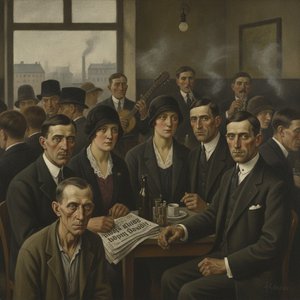
Neue Sachlichkeit: The Unflinching Realism and Social Critique of German New Objectivity
Explore the raw realism of Neue Sachlichkeit. Discover how German New Objectivity artists like Otto Dix and George Grosz captured the turbulent Weimar Republic through unflinching social critique and precise detail. A definitive guide for art historians and collectors.

Unmasking Emotion: A Journey Through the Raw Power and Visceral Beauty of German Expressionism
Explore the raw emotional power of German Expressionism. From Kirchner to Die Brücke, discover how artists used distortion and vibrant color to unmask the human psyche. A deep dive into art history for the discerning collector and enthusiast.

German Expressionism's 10 Defining Masterpieces | Art for Your Home
Explore 10 defining German Expressionism masterpieces – from Munch's 'The Scream' to Kandinsky’s abstracts. Discover the artists, stories & bold colors behind this powerful art movement. Find museum-quality reproductions at OriginalUniqueArt.com.
日耳曼文艺复兴:人文主义的觉醒与艺术革新 - 重塑欧洲文明的辉煌篇章
探索日耳曼文艺复兴的人文主义与艺术革新!OriginalUniqueArt 提供高品质手绘油画复制品、定制服务及专业艺术咨询,重现大师经典,点亮您的空间。值得信赖的艺术品收藏专家。