

 效果预览
效果预览
 分享
分享 分享
分享
 详情
详情

 下载
下载
 相似作品
相似作品 X射线
X射线 幻灯片播放
幻灯片播放 统计数据
统计数据Oriental Island
 Islamic Miniature Tradition
 2005
2005 45.0 x 105.0 cm
 Ibrahimi Collection
 展开详情
展开详情
手工油画复制品
由我们的艺术家按需定制,为您提供您所选尺寸及画框的布面手工油画。 ( 切换至版画销售渠道 切换至数字图像销售渠道)




































从与原作比例一致的预设尺寸中进行选择。

您可以输入自定义尺寸,以适配特定的画框或空间。如果所选尺寸与原图比例不符,我们将通过裁剪作品或添加手绘元素来扩展画面。数字样稿将在制作开始前发送给您确认。
请注意,屏幕预览无法准确反映实际的裁剪或扩展效果,只有样稿才能真实呈现最终的构图。
虽然我们提供定制尺寸服务,但为了保留原作比例,建议您从预设列表中选择尺寸。
下单后,OriginalUniqueArt.com 团队将通过电子邮件联系客户获取具体要求,并提供效果预览图。


 玻璃选项仅适用于110厘米以下的尺寸。

Oriental Island
复制材质
复制品尺寸
-


最终总价
$ 300
艺术家简介
Early Life and Education
- Born: Baghdad, Iraq (1954)
- Widad Al-Orfali's upbringing was steeped in Iraqi culture and intellectual pursuits. Her father, Makki Al-Orfali, held a position as a judge, fostering an environment that valued education and civic engagement.
- She pursued higher education at the Beirut College for Women before transferring to Queen Alia College in Baghdad.
- Her formal artistic training took place at the Institute of Art in Baghdad, where she studied under influential artists such as Faiq Hassan, Faraj Abbo, and Ismail al-Shaikhly. She graduated from the institute in 1960.
Artistic Style and Themes
- Al-Orfali is best known for her captivating paintings depicting "dream cities" or fantasy cityscapes. These works are characterized by intricate details, vibrant colors, and a sense of otherworldly beauty.
- Her artistic style evolved over time, initially influenced by realism before transitioning to an expressive approach inspired by her travels to Andalusia and the study of early illuminated manuscripts.
- Key Themes: Her paintings frequently explore themes of memory, nostalgia, cultural heritage, and the interplay between reality and imagination. The influence of Andalusian architecture and design is evident in many of her works, reflecting a fascination with its rich artistic legacy.
Career Highlights and Recognition
- Early Exhibitions: Al-Orfali began exhibiting her work early in her career, starting with an exhibition in West Germany in 1964.
- The Orfali Gallery: In 1983, she established one of the first private art galleries in Iraq, the Orfali Gallery, which later expanded into a cultural center offering diverse programs beyond exhibitions.
- Gulf War and Displacement: During the Gulf War in 1991, Al-Orfali remained in Baghdad, continuing her artistic practice amidst challenging circumstances. She eventually relocated to Amman, Jordan, in 2003 due to the US-Iraq War, where she re-established the Orfali Gallery.
- Musical Album: In 2011, Al-Orfali released her first album, "Rhythms of Arabia," showcasing her musical talents alongside her visual art.
- Recognition: Her work has been featured in publications such as the "Iraqi Art Red List" and is held by prominent institutions like the Barjeel Art Foundation and the Hindiyeh Museum in Jordan.
Influences and Historical Significance
- Artistic Influences: Al-Orfali's artistic development was shaped by a diverse range of influences, including her teachers at the Institute of Art, her travels to Andalusia, and her study of historical manuscripts.
- Cultural Heritage: Her work serves as a powerful reflection of Iraqi cultural heritage and identity, particularly in its depiction of dream cities that evoke memories of Baghdad's rich history.
- Pioneer for Women Artists: As one of the first female artists to establish a private gallery in Iraq, Al-Orfali played a significant role in promoting contemporary art and providing opportunities for other artists.
- Resilience and Creativity: Her artistic journey exemplifies resilience and creativity in the face of political instability and displacement, demonstrating her commitment to preserving and celebrating Iraqi culture through her art.

Widad Al-Orfali
1954 - , Iraq
艺术家简介
- Artistic Movement Or Style: Fantasy cityscapes
- Artists Who Influenced This Artist:
- Faiq Hassan
- Faraj Abbo
- Ismail al-Shaikhly
- Date Of Birth: 1954
- Full Name: Widad Al-Orfali
- Nationality: Iraqi
- Notable Artworks: ['Rosy dream']
- Place Of Birth: Baghdad, Iraq
相关文章


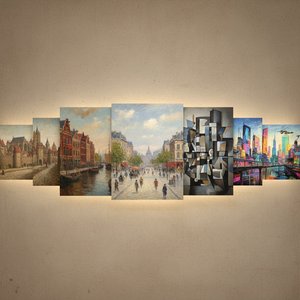
Concrete Visions: Exploring the Urban Landscape in Painting – From Realism to Contemporary Art
Explore the evolution of cityscape painting from Realism to contemporary art with OriginalUniqueArt. Discover key artists & invest in timeless urban visions. Expert guidance, museum-quality reproductions.
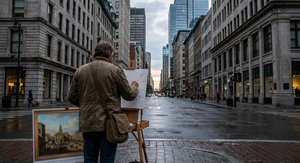
Urban Visions: A Historical & Artistic Exploration of the Cityscape in Painting
Explore the evolution of cityscape painting from historical maps to Impressionist masterpieces. Discover artists like Caillebotte, Utrillo & Matsumoto Shunsuke. Find museum-quality reproductions at OriginalUniqueArt.
Urban Visions: A Historical & Artistic Exploration of the Cityscape in Painting
Explore the evolution of cityscape painting from historical maps to Impressionist masterpieces. Discover artists like Caillebotte & Utrillo. Find museum-quality reproductions at OriginalUniqueArt.

The Subconscious Canvas: Exploring Dream Imagery in Art History & Contemporary Practice
Explore the captivating world of dream imagery in art history & contemporary practice. Discover key artists, symbolism, investment potential & expert insights for collectors at OriginalUniqueArt.