实景预览
实景预览
 发送
发送 分享
分享
 详情
详情 指南
指南

 下载图片
下载图片
 相似作品
相似作品 X射线
X射线 幻灯片播放
幻灯片播放 统计数据
统计数据White oval
 布面油画
布面油画- 墙面艺术品
- Expressionism
 1919
1919- 现代主义
 80.0 x 93.0 cm
 阅读全文
阅读全文
艺术微喷/版画
博物馆级艺术微喷或帆布版画,制作高效,并提供多种饰面选择。 ( 订购此收藏品的纯手工复刻画作 切换至数字图像销售渠道)




P118B ¥10

P118H ¥10

P118W ¥10

P438Z ¥10

P508JH ¥12

P508YH ¥12

P805H ¥10

P805Z ¥10

P919BZ ¥10

P919G ¥10

P919XJ ¥10

P959ZH ¥10

P968JZ ¥12

W106C ¥8

W218G ¥10

W218JH ¥8

W218Y ¥10

W307PJ ¥10

W316G ¥10

W316PJ ¥8

W316Y ¥10

W398PJ ¥8

W4111J ¥10

W500HY ¥15

W500JH ¥15

W692G ¥12

W849H ¥8

W940BG ¥15

W953PJ ¥8




您可以从与原作比例一致的预设尺寸中进行选择。

请输入您所需的宽度和高度,以适配您的画框或墙面。由于印刷品只能进行裁剪,无法超出原图尺寸,因此若比例不一致,画面的一部分将会被裁切。在正式印刷之前,我们会为您发送一份数字效果图供您确认。本页面显示的图片并非最终裁剪后的效果——只有效果图才能展示真实的裁剪情况。


 玻璃选项仅适用于110厘米以下的尺寸。

White oval
艺术微喷/版画
复刻品尺寸说明
-


总计金额
¥ 538
The Genesis of Abstraction: Unveiling ‘White Oval’ by Wassily Kandinsky
Wassily Kandinsky, a name synonymous with the birth of modern art, wasn't merely a painter; he was a visionary architect of feeling, translating inner experiences into vibrant visual languages. His journey from law student to revolutionary artist is as compelling as his artwork itself, and few pieces encapsulate this transformation more powerfully than ‘White Oval,’ created in 1919. This deceptively simple composition—a central white oval surrounded by a constellation of circles, lines, and splashes of color—represents a pivotal moment in Kandinsky’s exploration of abstraction, a deliberate rejection of representational art in favor of pure emotional expression. Born in Moscow in 1866, Kandinsky's early life was steeped in the traditions of Russian culture – his family history included connections to Mongolia and China – yet he felt an undeniable pull towards the burgeoning artistic movements of Europe. Witnessing Monet’s “Haystacks” ignited a profound shift within him, moving beyond mere depiction to capture the *essence* of color and its ability to evoke powerful sensations. ‘White Oval’ isn't just a painting; it’s a distillation of this evolving philosophy, a testament to Kandinsky’s belief that art could transcend the limitations of the visible world and tap directly into the realm of the soul.A Symphony of Color and Form
The beauty of ‘White Oval’ lies not in its complexity, but in its carefully orchestrated simplicity. Measuring 80 x 93 cm, the canvas is dominated by a large, luminous white oval – a shape that immediately draws the eye, acting as an anchor within the swirling composition. Around this central element dance a multitude of smaller circles, varying in size and intensity, interspersed with dynamic lines. The palette itself is remarkably restrained yet profoundly expressive: vibrant reds, deep blues, sunny yellows, verdant greens, and fiery oranges coalesce to create an energetic atmosphere. Kandinsky’s use of color wasn't arbitrary; he meticulously studied the psychological effects of hues, believing that each shade possessed its own inherent emotional power. Red, for instance, represented passion and energy, while blue evoked feelings of tranquility and introspection. The painting is executed in oil on canvas, a medium that allowed Kandinsky to build up layers of color and texture, creating a rich, tactile surface. The brushstrokes are visible, adding a sense of immediacy and spontaneity to the work—a deliberate departure from the smooth, polished surfaces favored by many of his contemporaries.The Spiritual Dimension: Influences and Intentions
Kandinsky’s artistic journey was deeply intertwined with spiritual ideas, particularly those influenced by Theosophy. He sought to create art that could awaken inner feelings and connect viewers to a higher consciousness. His seminal work, *Concerning the Spiritual in Art*, articulated this belief, arguing that color and form possessed an inherent spiritual significance. ‘White Oval’ embodies this philosophy perfectly; it's not simply a visual arrangement but a carefully constructed symbolic landscape designed to stimulate emotional response. The white oval itself can be interpreted as representing the “soul,” a blank canvas upon which the artist projects his inner world. The surrounding shapes and colors then act as symbols, each contributing to the overall composition of the painting’s spiritual narrative. Kandinsky's exploration of abstraction was not merely an aesthetic choice but a deeply personal quest for artistic truth—a desire to express what words could not capture.Kandinsky’s Legacy: A Bridge Between Art and Emotion
‘White Oval’ stands as a cornerstone in the development of abstract art, profoundly influencing generations of artists who followed. It's a key example of Kandinsky’s early work during his time with the Expressionist movement, which emphasized subjective experience and emotional intensity. His exploration of color theory and its connection to human emotion paved the way for later movements like Fauvism and Surrealism. The painting’s influence extends beyond the art world; it has been cited as a source of inspiration for designers, architects, and even musicians. Reproductions of ‘White Oval,’ such as those offered by OriginalUniqueArt.com, provide an accessible gateway to this groundbreaking artwork, allowing viewers to experience Kandinsky's vision firsthand. To delve deeper into the life and work of Wassily Kandinsky, explore resources like OriginalUniqueArt.com, which offers detailed information about his artistic development and other notable pieces such as “Small dream in red” or “Red Oval.” His legacy continues to resonate today, reminding us that art can be a powerful tool for self-expression and spiritual exploration.问答详情
“White oval”代表了卡林斯基艺术生涯的哪个阶段?
"White oval" 代表了 卡林斯基 的 Early Period 时期。
是否有关于 卡林斯基 的《White oval》 的指南?
"White oval" 的指南位于作品的 指南 页面 —— 这是一份可打印的信息单,展示了该作品及其说明、署名以及详细信息表(艺术家、日期、媒介、原尺寸、馆藏)。
我该如何获取卡林斯基 的《White oval》的数字文件?
您可以在 数字图像 页面直接购买 “White oval” 的 高分辨率数字图像下载。
艺术家简介
沉浸于色彩与灵魂的生命
瓦西里·瓦西里耶维奇·康定斯基(Wassily Wassilyevich Kandinsky)于1866年出生于莫斯科,是一位彻底改变了现代艺术进程的革命性人物。他的艺术之路并非一蹴而就;最初,他注定要在莫斯科大学从事法律与经济事业,然而,一场与印象派绘画——特别是克劳德·莫奈的《干草堆》——的深刻邂逅,以及亲历瓦格纳歌剧《罗恩格林》时那份震撼心灵的体验,在他内心点燃了对艺术无法遏制的渴望。这一发生在三十岁左右的关键时刻,不仅标志着职业生涯的转变,更是一场视角的彻底蜕变,引领他走向了开创抽象艺术的征途。不久后,他移居慕尼黑,进入享誉盛名的美术学院深造,师从弗兰茨·冯·斯图克(Franz von Stuck),但即便在正规的训练中,康定斯基的灵魂依然渴望着超越传统边界的探索。
早期的艺术影响还包括1889年通过沃洛格达地区的民族志考察所汲取的俄罗斯民间艺术,这使他痴迷于鲜艳的色彩组合与象征性的意象。随着他开始构建独特的艺术语言,这一根基变得至关重要。这些早期的探索并非仅仅出于审美偏好,而是植根于深厚的文化纽带,以及对“艺术如何超越具象进行沟通”这一命题日益增长的理解。
抽象艺术的黎明:从表现主义到内在必然性
康定斯基早期的作品展现出强烈的表现主义倾向,以大胆的色彩和情感的张力为特征——例如1902年的《杨树》(Papeln)便是这一时期的典范。然而,他并不满足于仅仅描绘外部世界;他渴望表达内在的现实,即那些超越视觉呈现的精神真理。这种追求促使他逐渐脱离具象艺术,转向对色彩、形式及其情感共鸣的革命性探索。
他开始相信,色彩本身具有内在的心理效应,能够唤起观者特定的情感与感官体验。这一信念与其对神智学(Theosophy)日益浓厚的兴趣紧密交织,神智学是一种强调秘传知识与普世博爱的精神运动。随着他对这些思想的深入钻研,康定斯基的绘画变得愈发非具象化,舍弃了可辨识的形态,转而追求由“内在必然性”驱动的抽象构图。这并非简单的抛弃写实,而是旨在发现一种全新的视觉语言,用以表达情感与精神那不可捉摸的领域。他试图创造一种音乐的视觉等价物,让色彩与形式在和谐中律动,激发起深层的情感共鸣。
几何的和谐与精神的共振
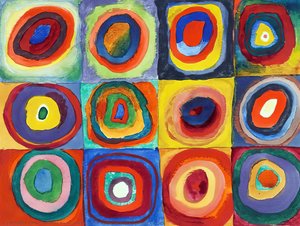
1911年在慕尼黑共同创立了极具影响力的艺术家团体“蓝骑士”(Der Blaue Reiter)之后,康定斯基的风格经历了进一步的演变。虽然早期的作品多采用流动的有机形状,但他开始探索几何抽象,专注于圆、三角与正方形之间的相互作用。《若干圆》(Several Circles)便是这一阶段的杰作——在这幅充满动感的构图中,色彩与形式在一种和谐而又充满能量的舞蹈中交织。
这种几何并非冰冷或枯燥的,相反,它充满了精神意义。康定斯基相信几何形状蕴含着内在的象征意义,它们在画布上的排列能够激发特定的情感反应。他的理论著作,尤其是著名的《论艺术的精神性》(1911),阐述了这些信念,为将抽象艺术视为表达深邃精神真理之媒介奠定了基础。他主张,艺术不应旨在模仿自然,而应揭示艺术家的内心世界,并在更深层、更直觉的层面与观者建立连接。
包豪斯的影响与永恒的遗产
第一次世界大战的爆发迫使康定斯基于1914年返回俄罗斯,但在俄国革命之后,他发现自己与当时盛行的艺术气候渐行渐远。1920年,他接受了德国包豪斯学校(Bauhaus)的教职,凭借其关于色彩、形式与抽象的理论,深刻影响了几代艺术家。包豪斯为康定斯器进一步发展思想并探索新的创作途径提供了理想的环境。
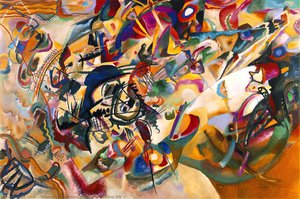
他继续在几何形式与鲜艳色彩中进行实验,经常运用厚涂技法(impasto)来创造富有纹理的表面,为构图增添了深度与复杂性——这在后期的作品如《亲密的聚会》(An Intimate Party, 1942)中可见一斑。1933年包豪斯被纳粹政权关闭后,康定斯基移居法国,并在那里度过了余生。他对现代艺术的影响是无法估量的;他被公认为抽象表现主义的先驱,也是非具象绘画发展史上的关键人物。他的作品收藏于世界各大博物馆,包括莫斯科的特列季亚科夫美术馆,那里珍藏着他那宏伟的《第七号构成》(Composition VII),这正是其艺术远见与不朽遗产的明证。
康定斯基对色彩、形式与精神性的探索至今仍在激励着艺术家们,巩固了他作为20世纪艺术史上最重要人物之一的地位。他不仅仅是在绘画,他是在描绘情感、思想,以及人类精神的最本质内核。

卡林斯基
1866 - 1944 , 俄罗斯
快速概览
- Artistic Movement Or Style: 抽象艺术、表现主义
- Artists Or Movements Influenced By This Artist: ['抽象表现主义']
- Artists Who Influenced This Artist:
- 克劳德·莫奈
- 理查德·瓦格纳
- Date Of Birth: 1866年12月4日
- Date Of Death: 1944年12月13日
- Full Name: Wassily Wassilyevich Kandinsky
- Nationality: 俄罗斯、法国
- Notable Artworks:
- Murnau与虹
- 多个圆
- 圣洁的宴会
- Place Of Birth: 莫斯科,俄罗斯
相关文章

Kandinsky's Masterpieces: 25 Paintings That Define Abstract Art | OriginalUniqueArt
Journey through Wassily Kandinsky's 25 most iconic abstract paintings. Explore his revolutionary use of color, form & spiritual expressionism. Find museum-quality Kandinsky reproductions and elevate your home decor with OriginalUniqueArt.com. Discover all masterpieces on OriginalUniqueArt.com!

抽象表现主义:十幅定义艺术史的杰作
探索抽象表现主义的十幅经典杰作!波洛克、罗斯科等大师作品,揭秘艺术史上的重要瞬间。OriginalUniqueArt.com为您呈现高品质艺术品复制和精选家居装饰方案,感受现代艺术的力量与魅力。立即浏览全系列!

Neo-Abstract Art: The High-Impact Evolution of Modern Visual Energy and Geometric Sophistication
Discover the power of Neo-Abstract art. Explore how bold geometric forms and high-impact visual energy are redefining modern design. Learn to curate sophisticated, high-energy spaces with the latest trends in contemporary abstraction and structural color.

White on Canvas: 10 Masterpieces & Timeless Elegance for Your Home Decor
Explore 10 iconic white paintings by Monet, Whistler & Rothko! Discover the stories behind these serene masterpieces and their impact on art history. Find museum-quality reproductions for your home decor at .

几何抽象艺术十大杰作:定义现代家居装饰的经典之作
探索几何抽象艺术的十大杰作!康定斯基、蒙德里安等大师作品,色彩构成与非具象之美。OriginalUniqueArt.com提供博物馆级艺术复制品,为您的家居带来现代艺术灵感。立即在线探索完整系列!