效果预览
效果预览
 切换至手工绘画版
 分享
分享 分享
分享
 详情
详情

 下载
下载
 相似作品
相似作品 X射线
X射线 幻灯片播放
幻灯片播放Improvisation 5


 展开详情
展开详情




P118B $10

P118H $10

P118W $10

P438Z $10

P508JH $12

P508YH $12

P805H $10

P805Z $10

P919BZ $10

P919G $10

P919XJ $10

P959ZH $10

P968JZ $12

W106C $8

W218G $10

W218JH $8

W218Y $10

W307PJ $10

W316G $10

W316PJ $8

W316Y $10

W398PJ $8

W4111J $10

W500HY $15

W500JH $15

W692G $12

W849H $8

W940BG $15

W953PJ $8




从与原作比例一致的预设尺寸中进行选择。

您可以输入自定义尺寸,以适配特定的画框或空间。如果您选择的尺寸与原图比例不符,我们将对作品进行裁剪,或通过镜像填充/纯色填充边缘的方式来扩展图像。在开始制作之前,我们会向您发送一份数字效果图供您确认。
请注意,屏幕上的预览并不能反映实际的裁剪或扩展效果。只有效果图才能准确展示最终的构图。
虽然我们提供定制尺寸,但为了保持原图比例,我们建议您从预设列表中选择尺寸。


 玻璃选项仅适用于110厘米以下的尺寸。

Improvisation 5
艺术微喷/版画
复制品尺寸
-


最终总价
$ 80
藏品详情
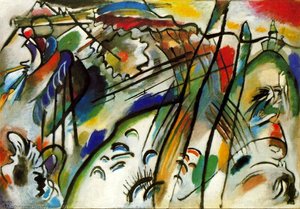
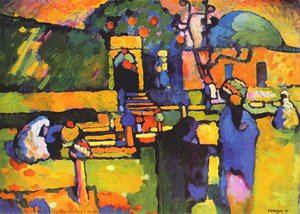
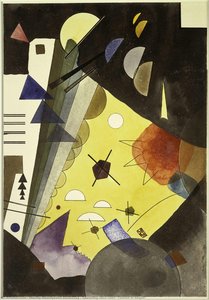
A Burst of Inner Harmony: Exploring Kandinsky’s ‘Improvisation 5’
Wassily Kandinsky stands as a monumental figure in the history of modern art, a true pioneer who dared to liberate painting from its traditional representational constraints. As a leading theorist and practitioner of abstract art, he believed deeply in the power of color and form to evoke emotion and spiritual resonance – principles vividly embodied in his 1911 masterpiece, Improvisation 5. This work isn’t merely a painting; it's a visual symphony, an attempt to translate inner experience directly onto canvas.Deconstructing the Composition: A World Beyond Representation
At first glance, Improvisation 5 appears as a dynamic interplay of vibrant hues and geometric shapes. The photo reveals a composition teeming with energy, featuring abstracted figures seemingly caught within an urban or architectural landscape. However, Kandinsky wasn’t aiming for realistic depiction. Instead, he employed flattened perspectives and bold blocks of color to create a sense of movement and emotional intensity. Rectangular forms suggest figures clad in colorful garments, their individual identities dissolving into the overall chromatic experience. The thick impasto brushstrokes are immediately apparent, adding texture and emphasizing the physicality of the paint itself – a testament to Kandinsky’s expressive technique.The Dawn of Abstraction: Historical Context & Artistic Movement
Created during a pivotal moment in art history, Improvisation 5 reflects the burgeoning spirit of abstraction that was challenging conventional artistic norms. While often categorized within Abstract Expressionism, it’s crucial to understand its roots in earlier movements like Expressionism. Kandinsky sought to move beyond merely portraying the external world and instead convey inner psychological states through purely abstract means. This period saw artists rejecting traditional academic styles, embracing experimentation, and prioritizing emotional impact over precise representation. His work directly influenced the development of non-objective art, paving the way for future generations of abstract painters.Symbolism & Emotional Resonance: A Language of Color
Kandinsky believed that colors possessed inherent spiritual qualities and could directly affect the viewer’s emotions. In Improvisation 5, the vibrant palette – a striking combination of yellows, oranges, blues, greens, and reds – isn't arbitrary. Each hue is carefully chosen to contribute to the painting’s overall emotional tone. The dynamic composition and interplay of colors evoke feelings of energy, tension, and perhaps even spiritual awakening. While specific interpretations remain open-ended, the work invites contemplation on themes of community, movement, and the human condition within a rapidly changing modern world.Technique & Materials: Impasto and the Power of Texture
Kandinsky’s masterful use of oil paints is evident in the visible brushstrokes and textured surface of Improvisation 5. The impasto technique – applying paint thickly to the canvas – adds a tactile quality, inviting viewers to engage with the artwork on a visceral level. This deliberate application of paint isn’t merely aesthetic; it's integral to Kandinsky’s expressive intent, emphasizing the artist’s hand and the materiality of the medium itself.Collecting & Interior Design: Bringing Abstract Harmony Home
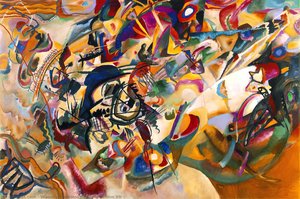
A reproduction of Improvisation 5 can serve as a stunning focal point in any modern or contemporary interior. Its bold colors and dynamic composition add energy and sophistication to living spaces, offices, or galleries. The artwork’s abstract nature allows it to complement a wide range of décor styles, from minimalist to eclectic. For collectors, owning a high-quality reproduction offers an opportunity to appreciate Kandinsky's genius and contribute to the enduring legacy of abstract art.- Explore related works by Wassily Kandinsky: Composition VII
- Discover more about the artist’s life and work: Wassily Kandinsky on Wikipedia
- Delve deeper into the artistic context of Modernism: Modernism on Wikipedia
艺术家简介
沉浸于色彩与灵魂的生命
瓦西里·瓦西里耶维奇·康定斯基(Wassily Wassilyevich Kandinsky)于1866年出生于莫斯科,是一位彻底改变了现代艺术进程的革命性人物。他的艺术之路并非一蹴而就;最初,他注定要在莫斯科大学从事法律与经济事业,然而,一场与印象派绘画——特别是克劳德·莫奈的《干草堆》——的深刻邂逅,以及亲历瓦格纳歌剧《罗恩格林》时那份震撼心灵的体验,在他内心点燃了对艺术无法遏制的渴望。这一发生在三十岁左右的关键时刻,不仅标志着职业生涯的转变,更是一场视角的彻底蜕变,引领他走向了开创抽象艺术的征途。不久后,他移居慕尼黑,进入享誉盛名的美术学院深造,师从弗兰茨·冯·斯图克(Franz von Stuck),但即便在正规的训练中,康定斯基的灵魂依然渴望着超越传统边界的探索。
早期的艺术影响还包括1889年通过沃洛格达地区的民族志考察所汲取的俄罗斯民间艺术,这使他痴迷于鲜艳的色彩组合与象征性的意象。随着他开始构建独特的艺术语言,这一根基变得至关重要。这些早期的探索并非仅仅出于审美偏好,而是植根于深厚的文化纽带,以及对“艺术如何超越具象进行沟通”这一命题日益增长的理解。
抽象艺术的黎明:从表现主义到内在必然性
康定斯基早期的作品展现出强烈的表现主义倾向,以大胆的色彩和情感的张力为特征——例如1902年的《杨树》(Papeln)便是这一时期的典范。然而,他并不满足于仅仅描绘外部世界;他渴望表达内在的现实,即那些超越视觉呈现的精神真理。这种追求促使他逐渐脱离具象艺术,转向对色彩、形式及其情感共鸣的革命性探索。
他开始相信,色彩本身具有内在的心理效应,能够唤起观者特定的情感与感官体验。这一信念与其对神智学(Theosophy)日益浓厚的兴趣紧密交织,神智学是一种强调秘传知识与普世博爱的精神运动。随着他对这些思想的深入钻研,康定斯基的绘画变得愈发非具象化,舍弃了可辨识的形态,转而追求由“内在必然性”驱动的抽象构图。这并非简单的抛弃写实,而是旨在发现一种全新的视觉语言,用以表达情感与精神那不可捉摸的领域。他试图创造一种音乐的视觉等价物,让色彩与形式在和谐中律动,激发起深层的情感共鸣。
几何的和谐与精神的共振
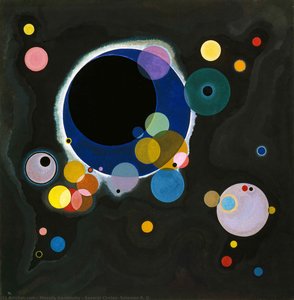
1911年在慕尼黑共同创立了极具影响力的艺术家团体“蓝骑士”(Der Blaue Reiter)之后,康定斯基的风格经历了进一步的演变。虽然早期的作品多采用流动的有机形状,但他开始探索几何抽象,专注于圆、三角与正方形之间的相互作用。《若干圆》(Several Circles)便是这一阶段的杰作——在这幅充满动感的构图中,色彩与形式在一种和谐而又充满能量的舞蹈中交织。
这种几何并非冰冷或枯燥的,相反,它充满了精神意义。康定斯基相信几何形状蕴含着内在的象征意义,它们在画布上的排列能够激发特定的情感反应。他的理论著作,尤其是著名的《论艺术的精神性》(1911),阐述了这些信念,为将抽象艺术视为表达深邃精神真理之媒介奠定了基础。他主张,艺术不应旨在模仿自然,而应揭示艺术家的内心世界,并在更深层、更直觉的层面与观者建立连接。
包豪斯的影响与永恒的遗产
第一次世界大战的爆发迫使康定斯基于1914年返回俄罗斯,但在俄国革命之后,他发现自己与当时盛行的艺术气候渐行渐远。1920年,他接受了德国包豪斯学校(Bauhaus)的教职,凭借其关于色彩、形式与抽象的理论,深刻影响了几代艺术家。包豪斯为康定斯器进一步发展思想并探索新的创作途径提供了理想的环境。
他继续在几何形式与鲜艳色彩中进行实验,经常运用厚涂技法(impasto)来创造富有纹理的表面,为构图增添了深度与复杂性——这在后期的作品如《亲密的聚会》(An Intimate Party, 1942)中可见一斑。1933年包豪斯被纳粹政权关闭后,康定斯基移居法国,并在那里度过了余生。他对现代艺术的影响是无法估量的;他被公认为抽象表现主义的先驱,也是非具象绘画发展史上的关键人物。他的作品收藏于世界各大博物馆,包括莫斯科的特列季亚科夫美术馆,那里珍藏着他那宏伟的《第七号构成》(Composition VII),这正是其艺术远见与不朽遗产的明证。
康定斯基对色彩、形式与精神性的探索至今仍在激励着艺术家们,巩固了他作为20世纪艺术史上最重要人物之一的地位。他不仅仅是在绘画,他是在描绘情感、思想,以及人类精神的最本质内核。

卡林斯基
1866 - 1944 , 俄罗斯
艺术家简介
- Artistic Movement Or Style: 抽象艺术、表现主义
- Artists Or Movements Influenced By This Artist: ['抽象表现主义']
- Artists Who Influenced This Artist:
- 克劳德·莫奈
- 理查德·瓦格纳
- Date Of Birth: 1866年12月4日
- Date Of Death: 1944年12月13日
- Full Name: Wassily Wassilyevich Kandinsky
- Nationality: 俄罗斯、法国
- Notable Artworks:
- Murnau与虹
- 多个圆
- 圣洁的宴会
- Place Of Birth: 莫斯科,俄罗斯
相关文章

Kandinsky's Masterpieces: 25 Paintings That Define Abstract Art | OriginalUniqueArt
Journey through Wassily Kandinsky's 25 most iconic abstract paintings. Explore his revolutionary use of color, form & spiritual expressionism. Find museum-quality Kandinsky reproductions and elevate your home decor with OriginalUniqueArt.com. Discover all masterpieces on OriginalUniqueArt.com!

抽象表现主义:十幅定义艺术史的杰作
探索抽象表现主义的十幅经典杰作!波洛克、罗斯科等大师作品,揭秘艺术史上的重要瞬间。OriginalUniqueArt.com为您呈现高品质艺术品复制和精选家居装饰方案,感受现代艺术的力量与魅力。立即浏览全系列!

几何抽象艺术十大杰作:定义现代家居装饰的经典之作
探索几何抽象艺术的十大杰作!康定斯基、蒙德里安等大师作品,色彩构成与非具象之美。OriginalUniqueArt.com提供博物馆级艺术复制品,为您的家居带来现代艺术灵感。立即在线探索完整系列!
纽约大都会艺术博物馆25幅必赏杰作:艺术、历史与家居灵感
探索纽约大都会艺术博物馆25幅传世杰作!从梵高、莫奈到达芬奇,深入了解艺术大师的故事与创作灵感。精美油画复制品,为您的家居带来艺术气息。立即在OriginalUniqueArt.com发现更多经典作品。
卡济米尔·马列维奇:25幅颠覆艺术认知的杰作 | OriginalUniqueArt
探索卡济米尔·马列维奇25幅至上主义杰作!深入了解抽象艺术的起源、黑色正方形背后的故事,以及如何用现代艺术提升您的家居装饰。OriginalUniqueArt.com提供博物馆级艺术复制品,点亮您的空间。立即在线探索完整系列!