

 实景预览
实景预览
 发送
发送 分享
分享
 详情
详情 指南
指南

 下载图片
下载图片
 相似作品
相似作品 X射线
X射线 幻灯片播放
幻灯片播放 统计数据
统计数据Mrs Barrett


 阅读全文
阅读全文
艺术微喷/版画
博物馆级艺术微喷或帆布版画,制作高效,并提供多种饰面选择。 ( 订购此收藏品的纯手工复刻画作 切换至数字图像销售渠道)




P118B ¥10

P118H ¥10

P118W ¥10

P438Z ¥10

P508JH ¥12

P508YH ¥12

P805H ¥10

P805Z ¥10

P919BZ ¥10

P919G ¥10

P919XJ ¥10

P959ZH ¥10

P968JZ ¥12

W106C ¥8

W218G ¥10

W218JH ¥8

W218Y ¥10

W307PJ ¥10

W316G ¥10

W316PJ ¥8

W316Y ¥10

W398PJ ¥8

W4111J ¥10

W500HY ¥15

W500JH ¥15

W692G ¥12

W849H ¥8

W940BG ¥15

W953PJ ¥8




您可以从与原作比例一致的预设尺寸中进行选择。

请输入您所需的宽度和高度,以适配您的画框或墙面。由于印刷品只能进行裁剪,无法超出原图尺寸,因此若比例不一致,画面的一部分将会被裁切。在正式印刷之前,我们会为您发送一份数字效果图供您确认。本页面显示的图片并非最终裁剪后的效果——只有效果图才能展示真实的裁剪情况。


 玻璃选项仅适用于110厘米以下的尺寸。

Mrs Barrett
艺术微喷/版画
复刻品尺寸说明
-


总计金额
¥ 538
Walter Richard Sickert’s ‘Mrs Barrett’: A Study in Shadows and Subtlety
Walter Richard Sickert's “Mrs Barrett,” painted around 1905, isn’t merely a portrait; it’s a carefully constructed tableau of urban life, social observation, and veiled mystery. This pastel on board, measuring a modest 540 x 711 mm, resides within the Tate Gallery collection, offering a glimpse into the Camden Town Group's fascination with London’s undercurrents – its working-class inhabitants, their lives, and the often-uncomfortable truths they concealed. The painting immediately draws the eye to the sitter, a woman identified simply as “Mrs Barrett,” whose face is partially obscured by a fur stole and a strategically placed mirror reflecting a striped sofa. This deliberate ambiguity—her identity shrouded in shadow, her gaze averted—is central to the work’s enduring appeal.A Camden Town Portrait: Context and Character
Sickert's decision to focus on this particular woman speaks volumes about his artistic interests during this period. He was deeply embedded within the Camden Town Group, a collective of artists who rejected the academic traditions of the Royal Academy in favor of capturing the gritty reality of London’s East End. Unlike many of his contemporaries who sought to idealize their subjects, Sickert frequently depicted ordinary people – costers, music hall performers, and domestic servants – often with an unsettling frankness. “Mrs Barrett” embodies this approach; she isn't presented as a glamorous socialite but rather as a woman of the streets, her attire suggesting a degree of respectability while hinting at a life lived outside conventional societal norms. The inclusion of the mirror, reflecting the striped sofa, adds another layer of complexity, creating a sense of voyeurism and inviting the viewer to contemplate the scene from an unsettling perspective.Technique and Atmosphere: Pastel’s Delicate Dance
Sickert's masterful use of pastel is particularly noteworthy. He eschewed bold brushstrokes in favor of delicate layering and subtle tonal shifts, creating a remarkably atmospheric effect. The muted palette—dominated by shades of grey, brown, and olive green—evokes the gloom of a London evening, while the loose application of pigment lends a sense of immediacy and spontaneity to the composition. The artist’s technique is almost impressionistic in its focus on capturing fleeting moments of light and shadow, yet it retains a distinctly personal and expressive quality. The way he renders the texture of the fur stole, the sheen of the mirror, and the folds of the woman's clothing demonstrates an exceptional level of detail and observation.Symbolism and Intrigue: Unraveling the Narrative
The identity of “Mrs Barrett” remains a subject of speculation among art historians. While some believe she was Sickert’s charlady, others suggest she may have been a prostitute or a member of his circle of bohemian acquaintances. The painting itself offers few definitive clues, relying instead on carefully placed symbols and suggestive details to provoke interpretation. The mirror, as mentioned earlier, creates a sense of unease and invites the viewer to question the nature of reality presented in the image. The woman’s averted gaze suggests a guardedness or perhaps even a hint of sadness—a reflection of the hardships and uncertainties of her life. It's this ambiguity that elevates “Mrs Barrett” beyond a simple portrait, transforming it into a poignant meditation on social class, identity, and the hidden lives of London’s marginalized figures.A Timeless Masterpiece: Reproduction and Appreciation
“Mrs Barrett” stands as a testament to Sickert's unique artistic vision and his ability to capture the essence of a particular moment in time. Reproductions of this captivating work offer an opportunity to appreciate its intricate details, atmospheric quality, and profound emotional resonance. Whether displayed in a private collection or a public gallery, “Mrs Barrett” continues to fascinate viewers with its enigmatic subject matter and its enduring exploration of the complexities of human experience. It’s a piece that rewards repeated viewing, revealing new layers of meaning with each encounter.问答详情
在哪里可以找到关于“Mrs Barrett”的指南?
沃特·理查德·西克特 (Wò Tè Lǐ Chá Dé Xī Kè Tè) 的《Mrs Barrett》 的 指南 页面提供了一份可打印的两页式学生资料单:包含作品及其身份信息表、将其置于艺术家生平中的年代轴、艺术家的其他作品、经测量的色板,以及四种格式的即用型引用文献。
沃特·理查德·西克特 (Wò Tè Lǐ Chá Dé Xī Kè Tè) 的《Mrs Barrett》 的创作日期是哪一年?
沃特·理查德·西克特 (Wò Tè Lǐ Chá Dé Xī Kè Tè) 的《Mrs Barrett》创作于1905年。
"Mrs Barrett" 的色彩饱和度如何?
“Mrs Barrett”的色彩饱和度为Muted,色彩强度为Monochromatic。
艺术家简介
早期生活与艺术萌芽
沃尔特·理查德·西克特,1860年出生于慕尼黑,注定是一位身处不同世界之间的人物——德国出身,英国为家园,一位艺术家在绘画的传统规范和现代主义潮流中不断徘徊。他的童年充满了变动;由于欧洲政治局势的变化,全家于1868年搬迁至英格兰,这在他心中种下了一种疏离感,或许正是这种疏离感激发了他对边缘人物和弱势群体的终身关注。西克特出身于艺术世家——他的父亲奥斯瓦尔德·西克特是一位丹麦画家——但年轻的沃尔特最初却渴望登上舞台,曾短暂地与著名演员亨利·欧文同台演出。这段早期的表演经历深刻影响了他的艺术视野,赋予了他的绘画一种戏剧性和心理深度,使他与同时代的艺术家区分开来。然而,视觉表达的魅力最终战胜了一切,西克特于1881年进入斯莱德美术学院深造,并成为詹姆斯·阿博特·麦克尼尔·惠斯勒的忠实学生。这段师从惠斯勒的经历对他影响深远,培养了他对直接取材、*alla prima* 绘画风格的偏好,以及一种精致的美学 sensibilities,为他早期的作品奠定了基础。惠斯勒的影响不仅仅是技术层面的;它还促进了他对艺术独立性的欣赏和挑战传统规范的意愿。伦敦阴影下的生活与现代生活的诱惑
西克特的艺术罗盘很快便转向了充满活力、常常粗犷的伦敦现实生活。他沉迷于这座城市音乐厅的气氛——这些空间充满了能量、奇观和社会各阶层的人们。这段时期的绘画,例如《凯蒂·劳伦斯在加蒂餐厅》,以其毫不掩饰地描绘这些环境及其居民而著称。这些并非简单的描绘;它们是对现代都市生活的探索,捕捉了墙壁内体验到的短暂瞬间和原始情感。他力求如实地描绘生活,而不是理想化它,这与维多利亚时代的艺术惯例大相径庭。这种对现实主义的承诺引发了争议。评论家认为他的题材“丑陋”且“粗俗”,挑战了偏爱理想化表现的审美观。西克特愿意以诚实和不浪漫化的方式描绘普通人,尤其是女演员,这是一种挑衅行为,预示着20世纪艺术向社会现实主义的转变。他从1894年开始在法国迪耶普度过的时间也至关重要,为他提供了对光线、色彩和构图的新视角,而他后来的威尼斯之旅进一步完善了他描绘室内空间和复杂人物排列的方法。他并非仅仅记录他所看到的东西;他通过独特的个人视角来诠释它,即使是最平凡的场景也赋予了一种神秘感和心理张力。变革催化剂:坎登镇画派及其他
随着20世纪初的到来,西克特成为新兴英国先锋运动的核心人物。1888年他加入了新英格兰艺术俱乐部,与拥抱法国印象派原则的艺术家们结盟。后来,他在1911年发挥了关键作用,建立了坎登镇画派——一个致力于以毫不掩饰的诚实和创新的风格描绘现代生活的集体。西克特对这个团体的影响深远,鼓励他们打破传统的学术束缚,探索新的表达形式。他倡导一种不浪漫化的城市景观愿景,专注于日常生活场景和普通人。这段时期的绘画经常以令人不安的主题为特色,例如他的《坎登镇谋杀》系列,反映了他对犯罪和心理张力的日益关注。这种直面困难主题的意愿巩固了他作为一位挑衅且具有挑战性的艺术家的声誉。他并非仅仅对描绘事物的表面感兴趣;他希望深入探索人类心灵的黑暗角落,探讨异化、焦虑和道德模糊等主题。遗产与挥之不去的谜团
沃尔特·理查德·西克特的遗产远远超出了他大量的作品产出。他是英国艺术变革的催化剂,为后来的艺术家们铺平了道路,使他们拥抱现代主义并探索新的表达途径。他的影响可以从众多追随者的作品中看到,特别是那些与伦敦画派和其他先锋运动相关的艺术家。西克特的开拓精神、他对现实主义的承诺以及他挑战社会规范的意愿至今仍在激励着艺术家们。虽然围绕他一生的争议——包括关于他可能参与开膛手杰克谋杀案的猜测——为他的故事增添了神秘色彩,但这并没有削弱他的艺术成就。这些理论,尽管学者们大多驳斥了它们,但反映了他作品中令人不安的品质及其对暴力和城市衰落主题的关注。他的绘画仍然是不断变化的世界的有力见证,为那些经常被传统艺术史忽视的人们的生活和经历提供了 glimpses 。他是一位敢于超越表面、直面现代生活不适真相并以毫不掩饰的诚实将它们描绘在画布上的艺术家。关键细节与影响
- 出生:1860年5月31日,巴伐利亚慕尼黑
- 逝世:1942年1月22日,英格兰巴斯顿
- 主要影响:詹姆斯·阿博特·麦克尼尔·惠斯勒,埃德加·德加
- 相关团体:新英格兰艺术俱乐部,坎登镇画派

沃特·理查德·西克特 (Wò Tè Lǐ Chá Dé Xī Kè Tè)
1860 - 1942 , 德国
快速概览
- Artistic Movement Or Style: 后印象派
- Artists Or Movements Influenced By This Artist:
- 坎登镇画派
- 伦敦画派
- Artists Who Influenced This Artist:
- 惠斯勒
- 德加
- Date Of Birth: 1860年5月31日
- Date Of Death: 1942年1月22日
- Full Name: 沃尔特·理查德·西克特
- Nationality: 英国
- Notable Artworks (List Of Titles):
- 凯蒂·劳伦斯在加蒂餐厅
- 辛费因党人
- 迪耶普皇家酒店
- 圣马可的马匹
- Place Of Birth (City And Country): 慕尼黑,德国
相关文章

The Soft Power of Pastel: A Connoisseur's Guide to History, Technique, and the Art of Texture
Explore the ethereal beauty of pastel art. From Renaissance origins to Impressionist mastery, discover the history, technique, and velvety textures that define this luminous medium in our expert guide for art connoisseurs.

柔光与细腻:粉彩艺术的技法、历史与情感共鸣
探索粉彩艺术的迷人世界!深入了解其历史、技法与情感共鸣。从文艺复兴到当代,精通粉彩绘画技巧,感受色彩的细腻魅力。OriginalUniqueArt提供专业艺术咨询与定制服务。
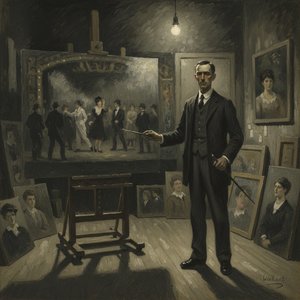
Walter Sickert: A Shadowy Realism & the Modern British Canvas
Explore the life & work of Walter Sickert, a pivotal British painter bridging Impressionism to Modernism. Discover his evocative scenes of London life, controversial legacy, and lasting influence on 20th-century art.

The Subdued Radiance of Pastel: Exploring Nuance & Emotion in Art
Explore the nuanced world of pastel art! Discover its history, techniques & emotional power with expert insights from OriginalUniqueArt.com. Find museum-quality reproductions and learn about collecting this delicate medium.

The Magic of Pastel Art: A Guide to Soft Colors and Velvately Textures in Impressionist Masterpieces
Explore the ethereal beauty of pastel art. Discover how Impressionist masters used soft hues and velvety textures to capture light. A professional guide for art enthusiasts seeking to understand, collect, and appreciate the delicate magic of this timeless medium.