

 实景预览
实景预览
 发送
发送 分享
分享
 详情
详情 指南
指南

 下载图片
下载图片
 相似作品
相似作品 X射线
X射线 幻灯片播放
幻灯片播放 统计数据
统计数据Apple Basket
 Oil
Oil- WallArt
- American Modernism
 1933
1933- Modern
 74.0 x 100.0 cm
 McNay Art Museum
 阅读全文
阅读全文
手工油画复制品
由我们的艺术家按需定制,为您提供您所选尺寸及画框的布面手工油画。 ( 切换至版画销售渠道 切换至数字图像销售渠道)




P118B ¥10

P118H ¥10

P118W ¥10

P438Z ¥10

P508JH ¥12

P508YH ¥12

P805H ¥10

P805Z ¥10

P919BZ ¥10

P919G ¥10

P919XJ ¥10

P959ZH ¥10

P968JZ ¥12

W106C ¥8

W218G ¥10

W218JH ¥8

W218Y ¥10

W307PJ ¥10

W316G ¥10

W316PJ ¥8

W316Y ¥10

W398PJ ¥8

W4111J ¥10

W500HY ¥15

W500JH ¥15

W692G ¥12

W849H ¥8

W940BG ¥15

W953PJ ¥8




您可以从与原作比例一致的预设尺寸中进行选择。

请输入您需要的宽度和高度,以适配您的画框或墙面。由于作品为手工绘制,若您选择不同的尺寸比例,艺术家可能会在画面边缘多画一些或稍作裁剪 —— 由您决定。在开始绘画之前,我们会为您发送一份数字效果图供您确认。本页面上展示的图片并非最终实物 —— 只有效果图才能反映真实结果。
下单后,OriginalUniqueArt.com 团队将通过电子邮件联系客户获取具体要求,并提供效果预览图


 玻璃选项仅适用于110厘米以下的尺寸。

Apple Basket
复制品材质
复刻品尺寸说明
-


总计金额
¥ 2019
A Symphony of Crimson and Light
In the quiet intimacy of Apple Basket, created in 1933 by the American modernist Walt Kuhn, we find a profound meditation on the beauty of simplicity. This exquisite still life invites the viewer into a serene domestic space, where the humble subject of fruit is elevated to a state of grace. The composition centers on a woven basket overflowing with ripe, red apples, their skins catching the light with a soft, tactile luster. Some fruits rest nestled deep within the shadows of the wicker, while others appear to tumble toward the edge, creating a sense of effortless abundance. A few stray apples lie scattered upon the table, breaking the formal arrangement and lending an organic, lived-in quality to the scene that resonates deeply with anyone who finds poetry in the everyday.
The technique employed by Kuhn reflects his sophisticated understanding of form and light, characteristic of a painter who navigated the transition from traditional studies to the bold energies of modernism. Through masterful brushwork, he captures the varying textures of the smooth, taut apple skins against the rough, rhythmic patterns of the basket's weave. The interplay of light and shadow is not merely a technical feat but an emotional one; it breathes life into the fruit, giving each piece a weight and presence that feels almost tangible. For the discerning collector or interior designer, this painting offers a balanced palette of warm reds and earthy tones, making it a versatile masterpiece capable of anchoring a room with both warmth and quiet sophistication.
The Legacy of a Modernist Vision
To appreciate Apple Basket, one must consider the hand behind the brush. Walt Kuhn was not merely a painter of beautiful objects; he was a pivotal figure in the American avant-garde, famously serving as an organizer of the landmark 1913 Armory Show. While his name is often associated with the vibrant, kinetic energy of circus scenes and the birth of modernism in America, this particular work reveals his ability to pivot toward the contemplative. It showcases a mastery of the still life tradition, rooted in his European training under the Barbizon School influence, yet infused with a uniquely American clarity and directness.
There is a timeless symbolism embedded within this arrangement. The apple, throughout art history, has served as a symbol of fertility, temptation, and the bounty of nature. In Kuhn’s hands, however, these heavy connotations are stripped away to reveal a pure, aesthetic appreciation for the natural world. The painting evokes a sense of peace and stability—a sanctuary of color and form that remains untouched by the complexities of the outside world. For those seeking to adorn a home with art that inspires tranquility and celebrates the elegance of nature, this reproduction serves as a window into a moment of perfect, unadorned beauty.
问答详情
建议将 Walt Kuhn 的《Apple Basket》 悬挂在哪个空间?
Walt Kuhn 的《Apple Basket》 的推荐陈列空间为 Dining Room。当然,该建议也可根据您的室内装饰进行灵活调整。
哪里可以买到 Walt Kuhn 的《Apple Basket》 的版画?
若想订购 Walt Kuhn 的《Apple Basket》 的版画,只需前往其 艺术版画 页面进行订购即可:采用棉质帆布或档案级画布纸制作的艺术版画。
American Modernism 流派的作品 "Apple Basket" 传达了怎样的情感?
"Apple Basket" 在 American Modernism 运动中蕴含着 Calm 的情感基调。
艺术家简介
Walt Kuhn: A Pioneer of American Modernism
Early Life and Background
- Born: 1877 in New York City.
- Kuhn’s early life was rooted in a working-class family near the Brooklyn docks, exposing him to vibrant yet rough waterfront experiences.
- Despite a natural inclination towards drawing, his initial career path diverged from art, involving work as a bicycle repair shop owner and a professional bike racer.
- He began selling drawings at age fifteen, adopting the signature “Walt.”
- Formal artistic training commenced in 1893 at the Brooklyn Polytechnic Institute.
European Studies and Artistic Development
- In 1899, Kuhn ventured to California with limited funds, working as an illustrator for WASP Magazine.
- Recognizing the need for broader artistic exposure, he traveled to Paris in 1901.
- He briefly studied at the Académie Colarossi before moving to Munich and studying under Heinrich von Zügel of the Barbizon School.
- His European travels included sketching trips in the Netherlands and visits to museums in Venice, where he encountered Impressionism and Post-Impressionism for the first time.
Return to America and Early Career
- Kuhn returned to New York in 1903, working as an illustrator for local journals.
- He held his first exhibition at the Salmagundi Club in 1905, establishing himself as both a cartoonist and painter.
- His illustrations appeared in Life Magazine, and he created the comic strip “Whisk” (1909-1911) for the New York World.
- He briefly taught at the New York School of Art but disliked the experience.
- Marriage to Vera Spier followed, and they had a daughter, Brenda Kuhn.
The Armory Show and its Impact
- A Defining Moment: Kuhn played a crucial role in organizing the 1913 Armory Show – America’s first large-scale introduction to European Modernism.
- He formed a close friendship with Arthur Bowen Davies, who also significantly impacted American art history.
- Kuhn served as the executive secretary and was tasked with securing participation from European artists. He, Davies, and Walter Pach toured Europe in 1912 to achieve this.
- The Armory Show attracted over 200,000 attendees and generated $44,000 in sales, exceeding all expectations.
- Robert Hughes noted Kuhn’s “talent for promotion” which was instrumental to the show's success.
Later Career and Artistic Style
- Post-Armory Show, Kuhn advised lawyer and collector John Quinn in building his modern art collection.
- He exhibited with the Whitney Studio Club and became a respected artist at the Whitney Museum of American Art.
- His work initially reflected European Modernist influences (e.g., Raoul Dufy, André Derain), but later evolved towards a more representational style while retaining bold colors and textures.
- He taught at the Art Students League of New York after recovering from a serious illness in 1925.
- Kuhn completed a commission for the Union Pacific Railroad, designing the club car “The Little Nugget.”
Historical Significance and Legacy
- Kuhn’s role in the Armory Show was transformative, opening American audiences to new artistic ideas.
- He navigated a complex art world caught between European Modernism and emerging American regionalist movements.
- His paintings – particularly his depictions of circus performers and still lifes – are celebrated for their vibrant color, energetic brushwork, and unique perspective.
- Died: 1949, leaving behind a legacy as a pivotal figure in the development of American Modernism.

Walt Kuhn
1877 - 1949
快速概览
- Name: Walt Kuhn
- Movement: Modernism, American Modernism
- Birth Date: 1877
- Death Date: 1949
- Birth Place: New York City
- Nationality: American
- Date Of Birth: 1877
- Date Of Death: 1949
- Influenced By:
- Barbizon School
- Impressionists
- Post-Impressionists
- Notable Works:
- The Tragic Comedians
- The White Clown
- Clown with a Black Wig
- Apple Basket
相关文章

American Realism's Defining Works: 10 Masterpieces for Your Home
Explore 10 defining American Realism masterpieces – Hopper, Homer & more. Discover the stories behind these iconic paintings and bring timeless art to your home with OriginalUniqueArt's museum-quality reproductions. Explore the full collection online.

Crimson Threads of Narrative: Exploring Symbolism & Representation in Artworks Featuring the Red Dress
Explore the rich symbolism of the red dress in art history! From ancient power displays to iconic portraits like Cézanne’s 'Madame Cezanne', discover the cultural and artistic significance behind this captivating color. Expert analysis & insights.

The Bountiful Still Life: Symbolism & Artistic Representation of Fruit Across Art History
Explore the rich history of still life painting & the symbolism of fruit across art movements. Discover masterpieces from Caravaggio to Cézanne with OriginalUniqueArt – expert guidance & museum-quality reproductions.
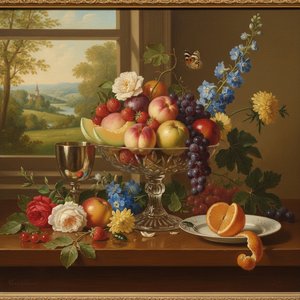
Severin Roesen: Evoking National Identity Through American Still Life Painting
Explore the captivating world of Severin Roesen, a major American still life painter influenced by Dutch masters. Discover his lush compositions and the symbolism within his art – a window into 19th-century America.

保罗·塞尚:25幅大师杰作,重塑现代艺术与家居美学 | OriginalUniqueArt
探索保罗·塞尚25幅经典杰作!深入了解后印象派大师的艺术生涯、独特技法与色彩运用。OriginalUniqueArt提供高清油画复制品,为您的家居带来博物馆级艺术体验。立即发现更多名画,点亮生活空间!