
() ·
A painting made for you, by hand
手工油画复制品
由我们的艺术家按需定制,为您提供您所选尺寸及画框的布面手工油画。 ( 切换至版画销售渠道 切换至数字图像销售渠道)
藏品详情
A striking modernist cityscape of Vilnius featuring vibrant red brick architecture by Lithuanian master Vincas Kisarauskas from 1965, offering a poignant glimpse into Soviet-era art for your private collection.
艺术家简介
Discover Vincas Kisarauskas: Lithuanian modernist painter & graphic artist. Bold experiments, radical style, & poignant Vilnius scenes. A key figure in Soviet-era art.
 展开全文
展开全文
from ·
Chapter 1
How large should it be?
Slide to change the size; the picture on the left shows the frame at its real width. The proportions of the original are kept.
您可以从与原作比例一致的预设尺寸中进行选择。

请输入您需要的宽度和高度,以适配您的画框或墙面。由于作品为手工绘制,若选择不同比例的尺寸,艺术家可能会在画面边缘多画一些或稍作裁剪 —— 由您决定。在开始绘画之前,我们会为您发送一份数字效果图供您确认。本页面上展示的图片并非最终实物 —— 只有效果图才能反映真实结果。
Chapter 2
How should it arrive?
Choose the edges of the stretched canvas
Choose your frame

White ¥1

Blurside ¥1

Extended ¥1

P118B ¥10

P118H ¥10

P118W ¥10

P438Z ¥10

P508JH ¥12

P508YH ¥12

P805H ¥10

P805Z ¥10

P919BZ ¥10

P919G ¥10

P919XJ ¥10

P959ZH ¥10

P968JZ ¥12

W106C ¥8

W218G ¥10

W218JH ¥8

W218Y ¥10

W307PJ ¥10

W316G ¥10

W316PJ ¥8

W316Y ¥10

W398PJ ¥8

W4111J ¥10

W500HY ¥15

W500JH ¥15

W692G ¥12

W849H ¥8

W940BG ¥15

W953PJ ¥8

H24-GOLD ¥30

H24-SILVER ¥30

H36-GOLD ¥45

H36-SILVER ¥45
带框
Moulding: . Overall size with the frame: .
Chapter 3
Who paints it, and should anything change?
After order, OriginalUniqueArt.com team will email client for instructions and provide a mockup preview
全球配送()仅需 3-4 周即可送达,无需等待标准时效的 5 周。(30 October)。品质绝不妥协。
Chapter 4
The finishing touches
A nameplate, as in a museum?
青铜铭牌雕刻详情
This elegant plaque features the artist's name and the title of the artwork, finely engraved for a timeless presentation.
It is made from bronze with a refined, elegant finish. The text is precisely laser-engraved for a sharp and permanent result. Measuring 9x2 cm, the plaque is compact yet easy to read. It's built to be durable and scratch-resistant, offering a professional, museum-quality look. Mounting is simple thanks to the included adhesive backing.
透明亚克力铭牌详情
The plaque includes essential engraved details such as the artist's name, the title of the artwork, the date it was created, the type of media used-like oil on canvas or watercolor-a brief description of the piece, and a QR code that links to the complete artwork information.
It is crafted from clear acrylic, offering a sleek, modern appearance. The text is UV-engraved in black to ensure strong visual contrast. With a size of 10x15 cm, it ensures optimal readability. It comes equipped with two metal hooks for secure wall mounting. The plaque is designed to be weather-resistant, making it suitable for various environments, and it includes interactive features that work seamlessly with smartphone scanning.
黑色亚克力铭牌详情
This elegant plaque includes engraved information such as the artist's name, the title of the artwork, the date it was created, the type of media used (like oil on canvas or watercolor), a short description of the artwork, and a QR code for quick access to more information.
The plaque itself is made from refined black acrylic with a premium finish. The text is laser-engraved in white for high contrast and readability. Its size is 10x15 cm, designed to be easy to read. It comes with two metal hooks for professional mounting. The design is sleek and fits any interior style. It is also weather-resistant and durable, with built-in digital integration for mobile compatibility.
A protective varnish?
When do you need it?
Chapter 5
Your painting, as you ordered it

Vilnius
复制品材质
复刻品尺寸
-

精选资深艺术家
更丰富的细节、更精湛的工艺以及更充裕的制作时间
-

复制画装裱选项
-
-
对于任何边长超过 105 厘米(约 41 英寸)的艺术品或复制品,画框将以拆解后的组件形式发货。此方法可确保安全送达并防止运输过程中的损坏。
需由专业人员组装 —— 本产品不适用于 DIY 操作。
该组件必须由经验丰富的专业装裱师进行组装及画布绷装,过程中需使用木工胶(不随附)、画布绷边钳以及夹具,以确保在胶水干燥期间保持内框方正。组装不当或画布张力不均可能会对艺术品造成永久性损坏,且此类情况不在我们的保修范围之内。
 对于任何边长超过 105 厘米(约 41 英寸)的艺术品或复制品,画框将以拆解后的组件形式发货。此方法可确保安全送达并防止运输过程中的损坏。
包含所有实木条,尺寸精确,便于组装。
使用随附的螺丝进行组装,另需准备用于角部连接的木工胶(本品不含木工胶),请由您的装裱师自行准备。
需另备专业工具(本套件不含):画布绷紧钳以及用于在胶水干燥过程中保持木条方正的夹具。
重要提示:
角部连接处需要使用木工胶,边框条必须使用夹具固定直至胶水完全干透,且在组装好的框架上绷紧画布需要用到画布拉伸钳。以上工具均不包含在套装内。请在订购此尺寸前,预先联系经验丰富的专业装裱师。

展品铭牌
-
-

保护性清漆
光泽清漆(提亮色彩,防光防潮)
-

定制我的艺术品
定制化示例:替换面部为客户照片;添加宠物(例如,将猫替换为狗);在背景中加入隐藏信息;更改背景风景或元素。
-

加急
全球配送()仅需 3-4 周即可送达,无需等待标准时效的 5 周。(30 October)。品质始终如一,绝不妥协。
-
极速达
全球配送(),预计 5 周送达。(6 November)。
已包含
最终结算价
¥ 2015
玻璃选项仅适用于110厘米以下的尺寸。
Included with every order
- 全球免运费特快专递服务
- 优质亚麻画布
- 全程运输保险
- 关税退款保证
- 色彩精准还原保证
- 100天退货保障(仅限制造缺陷)
- 100% 退款保证
- 多件购买优惠


 实景预览
实景预览
 分享
分享 分享
分享
 详情
详情 指南
指南

 下载作品
下载作品
 相似作品
相似作品 X射线
X射线 幻灯片播放
幻灯片播放 Q&A
Q&A 统计数据
统计数据In numbers
- 1965the year it was painted
- 29frames to choose from
- standard sizes, in its own proportions
- 5weeks to paint and deliver it
About the original
 Oil On Canvas
- WallArt
- Modernism
 1965
1965- Modern
 70.0 x 70.0 cm
 Lithuanian Art Centre TARTLE

Vincas Kisarauskas
1934 - 1988, Lithuania
Quick facts about Vincas Kisarauskas
- Full Name: Vincas Kisarauskas
- Nationality: Lithuanian
- Date Of Birth: 1934
- Date Of Death: 1988
- Place Of Birth: Augiemanių, Lithuania
- Notable Artworks:
- Christ at Emmaus
- Illuminated Window III
- April Space
- Tilting towards Zanavykai
- Six Figures...
- Artistic Movement Or Style: Radical Modernism
- Artists Who Influenced This Artist: ['Abstract Expressionism']
- Artists Or Movements Influenced By This Artist: ['Contemporary Lithuanian art']
艺术家简介
Vincas Kisarauskas: A Radical Voice in Soviet Lithuania
Born in Augiemanių, Lithuania, in 1934, Vincas Kisarauskas’s life and art were inextricably linked to the turbulent currents of Soviet-era Lithuania. He emerged as a pivotal figure in the country's burgeoning modernist scene – a bold experimenter who defied official constraints while simultaneously pushing the boundaries of artistic expression. Often described as one of the most progressive artists of his time, Kisarauskas’s work is characterized by its raw emotion, unsettling imagery, and a deliberate rejection of prevailing ideological norms. His legacy lies not just in the paintings he created but also in his courageous stance against censorship and his profound influence on subsequent generations of Lithuanian artists.
Early Years and Artistic Training
Kisarauskas’s artistic journey began with a practical grounding in ceramics at the Telšiai Trade School of Applied Arts. This early exposure to tactile materials and functional design subtly shaped his later approach, influencing his use of texture and form. He then transitioned to Vilnius Art Institute, initially studying textiles before transferring to the Painting Department in 1959. It was here that he truly began to develop his distinctive style – a potent blend of abstraction, expressionism, and a deeply personal vision. His graduation marked the beginning of a period where his work would be largely marginalized by the state’s rigid artistic controls.
A Style Defined by Disruption and Emotion
Kisarauskas's art is immediately arresting. He wasn’t interested in creating pleasant, easily digestible images; instead, he sought to confront viewers with uncomfortable truths about the human condition. His paintings are often characterized by fragmented figures, distorted perspectives, and a palpable sense of unease. He frequently employed stark contrasts between light and shadow, utilizing bold colors – particularly reds and blacks – to amplify the emotional intensity of his scenes. Kisarauskas’s work can be seen as a direct response to the psychological pressures of living under Soviet rule, reflecting the anxieties, frustrations, and suppressed desires of ordinary Lithuanians. He was a pioneer in combining painting with photography and assemblage, creating multi-layered works that challenged traditional artistic conventions.
Recognition After Censorship: A Late Flowering
For much of his career, Kisarauskas’s work remained largely unseen by the public. The Soviet authorities actively suppressed any art deemed “formalist” or subversive, and his innovative style was considered a threat to ideological orthodoxy. Despite this censorship, he continued to create prolifically, often working in secret and distributing his art through informal channels. It wasn't until after his death in 1988 in New York that his work began to receive wider recognition. The lifting of restrictions on artistic expression following the collapse of the Soviet Union allowed Kisarauskas’s legacy to finally emerge, solidifying his place as a key figure in Lithuanian modernism and a courageous voice against oppression.
Key Works and Lasting Influence
Several works stand out as particularly significant examples of Kisarauskas's artistic vision. “Christ at Emmaus” (1988), painted shortly before his death, is a powerful depiction of faith and suffering, rendered in a raw and emotionally charged style. "Illuminated Window III" (1987) showcases his exploration of light and shadow, while "April Space" (XX Century. V) reflects the anxieties of the era. His smaller-format works, including diary-like sketchbooks and ex-libris designs, offer a glimpse into his creative process and reveal a remarkable versatility. Kisarauskas’s influence extends beyond his own creations; he inspired countless artists in Lithuania to challenge conventions and explore new forms of expression. He remains a potent symbol of artistic freedom and a testament to the enduring power of art to resist oppression.
Useful Links:
相关文章

Crimson Threads of Narrative: Exploring Symbolism & Representation in Artworks Featuring the Red Dress
Explore the rich symbolism of the red dress in art history! From ancient power displays to iconic portraits like Cézanne’s 'Madame Cezanne', discover the cultural and artistic significance behind this captivating color. Expert analysis & insights.

Concrete Visions: Exploring the Urban Landscape in Painting – From Realism to Contemporary Art
Explore the evolution of cityscape painting from Realism to contemporary art with OriginalUniqueArt. Discover key artists & invest in timeless urban visions. Expert guidance, museum-quality reproductions.
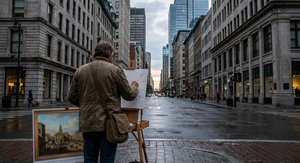
Urban Visions: A Historical & Artistic Exploration of the Cityscape in Painting
Explore the evolution of cityscape painting from historical maps to Impressionist masterpieces. Discover artists like Caillebotte & Utrillo. Find museum-quality reproductions at OriginalUniqueArt.

马克·罗斯科25幅杰作:色彩与情感的深度之旅 | OriginalUniqueArt
探索马克·罗斯科25幅杰作,感受抽象表现主义的色彩力量与深刻情感。从经典色域绘画到无题系列,了解艺术史上的大师及其作品背后的故事。OriginalUniqueArt.com提供博物馆级高质量复制品,为您的家居装饰带来艺术灵感!立即探索完整收藏。