切换至版画销售渠道
 展开全文
展开全文







































 对于任何边长超过 105 厘米(约 41 英寸)的艺术品或复制品,画框将以拆解后的组件形式发货。此方法可确保安全送达并防止运输过程中的损坏。


A Contemplative Journey: Exploring Surikov’s “Wanderer”
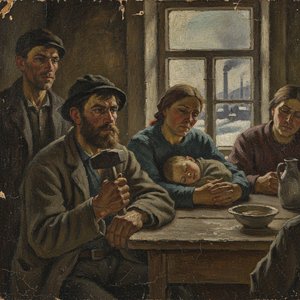
Vasili Ivanovich Surikov's 1885 watercolor painting, “Wanderer,” is a captivating study in introspection and the spirit of Russian identity. The artwork presents a solitary figure – a man with flowing hair and a full beard – rendered with remarkable realism and imbued with a sense of quiet dignity. He’s dressed in traditional Russian attire: a dark tunic secured at the neck, partially obscured by a lighter-colored garment draped over his shoulder, suggesting both practicality and a hint of status.Realism Rooted in Symbolism
Surikov was a master of realism, but his work consistently transcends mere representation. “Wanderer” is no exception. While the painting meticulously details the man’s clothing and features – achieved through visible, textured brushstrokes characteristic of Surikov's technique – it also operates on a symbolic level. The figure isn’t engaged in any specific action; instead, his gaze is directed off-canvas, lost in thought. This invites viewers to project their own narratives onto the scene, contemplating themes of journey, self-discovery, and perhaps even societal displacement. The minimalistic background further emphasizes this focus on internal experience, stripping away distractions and centering all attention on the subject’s emotional state.A Reflection of 19th-Century Russia
Painted in 1885, “Wanderer” emerges from a period of significant social and political change in Russia. The late 19th century witnessed growing intellectual ferment, artistic innovation, and increasing awareness of the lives of ordinary people – all themes that resonated deeply with Surikov. He was influenced by contemporaries like Ilya Repin and Isaac Levitan, who similarly sought to capture the essence of Russian life and landscape. The painting’s focus on a distinctly Russian figure in traditional dress speaks to a burgeoning national consciousness, while the contemplative mood hints at the anxieties and uncertainties of the era.Watercolor's Ethereal Touch
Surikov’s choice of watercolor is particularly noteworthy. This medium lends itself beautifully to capturing subtle nuances of light and shadow, resulting in an image that feels both grounded and ethereal. The soft washes of color create a sense of atmosphere, while the sharp details – especially in the man's face and clothing – demonstrate Surikov’s technical skill. The watercolor technique enhances the painting’s emotional resonance, suggesting fragility and transience alongside strength and resilience.Emotional Impact & Interior Design
“Wanderer” evokes a powerful sense of quiet contemplation. It's a piece that invites prolonged viewing, encouraging viewers to connect with the subject on an emotional level. Its subdued color palette and introspective mood make it ideally suited for spaces designed to promote relaxation and reflection – libraries, studies, or bedrooms. The painting’s historical significance and artistic merit also elevate its appeal for collectors seeking works of enduring value.- Style: Russian Realism
- Technique: Watercolor on paper with visible brushstrokes.
- Subject: A contemplative man in traditional Russian attire.
- Mood: Introspective, thoughtful, and serene.
- Ideal For: Collectors of Russian art, those seeking evocative artwork for quiet spaces, and interior designs emphasizing historical depth and emotional resonance.
常见问题与解答
瓦西里·伊万诺维奇·苏里科夫 的《Wanderer》 创作于哪一年?
瓦西里·伊万诺维奇·苏里科夫 的《Wanderer》 创作于 1885 年。
"Wanderer" 与 瓦西里·伊万诺维奇·苏里科夫 的其他作品有何共通之处?
在瓦西里·伊万诺维奇·苏里科夫的作品中,"Wanderer" 呈现出Realism风格,并延续了russian realism influence, historical narrative focus, national identity themes, contemplative journey, surikov's signature style, social commentary subtle, landscapes & human spirit, key work in artist's career的主题。
我可以在全屏幻灯片模式下观看“Wanderer”吗?
您可以在作品的 幻灯片展示 页面上以幻灯片形式浏览 瓦西里·伊万诺维奇·苏里科夫 的《Wanderer》。
 实景预览
实景预览
 分享
分享 分享
分享
 详情
详情 指南
指南

 下载作品
下载作品
 相似作品
相似作品 X射线
X射线 幻灯片播放
幻灯片播放 Q&A
Q&A 统计数据
统计数据