
 实景预览
实景预览
 分享
分享 分享
分享
 详情
详情 指南
指南

 下载作品
下载作品
 相似作品
相似作品 X射线
X射线 幻灯片播放
幻灯片播放 问答
问答 统计数据
统计数据Incorrigible One

- 87.0 x 113.0 cm


 展开全文
展开全文
艺术微喷/版画
博物馆级艺术微喷或帆布版画,制作高效,并提供多种饰面选择。 ( 订购纯手工绘制画作 切换至数字图像销售渠道)




P118B ¥10

P118H ¥10

P118W ¥10

P438Z ¥10

P508JH ¥12

P508YH ¥12

P805H ¥10

P805Z ¥10

P919BZ ¥10

P919G ¥10

P919XJ ¥10

P959ZH ¥10

P968JZ ¥12

W106C ¥8

W218G ¥10

W218JH ¥8

W218Y ¥10

W307PJ ¥10

W316G ¥10

W316PJ ¥8

W316Y ¥10

W398PJ ¥8

W4111J ¥10

W500HY ¥15

W500JH ¥15

W692G ¥12

W849H ¥8

W940BG ¥15

W953PJ ¥8




您可以从与原作比例一致的预设尺寸中进行选择。

请输入您所需的宽度和高度,以适配您的画框或墙面。由于印刷品只能进行裁剪,无法超出原图尺寸,因此若比例不一致,画面的一部分将会被裁切。在正式印刷之前,我们会为您发送一份数字效果图供您确认。本页面显示的图片并非最终裁剪后的效果——只有效果图才能展示真实的裁剪情况。


 玻璃选项仅适用于110厘米以下的尺寸。

Incorrigible One
艺术微喷/版画
复刻品尺寸
-


最终结算价
¥ 543
A Moment of Unyielding Spirit
In the profound depths of Vasily Grigoryevich Perov’s 1873 masterpiece, Incorrigible One, we are thrust into a visceral scene of tension and social friction. The painting captures a raw, cinematic moment: a man in a striking red shirt is being forcibly restrained, his hands bound behind his back. This central figure, the eponymous "incorrigible" soul, stands as a defiant focal point amidst a landscape of looming authority. Surrounding him, two men engage in a grim dialogue of discipline; one holds a whip, a symbol of impending retribution, while another stands sentinel with a stick. The setting—an outdoor space characterized by rugged stone walls and the rustic presence of a horse—adds a layer of earthy realism that grounds the drama in the tangible, often harsh, reality of 19th-century Russian life.
Perov’s mastery of Critical Realism is on full display here. Rather than seeking to beautify the scene, he employs a meticulous technique to document the psychological weight of the encounter. The artist uses light and shadow to sculpt the figures, drawing our eyes to the vibrant crimson of the captive's shirt, which serves as both a visual anchor and a metaphor for his burning, unextinguished spirit. Every detail, from the texture of the brickwork to the curious, watchful gaze of the horse, is rendered with an observational precision that invites the viewer to step into the frame and feel the heavy atmosphere of the courtyard.
The Soul of the Peredvizhniki Movement
To understand this work, one must look toward the historical heartbeat of the Peredvizhniki (The Wanderers) movement, of which Perov was a founding pillar. This era of Russian art sought to move away from the polished, academic traditions of the past and instead bring art to the people, focusing on the poignant, often uncomfortable truths of social inequality and peasant life. In Incorrigible One, Perov does not merely paint a scene of punishment; he paints a commentary on the struggle between individual will and societal control. The presence of the fireplace in the background and the quiet benches suggest a domesticity that has been interrupted by this sudden act of coercion, creating a jarring contrast between peace and violence.
For the discerning collector or interior designer, this painting offers more than just aesthetic value; it provides a profound narrative depth. The composition’s balance of movement and stillness makes it an extraordinary centerpiece for a room that demands conversation and intellectual engagement. Whether placed in a sophisticated study or a grand gallery-style living space, the artwork’s rich textures and emotive power serve as a window into a bygone era of social awakening. It is a piece that resonates with anyone who appreciates art that dares to look closely at the human condition, making it an enduring choice for those seeking a high-quality reproduction that embodies both historical significance and timeless emotional impact.
常见问题与解答
"Incorrigible One" 的版画推荐用于何处?
瓦西里·格里戈里耶维奇·佩罗夫 的《Incorrigible One》 的建议用途为 Conversation,同时也适用于其他场景。
我该如何获取瓦西里·格里戈里耶维奇·佩罗夫 的《Incorrigible One》的数字文件?
您可以在 高分辨率数字图像 页面直接购买 “Incorrigible One” 的 高分辨率数字图像下载。
"Incorrigible One" 的整体色调有多明亮?
就视觉亮度而言,瓦西里·格里戈里耶维奇·佩罗夫 的《Incorrigible One》 呈现出 deep_shadow 的效果。
艺术家简介
镌刻在现实主义中的生命:瓦西里·彼尔洛夫与俄罗斯之魂
1834年,瓦西里·格里戈里耶维奇·彼尔洛夫(原名瓦西里·瓦西里耶夫)出生于西伯利亚偏远的托博尔斯克。他后来成为了俄罗斯艺术史上的关键人物,其作品已成为批判现实主义的代名词。他的生平本身就充满了他日后在画布上描绘的社会复杂性。作为格里戈里·克里德纳男爵与阿库利娜·伊万诺娃非婚生子,彼尔 ලෙස夫早年的成长经历并不寻常,这种背景培养了他对社会不平等现象极其敏锐的感知力。他后来改姓“彼尔洛夫”,这个名字源于俄语中“羽毛”一词,既是对他早期书法造诣的致敬,也预示了他对细致刻画周围世界的执着——那是一个经常被忽视或被刻意掩盖的世界。他的艺术之旅始于阿尔扎马斯的亚历山大·斯图平艺术学校,在磨炼了基本功后,他于1853年进入莫斯科绘画、雕塑与建筑学院深造。这段时期对于塑造他的技术能力至关重要,并让他接触到了更广泛的艺术影响。凭借《调查农村警察事务官》等作品,他获得了帝国艺术学院颁发的银奖和金奖;而最著名的莫过于1861年的《村庄里的布道》,这幅画作将他推向了全国瞩目的地位,并为他赢得了出国深造的机会。为无声者发声:主题与技法
彼尔洛夫的艺术愿景深深植根于以不屈的诚实描绘俄罗斯社会的承诺之中。他拒绝了当时许多同辈艺术家所青睐的理想化描绘,转而选择关注普通人的生活——农民、劳动者、边缘群体以及那些被遗忘的人。他的画作不仅仅是对现实的再现,更是强有力的社会评论,揭露了19世纪俄罗斯普遍存在的苦难、不公与精神空虚。例如,《村庄里的布道》通过描绘教堂仪式中心不在焉的信徒,含蓄地批判了宗教的虚伪;而《喷泉前的排队》则冷峻地展示了农村生活的日常挣扎。他的技法以细腻的细节、忧郁的色调以及对光影大师级的运用为特征,以此营造戏剧性的效果。他并不热衷于将贫穷或苦难浪漫化,相反,他试图带着尊严与同理心去呈现它们,迫使观众直面自身社会中那些令人不安的真相。诸如描绘农民葬礼队伍的《最后的旅程》以及《三重奏:挑水学徒》等作品,都是他通过写实手法唤起深刻情感共鸣的动人范例。彼尔洛夫的才华不仅限于油画,他在蚀刻版画方面也表现卓越,如充满力量感的单色作品《纳乌什尼察:暴风雨前》,充分展示了他对明暗对比法和复杂细节的掌控力。开创运动:巡回展览画派
彼尔洛夫对现实主义的执着,与1870年兴起的艺术反叛精神完美契合,并促成了“巡回展览画派”(Peredvizhniki)的形成。这群俄罗斯现实主义画家脱离了学院派的束缚,建立了一个独立的协会,致力于在整个俄罗斯境内举办展览,将艺术带到圣彼得堡和莫斯科之外的广大观众面前。- 巡回展览画派旨在将艺术直接带给人民,
- 通过作品探讨社会问题,
- 并推广一种独特的俄罗斯艺术身份。
遗产与持久的影响力
1882年,彼尔洛夫因肺结核不幸逝世,年仅48岁,这对于俄罗斯艺术界来说是一个重大的损失。然而,他的遗产继续激励着后继的艺术家一代又一代。在他的作品中,我们可以看到伊利亚·列宾和瓦西里·苏里科夫的影子,这两位现实主义绘画大师进一步发展了他所参与建立的传统。彼尔洛夫的画作在今天依然具有意义,不仅因为其艺术价值,更因为其持久的社会评论意义。它们作为强有力的提醒,诉说着历史上普通人所面临的苦难,并持续激发着人们的同情与理解。他的作品现收藏于包括特罗平尼诺当代莫斯科艺术家博物馆在内的著名馆藏中,确保了他的愿景能够继续引起全球观众的共鸣。彼尔洛夫的贡献超越了单纯的艺术技巧;他是镌刻在画布上的社会良知,是为无声者发出的呐喊,更是俄罗斯现实主义的先驱。 他留下的作品集不仅记录了他的时代,更挑战了这个时代,永远改变了俄罗斯艺术的版图。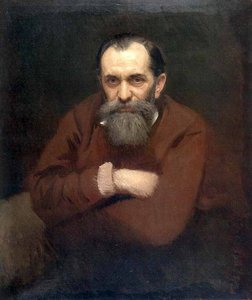
瓦西里·格里戈里耶维奇·佩罗夫
1833 - 1882 , 俄罗斯
艺术家简介
- Artistic Movement Or Style: 批判现实主义
- Artists Or Movements Influenced By This Artist:
- 伊利亚·列宾
- 瓦西里·苏里科夫
- Date Of Birth: 1834年1月2日
- Date Of Death: 1882年5月29日
- Full Name: 瓦西里·格里戈里耶维奇·佩罗夫
- Nationality: 俄罗斯
- Notable Artworks:
- 乡村布道
- 喷泉前的长队
- 最后的旅程
- 三驾马车
- 溺水的女孩
- Place Of Birth: 俄罗斯,托博尔斯克
相关文章

Vasily Vereshchagin: Realism, War & Subversion in 19th-Century Russian Painting
Explore the powerful realism of Vasily Vereshchagin's war paintings & Central Asian scenes. Discover how this Russian master challenged artistic conventions and offered a brutal, honest depiction of 19th-century conflict. Learn about his legacy for discerning collectors.

Vasily Surikov: Historical Epic & Psychological Realism in 19th-Century Russian Painting
Explore the powerful historical paintings of Vasily Surikov, a leading figure of Russian Realism. Discover his dramatic compositions, psychological depth & lasting influence on 19th-century art. Learn about collecting Surikov's masterpieces.

Vladimir Makovsky: Realism, Social Commentary & Russian Life in Late 19th-Century Painting
Explore the captivating world of Vladimir Makovsky, a leading Russian realist painter. Discover his insightful depictions of 19th-century life, social commentary & legacy with OriginalUniqueArt.

Russian Realism: The Soulful Power of Truth and the Unyielding Spirit of the Peredvizhniki
Explore the profound depth of Russian Realism. From the social truths of the Peredvizhniki to epic folklore, discover the soulful power of masters like Perov and Yaroshenko through our expert art history insights and museum-quality reproductions.

Discover Russian Realism: Soulful Masterpieces and the Timeless Spirit of the Peredvizhniki for Your Modern Home
Elevate your home with the soulful beauty of Russian Realism. Discover exquisite hand-painted reproductions of Peredvizhniki masterpieces, from lyrical landscapes to profound portraits, curated to bring historical depth and timeless elegance to your modern interior design.