
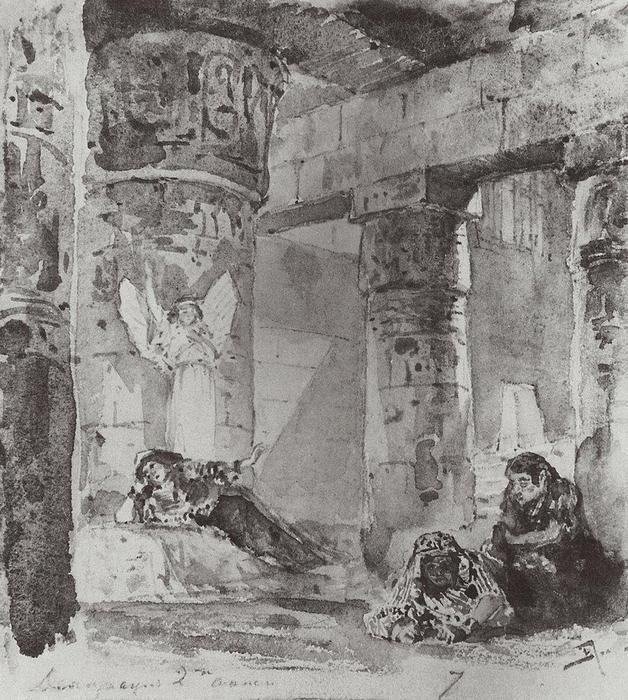
 效果预览
效果预览
 购买手绘画作
 分享
分享 分享
分享
 详情
详情

 下载
下载
 相似作品
相似作品 X射线
X射线 幻灯片播放
幻灯片播放Dungeon


 展开详情
展开详情




P118B $10

P118H $10

P118W $10

P438Z $10

P508JH $12

P508YH $12

P805H $10

P805Z $10

P919BZ $10

P919G $10

P919XJ $10

P959ZH $10

P968JZ $12

W106C $8

W218G $10

W218JH $8

W218Y $10

W307PJ $10

W316G $10

W316PJ $8

W316Y $10

W398PJ $8

W4111J $10

W500HY $15

W500JH $15

W692G $12

W849H $8

W940BG $15

W953PJ $8




从与原作比例一致的预设尺寸中进行选择。

您可以输入自定义尺寸,以适配特定的画框或空间。如果您选择的尺寸与原图比例不符,我们将对作品进行裁剪,或通过镜像填充/纯色填充边缘的方式来扩展图像。在开始制作之前,我们会向您发送一份数字效果图供您确认。
请注意,屏幕上的预览并不能反映实际的裁剪或扩展效果。只有效果图才能准确展示最终的构图。
虽然我们提供定制尺寸,但为了保持原图比例,我们建议您从预设列表中选择尺寸。


 玻璃选项仅适用于110厘米以下的尺寸。

Dungeon
艺术微喷/版画
复制品尺寸
-


最终总价
$ 80
艺术家简介
The Knight of Beauty: The Life and Vision of Vasily Polenov
Vasily Dmitrievich Polenov (1844–1927) stands as a cornerstone figure in Russian landscape painting and the Peredvizhniki movement—a collective of realist artists who championed artistic freedom and social reform. Often dubbed “the Knight of Beauty,” Polenov embodied both European artistic sensibilities and deep roots within Russian culture, reflecting a vision where art served not merely for aesthetic pleasure but actively fostered happiness and moral upliftment. As he eloquently stated, "Art should promote happiness and joy," encapsulating the movement’s core ethos. His legacy continues to inspire artists today with his unwavering belief in art's transformative power—a conviction born from his formative years amidst a vibrant intellectual landscape shaped by progressive thinkers challenging oppression.
Born in St. Petersburg, Polenov descended from a wealthy family steeped in artistic tradition. His father, Dmitri Polenov, was a celebrated archaeologist and bibliographer whose groundbreaking expeditions to Greece exposed the young Vasily to influential artists like Karl Briullov. This familial environment nurtured a passion for learning and artistic exploration from an early age. His mother, Maria Alekseevna Polenova, was herself a painter and portraitist, a connection that underscored the pervasive artistic culture of the era. Her memoirs vividly portray the atmosphere of intellectual ferment prevalent in Russia during the 1860s—a period marked by debates concerning democracy, progress, education, and resistance to autocratic rule.
A Mastery of Light and Lyrical Realism
Polenov’s artistic development was characterized by a unique ability to blend the rigorous training of the Russian Academy with the luminous, atmospheric qualities of European landscape traditions. His work often transcends simple documentation, moving into the realm of lyrical realism. He possessed a profound talent for capturing the subtle shifts of light across a landscape, imbuing his scenes with a sense of serenity and spiritual depth. This is perhaps most evident in his biblical series, where he approached sacred narratives not as distant, iconographic legends, but as living, breathing moments of human connection and divine grace.
His technical prowess allowed him to navigate various stylistic territories, from the detailed architectural studies of the Orient to the idyllic, sun-drenched vistas of the Russian countryside. Notable highlights of his oeuvre include:
- Christ and the Sinner: An 1886 masterpiece that demonstrates a breathtaking Byzantine grace, offering a luminous vision of faith through soft light and profound emotion.
- The Church of the Holy Sepulcher Series: Through works like his studies of the interior and the façade of this sacred site, Polenov showcased an Orientalist fascination with Byzantine architecture, utilizing warm colors to create a serene, almost meditative atmosphere.
- Landscape Studies: His ability to capture the "mood" of nature, turning simple vistas into profound meditations on the beauty of the natural world.
Legacy and Historical Significance
Beyond his individual canvases, Polenov’s impact on the Russian art world was structural and cultural. As a member of the Peredvizhniki (The Wanderers), he helped shift the focus of Russian art away from the rigid, aristocratic confines of the Academy toward a more populist, socially conscious realism. Yet, unlike some of his contemporaries who focused solely on the harshness of social struggle, Polenov sought to find the eternal beauty within the human condition. His estate at Polenovo became more than just a home; it was a sanctuary for art and culture, reflecting his lifelong commitment to the idea that beauty is a fundamental necessity for the human soul.
His historical significance lies in this delicate balance: he was a realist who refused to abandon hope, and a traditionalist who embraced the light of modern impressionistic sensibilities. By weaving together the archaeological richness of his heritage with a forward-looking humanist ideal, Vasily Polenov ensured that his "Knight of Beauty" persona would remain etched in the annals of art history, reminding generations that the ultimate purpose of creativity is to illuminate the joy of existence.

vasily dmitrievich polenov
1844 - 1927
艺术家简介
- Artistic Movement Or Style: Peredvizhniki
- Artists Or Movements Influenced By This Artist: ['European Painting']
- Artists Who Influenced This Artist:
- Karl Briullov
- Roman Kuzmin
- Date Of Birth: June 1, 1844
- Date Of Death: July 18, 1927
- Full Name: Vasily Dmitrievich Polenov
- Nationality: Russian
- Notable Artworks:
- Cityscape
- Tiberian Jew
- Portrait of the Artist Ilya Repin
- Place Of Birth: St. Petersburg, Russia
相关文章

Evoking Atmosphere & Identity: A Journey Through Landscape Painting's History
Explore the rich history of landscape painting! Discover renowned artists, movements like Romanticism, & techniques such as atmospheric perspective. Find inspiration and quality reproductions at OriginalUniqueArt.

Bridging Centuries: Digital Visualization & Classical Oil Painting Techniques in Contemporary Art Commissioning
Discover the art of commissioning bespoke oil paintings blending classical techniques with modern digital precision. Expert artists, personalized service & museum-quality results. Invest in a timeless masterpiece today.
Vasily Polenov: A Pioneer of Landscape Impressionism & Russian National Identity
Explore the captivating landscapes of Vasily Polenov, a pivotal figure in Russian art history. Discover his lyrical realism, biblical series & influence on Impressionism. Learn about the 'Knight of Beauty' and his enduring legacy.
From Imagination to Canvas: Commissioning Bespoke Fantasy Art with Traditional Oil Painting Techniques
Commission breathtaking bespoke fantasy art with skilled oil painters. Explore techniques, artist selection & preservation tips. Invest in a unique masterpiece today!
Dark Gray Masterpieces: 10 Iconic Paintings & Timeless Home Decor Ideas
Explore 10 iconic paintings dominated by dark gray tones, from Rembrandt & Caravaggio to Goya. Discover the stories behind these masterpieces and find museum-quality art reproductions for your home at . Explore the full collection online.

