
() ·
为您亲手绘制的每一幅画作
手工油画复制品
由我们的艺术家按需定制,为您提供您所选尺寸及画框的布面手工油画。 ( 切换至版画销售渠道 切换至数字图像销售渠道)
艺术家简介
Explore the haunting vanitas & tromp l'oeil paintings of Franciscus Gysbrechts, a 17th-century Flemish Baroque artist known for his dark themes & meticulous detail.
 展开全文
低于 ·
第1章
您需要多大的尺寸?
左右滑动以更改尺寸;左侧图片展示了画框的实际宽度。原图比例保持不变。
您可以从与原作比例一致的预设尺寸中进行选择。

请输入您需要的宽度和高度,以适配您的画框或墙面。由于作品为手工绘制,若选择不同比例的尺寸,艺术家可能会在画面边缘多画一些或稍作裁剪 —— 由您决定。在开始绘画之前,我们会为您发送一份数字效果图供您确认。本页面上展示的图片并非最终实物 —— 只有效果图才能反映真实结果。
第二章
您希望以何种方式送达?
选择绷边画布的边缘样式
选择您的画框

白色边缘 ¥1

边缘晕染效果 ¥1

延展式 ¥1

P118B ¥10

P118H ¥10

P118W ¥10

P438Z ¥10

P508JH ¥12

P508YH ¥12

P805H ¥10

P805Z ¥10

P919BZ ¥10

P919G ¥10

P919XJ ¥10

P959ZH ¥10

P968JZ ¥12

W106C ¥8

W218G ¥10

W218JH ¥8

W218Y ¥10

W307PJ ¥10

W316G ¥10

W316PJ ¥8

W316Y ¥10

W398PJ ¥8

W4111J ¥10

W500HY ¥15

W500JH ¥15

W692G ¥12

W849H ¥8

W940BG ¥15

W953PJ ¥8

H24-GOLD ¥30

H24-SILVER ¥30

H36-GOLD ¥45

H36-SILVER ¥45
带框
边框材质: . 含框总尺寸: .
第三章
谁创作了这幅作品,是否需要进行任何改动?
第四章
全球配送()仅需 3-4 周即可送达,无需等待标准时效的 5 周。(22 November)。品质绝不妥协。
最后的润色
像博物馆里的那样,配上一块铭牌?
青铜铭牌雕刻详情
This elegant plaque features the artist's name and the title of the artwork, finely engraved for a timeless presentation.
It is made from bronze with a refined, elegant finish. The text is precisely laser-engraved for a sharp and permanent result. Measuring 9x2 cm, the plaque is compact yet easy to read. It's built to be durable and scratch-resistant, offering a professional, museum-quality look. Mounting is simple thanks to the included adhesive backing.
透明亚克力铭牌详情
The plaque includes essential engraved details such as the artist's name, the title of the artwork, the date it was created, the type of media used-like oil on canvas or watercolor-a brief description of the piece, and a QR code that links to the complete artwork information.
It is crafted from clear acrylic, offering a sleek, modern appearance. The text is UV-engraved in black to ensure strong visual contrast. With a size of 10x15 cm, it ensures optimal readability. It comes equipped with two metal hooks for secure wall mounting. The plaque is designed to be weather-resistant, making it suitable for various environments, and it includes interactive features that work seamlessly with smartphone scanning.
黑色亚克力铭牌详情
This elegant plaque includes engraved information such as the artist's name, the title of the artwork, the date it was created, the type of media used (like oil on canvas or watercolor), a short description of the artwork, and a QR code for quick access to more information.
The plaque itself is made from refined black acrylic with a premium finish. The text is laser-engraved in white for high contrast and readability. Its size is 10x15 cm, designed to be easy to read. It comes with two metal hooks for professional mounting. The design is sleek and fits any interior style. It is also weather-resistant and durable, with built-in digital integration for mobile compatibility.
需要保护性光油吗?
您预计何时收到?
第五章
您的画作,正如您所订购的那样

Vanitas
复制品材质
复刻品尺寸
-

精选资深艺术家
更丰富的细节、更精湛的工艺以及更充裕的制作时间
-

复制画装裱选项
-
-
对于任何边长超过 105 厘米(约 41 英寸)的艺术品或复制品,画框将以拆解后的组件形式发货。此方法可确保安全送达并防止运输过程中的损坏。
需由专业人员组装 —— 本产品不适用于 DIY 操作。
该组件必须由经验丰富的专业装裱师进行组装及画布绷装,过程中需使用木工胶(不随附)、画布绷边钳以及夹具,以确保在胶水干燥期间保持内框方正。组装不当或画布张力不均可能会对艺术品造成永久性损坏,且此类情况不在我们的保修范围之内。
 对于任何边长超过 105 厘米(约 41 英寸)的艺术品或复制品,画框将以拆解后的组件形式发货。此方法可确保安全送达并防止运输过程中的损坏。
包含所有实木条,尺寸精确,便于组装。
使用随附的螺丝进行组装,另需准备用于角部连接的木工胶(本品不含木工胶),请由您的装裱师自行准备。
需另备专业工具(本套件不含):画布绷紧钳以及用于在胶水干燥过程中保持木条方正的夹具。
重要提示:
角部连接处需要使用木工胶,边框条必须使用夹具固定直至胶水完全干透,且在组装好的框架上绷紧画布需要用到画布拉伸钳。以上工具均不包含在套装内。请在订购此尺寸前,预先联系经验丰富的专业装裱师。

展品铭牌
-
-

保护性清漆
光泽清漆(提亮色彩,防光防潮)
-

定制我的艺术品
定制化示例:替换面部为客户照片;添加宠物(例如,将猫替换为狗);在背景中加入隐藏信息;更改背景风景或元素。
-

加急
全球配送()仅需 3-4 周即可送达,无需等待标准时效的 5 周。(22 November)。品质始终如一,绝不妥协。
-
极速达
全球配送(),预计 5 周送达。(29 November)。
已包含
最终结算价
¥ 2005
玻璃选项仅适用于110厘米以下的尺寸。
每份订单均包含
- 全球免运费特快专递服务
- 优质亚麻画布
- 全程运输保险
- 关税退款保证
- 色彩精准还原保证
- 100天退货保障(仅限制造缺陷)
- 100% 退款保证
- 多件购买优惠


 实景预览

 分享
 分享
 详情
 指南


 下载作品
 相似作品
 X射线
 幻灯片播放
 问答
 统计数据
数据概览
- 1667创作年份
- 29可选画框
- 标准尺寸,各具比例
- 5需数周时间进行绘制与交付
关于原作


Franciscus Gysbrechts
1630 - 1680
关于 Franciscus Gysbrechts 的简介
- Full Name: Franciscus Gijsbrechts
- Nationality: Flemish
- Date Of Birth: 1630
- Date Of Death: 1680
- Place Of Birth: Antwerp, Belgium
- Notable Artworks:
- Vanitas paintings
- Trompe-l'œil still lifes
- Artistic Movement Or Style: Baroque, Trompe-l'oeil
- Artists Who Influenced This Artist: ['Cornelis Norbertus Gijsbrechts']
艺术家简介
Franciscus Gijsbrechts: Weaver of Shadows and Echoes of Mortality
The world of 17th-century Dutch art is a tapestry woven with light, color, and an almost unsettling preoccupation with mortality. Within this rich landscape emerges Franciscus Gijsbrechts (c. 1649 – after 1677), a painter whose name, often overshadowed by his more celebrated father, Cornelis Norbertus Gijsbrechts, nonetheless holds a unique and haunting significance. Gijsbrechts wasn’t merely an artist; he was a meticulous architect of illusion, a master of the trompe-l'œil, and a profound interpreter of the vanitas – the contemplation of life’s fleeting nature. His paintings aren’t simply still lifes; they are carefully constructed dialogues with death, rendered in exquisitely detailed shadows and subtly suggestive symbolism.
Born into an artistic lineage steeped in the tradition of Dutch still-life painting, Franciscus Gijsbrechts inherited a legacy that demanded both technical skill and a keen eye for detail. His father, Cornelis Norbertus Gijsbrechts, was already establishing himself as a leading figure in the genre, renowned for his groundbreaking trompe-l'œil paintings – illusions so convincing they seemed to spill out of the canvas and into the viewer’s space. Franciscus’s early life likely involved apprenticeship under his father, absorbing not just the technical aspects of painting but also the philosophical underpinning of their work: a recognition that beauty and material possessions were ultimately transient, destined for decay and oblivion.
The Language of Illusion: Trompe-l'œil and Vanitas
Gijsbrechts’s artistic identity is inextricably linked to two distinct yet intertwined techniques. First and foremost, he was a master of the trompe-l'œil – a technique that sought to deceive the eye into believing it was looking at a three-dimensional reality when, in fact, it was observing a meticulously crafted illusion on a flat surface. His compositions often featured seemingly overflowing cabinets filled with objects – writing implements, silverware, musical instruments, and exotic shells – arranged as if they were genuinely present within the room. The precision of his rendering, the subtle variations in light and shadow, and the careful manipulation of perspective created an astonishing sense of depth and volume. It’s a testament to his skill that viewers often find themselves instinctively reaching out to touch the objects depicted.
However, Gijsbrechts didn't simply replicate reality; he imbued his trompe-l'œil paintings with a deeper meaning through the incorporation of vanitas symbols. These emblems – a skull, an hourglass, a wilting flower, a candle flame, or a broken timepiece – served as potent reminders of mortality and the futility of earthly pursuits. Unlike some of his contemporaries who employed vanitas solely to preach religious morality, Gijsbrechts’s depictions often felt more subtly melancholic, reflecting on the ephemeral nature of beauty, wealth, and achievement. He wasn't offering a didactic sermon; he was inviting contemplation.
A Delicate Balance: Style and Influence
While undeniably influenced by his father’s established style – particularly in the meticulous rendering of objects and the use of chiaroscuro (the dramatic contrast between light and dark) – Gijsbrechts developed a distinct artistic voice. His paintings possess a certain somberness, a quiet intensity that sets them apart from the more overtly celebratory works of other Dutch still-life painters. There’s a deliberate restraint in his palette, favoring muted browns, grays, and blacks, which contribute to the overall atmosphere of melancholy and introspection.
It's important to note that distinguishing between Gijsbrechts’s work and that of his father can be challenging. Both artists shared a similar technical approach and favored comparable subjects. However, subtle differences in brushwork, composition, and the specific arrangement of vanitas symbols suggest that Franciscus developed his own unique style – one characterized by a heightened sense of realism and an almost unnerving attention to detail. Recent scholarship suggests he may have been active as an assistant to his father in Copenhagen in 1672, further blurring the lines between their artistic output.
Legacy and Historical Significance
Despite often being relegated to a secondary role within the broader narrative of Dutch still-life painting, Franciscus Gijsbrechts’s work holds considerable historical significance. He represents a crucial link in the evolution of the trompe-l'œil technique and the vanitas genre, demonstrating a remarkable ability to combine technical virtuosity with profound philosophical reflection. His paintings offer a poignant glimpse into the mindset of 17th-century Europe – a society grappling with questions of mortality, faith, and the meaning of life in an age of unprecedented prosperity and artistic innovation.
Today, Gijsbrechts’s works are treasured for their exquisite detail, haunting atmosphere, and subtle yet powerful symbolism. They serve as enduring reminders of the transience of beauty and the inevitability of death – a timeless meditation on the human condition rendered with remarkable skill and sensitivity.
相关文章
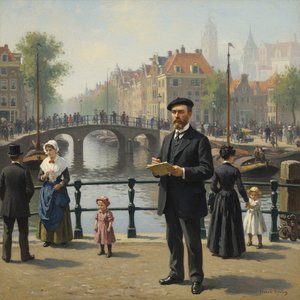
Isaac Lazarus Israëls: A Chronicle of Dutch Life & the Evolution of Impressionistic Realism
Explore the captivating world of Isaac Lazarus Israëls (1865-1934), a leading Dutch Amsterdam Impressionist. Discover his city scenes, portraits & travels through Asia – a chronicle of Dutch life and artistic evolution.