

 效果预览
效果预览
 购买印刷品
购买印刷品 分享
分享 分享
分享
 详情
详情

 下载
下载
 相似作品
相似作品 X射线
X射线 幻灯片播放
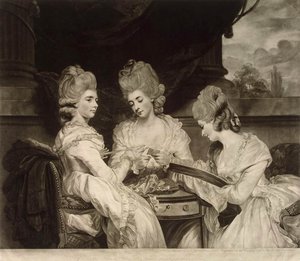
幻灯片播放John Boydell
 展开详情
展开详情




































从与原作比例一致的预设尺寸中进行选择。

您可以输入自定义尺寸,以适配特定的画框或空间。如果所选尺寸与原图比例不符,我们将通过裁剪作品或添加手绘元素来扩展画面。数字样稿将在制作开始前发送给您确认。
请注意,屏幕预览无法准确反映实际的裁剪或扩展效果,只有样稿才能真实呈现最终的构图。
虽然我们提供定制尺寸服务,但为了保留原作比例,建议您从预设列表中选择尺寸。
下单后,OriginalUniqueArt.com 团队将通过电子邮件联系客户获取具体要求,并提供效果预览图。


 玻璃选项仅适用于110厘米以下的尺寸。

John Boydell
复制材质
复制品尺寸
-


最终总价
$ 300
艺术家简介
Valentine Green: A Master of Mezzotint’s Rich Embrace
Valentine Green, born in Salford, England, in 1739, stands as a pivotal figure in the history of British engraving during the late 18th and early 19th centuries. His life story is one interwoven with artistic ambition, financial hardship, and ultimately, a quiet dedication to preserving the legacy of art. Green’s career unfolded against the backdrop of burgeoning London's vibrant artistic scene, a period marked by experimentation in printmaking techniques and a growing appreciation for portraiture and historical subjects. He wasn’t simply an engraver; he was a craftsman who meticulously coaxed tonal depth and nuanced detail from the seemingly simple medium of mezzotint.
Green's early training began under Robert Hancock, a Worcester engraver, providing him with a foundational understanding of the craft. However, it was his relocation to London in 1765 that truly ignited his career. He quickly mastered the intricacies of mezzotint, a process demanding both technical skill and artistic sensitivity. This technique, utilizing a roughened metal plate and ink distribution, allowed for incredibly rich blacks and subtle gradations – qualities that Green exploited with remarkable effect. Initially, he collaborated with Francis Jukes, another prominent aquatint engraver, establishing a partnership that produced some of the era’s most celebrated prints. Their combined efforts showcased a dynamic interplay between light and shadow, capturing the essence of their subjects with astonishing realism.
The Rise to Prominence and Royal Recognition
By 1766, Green had joined the Incorporated Society of Artists, marking his formal entry into London’s artistic circles. His talent quickly garnered recognition, culminating in his election as an Associate Engraver with the Royal Academy in 1775 – a prestigious honor signifying his acceptance by the highest echelons of British art. This period witnessed a flourishing of his work, largely focused on portraiture and engravings based on paintings from the Düsseldorf Gallery, a collection that offered unparalleled access to Old Master works. The Duke of Bavaria granted Green exclusive rights to reproduce these images, a lucrative arrangement that fueled his success for nearly a decade.
Green’s ability to faithfully replicate the details and atmospheric qualities of Reynolds, Romney, and other masters was remarkable. He wasn't merely copying; he was translating the spirit of the original paintings onto paper. His portraits possessed an immediacy and psychological depth rarely seen in contemporary engravings. He understood how to capture not just a likeness but also the character and emotion of his subjects – a skill that cemented his reputation as one of Britain’s foremost engravers.
Financial Ruin and a New Purpose
The 1790s proved to be a devastating period for Green. A series of international speculations, including ventures related to the Düsseldorf Gallery plates, ultimately failed spectacularly. The French siege of Düsseldorf in 1793 effectively halted his lucrative engraving business, plunging him into financial ruin. Despite his diminished circumstances, Green remained dedicated to his craft, continuing to work diligently until 1805. In this year, he accepted a position as Keeper of the British Institution, a role that provided a modest income and allowed him to focus on cataloging and preserving the institution’s collection.
This shift in responsibility marked a significant turning point in Green's life. It represented a move away from commercial success towards a more contemplative pursuit – safeguarding artistic heritage for future generations. While his financial woes were considerable, he never abandoned his passion for engraving, continuing to produce works of exceptional quality until his death in 1813. His later years were characterized by a quiet dignity and a profound appreciation for the enduring power of art.
Legacy and Enduring Influence
Valentine Green’s contribution to British printmaking is undeniable. He elevated mezzotint engraving to an art form, demonstrating its capacity for nuanced tonal expression and capturing the subtleties of human character. His meticulous attention to detail, combined with his deep understanding of painting techniques, resulted in engravings that remain highly valued today. His work serves as a testament to the enduring appeal of traditional printmaking methods and the skill of a craftsman dedicated to his art. The influence of Green’s approach can be seen in subsequent generations of engravers who followed, solidifying his place as a true master of the mezzotint.
Valentine Green
1739 - 1813 , United Kingdom
艺术家简介
- Artistic Movement Or Style: Mezzotint engraving
- Artists Who Influenced This Artist: ['Robert Hancock']
- Date Of Birth: 1739
- Date Of Death: 1813
- Full Name: Valentine Green
- Nationality: British
- Notable Artworks:
- Reynolds portraits
- Romney engravings
- Old Masters prints
- Place Of Birth: Salford, United Kingdom

