切换至版画销售渠道
 展开全文
展开全文







































 对于任何边长超过 105 厘米(约 41 英寸)的艺术品或复制品,画框将以拆解后的组件形式发货。此方法可确保安全送达并防止运输过程中的损坏。


The Essence of a Nighttime Journey
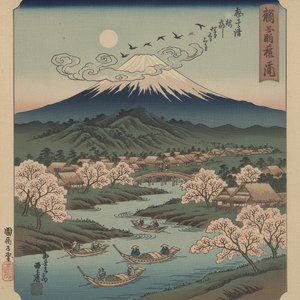
Utagawa Hiroshige’s “Asakusa River” isn't merely a depiction of a scene; it’s an immersion into the heart of Edo-era Tokyo. Painted in 1857, during a period of profound transformation for Japan – grappling with Western influence while clinging fiercely to its traditions – this woodblock print captures a fleeting moment of serenity amidst bustling urban life. The image unfolds like a carefully orchestrated memory: a lone boat glides along the Sumida River under a velvet night sky, reflecting the distant glow of lanterns and the subtle shimmer of water. It’s a scene imbued with a quiet melancholy, a poignant awareness of time's passage, characteristic of Hiroshige’s signature style.
Technique and the Art of *Ukiyo-e*
Hiroshige’s mastery lies in his meticulous application of *ukiyo-e*, or “pictures of the floating world.” This technique, perfected over centuries, involved carving intricate designs onto wooden blocks – one block for each color – then painstakingly printing them onto paper. “Asakusa River” exemplifies this process brilliantly. The artist employs a delicate gradation of Prussian blue and grey to render the sky, creating an atmospheric depth that belies the relatively flat surface of the print. Notice how subtle variations in tone suggest movement within the water and the gentle sway of the boat. The use of *nagashi-zuri*, or loose-ink washes, adds a sense of fluidity and spontaneity, mimicking the ephemeral nature of light and shadow. The composition itself is carefully balanced – the boat’s trajectory draws the eye across the scene, while the distant trees and buildings provide grounding elements.
A Window into Edo Life
Asakusa in 1857 was a vibrant hub, a crossroads of commerce, religion, and entertainment. The temple of Sensō-ji, visible faintly in the background, stood as a focal point for pilgrims and locals alike. The river served as a vital artery for trade and transportation, connecting the city to its surrounding regions. Hiroshige’s choice to depict a simple boat journey – a commonplace activity for many Edo residents – elevates it into something profound. It speaks to the everyday rhythms of life, the quiet moments of contemplation amidst the constant flow of urban activity. The inclusion of figures in the boat, though largely obscured, hints at the human element within this landscape.
Symbolism and a Poetic Mood
Beyond its realistic depiction, “Asakusa River” is rich with symbolic meaning. The lone boat can be interpreted as representing the journey of life itself – a solitary voyage through an uncertain world. The river, a recurring motif in Hiroshige’s work, symbolizes both passage and transformation. The muted colors and soft lighting evoke a sense of nostalgia and melancholy, reflecting the artist's awareness of the fleeting nature of beauty and the inevitable decline of traditional Japan. It is a testament to Hiroshige’s ability to capture not just a scene, but an entire mood – a poignant meditation on time, memory, and the enduring spirit of Edo.
Collecting and Displaying This Masterpiece
Reproductions of “Asakusa River” are available in various sizes and mediums, offering collectors a chance to bring this iconic image into their homes. Consider framing it with simple, natural wood to complement the print’s understated elegance. Its calming aesthetic would be particularly well-suited for spaces seeking tranquility – bedrooms, libraries, or meditation rooms. The print's subtle color palette also harmonizes beautifully with a range of interior design styles, from minimalist to traditional Japanese.
常见问题与解答
"Asakusa River:" 是何时以及使用什么材料创作的?
"Asakusa River:"创作于1857年,采用了Woodblock Print技法。材质与日期说明了原作的创作方式及时间。
歌川广重 的《Asakusa River:》 建议用于何种场景?
歌川广重 的《Asakusa River:》 的建议用途为 Mood,同时也适用于其他场景。
我可以在全屏幻灯片模式下观看“Asakusa River:”吗?
可进行幻灯片浏览:查看 歌川广重 的《Asakusa River:》 的 幻灯片展示 页面。
 实景预览
实景预览
 分享
分享 分享
分享
 详情
详情 指南
指南

 下载作品
下载作品
 相似作品
相似作品 X射线
X射线 幻灯片播放
幻灯片播放 Q&A
Q&A 统计数据
统计数据