
 效果预览
效果预览
 切换至手工绘画版
 分享
分享 分享
分享
 详情
详情

 下载
下载
 相似作品
相似作品 X射线
X射线 幻灯片播放
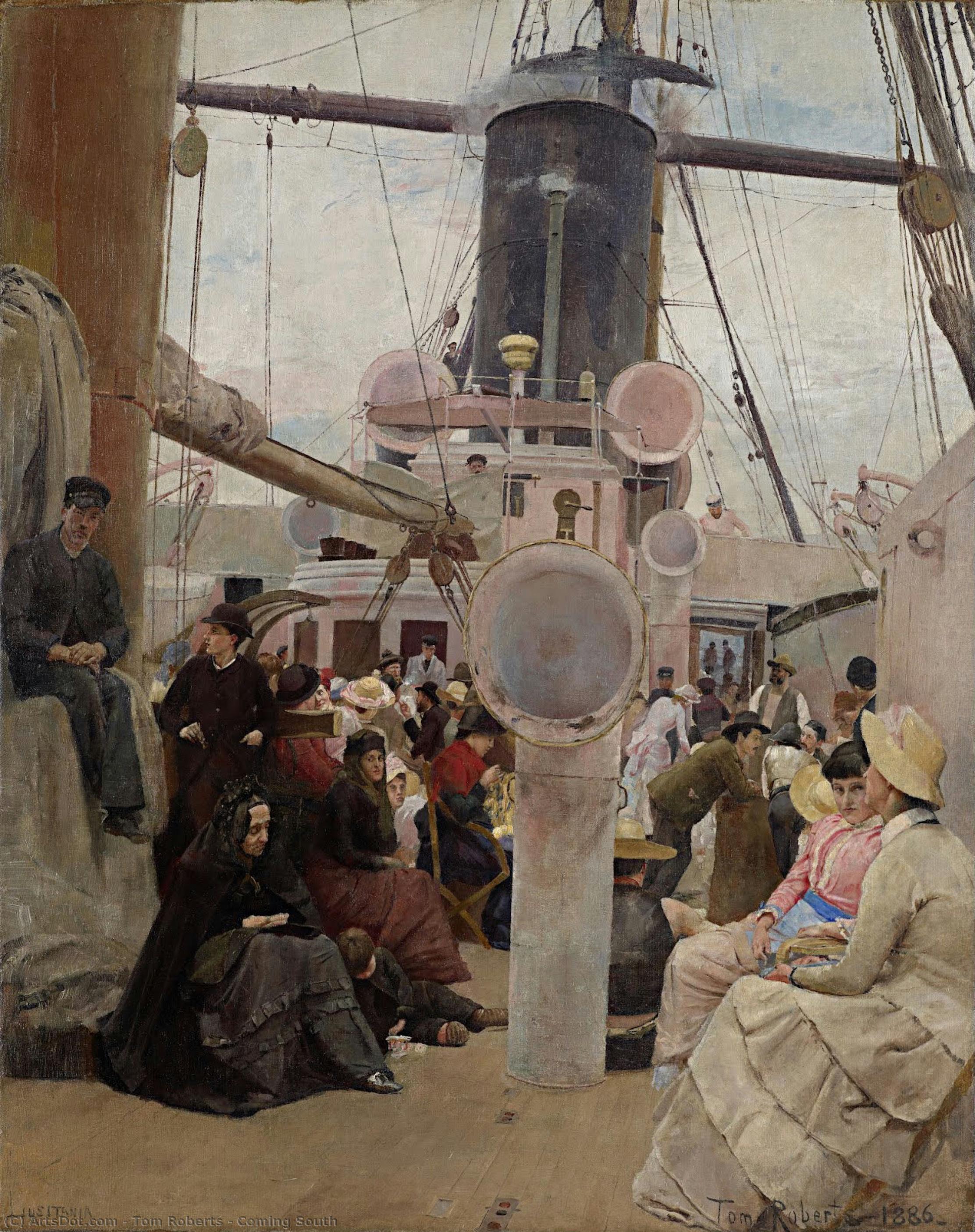
幻灯片播放Coming South
 Oil On Canvas
- WallArt
- Heidelberg School
 1886
1886 63.0 x 52.0 cm
 国立美术馆 (NGV)
 展开详情
展开详情




P118B $10

P118H $10

P118W $10

P438Z $10

P508JH $12

P508YH $12

P805H $10

P805Z $10

P919BZ $10

P919G $10

P919XJ $10

P959ZH $10

P968JZ $12

W106C $8

W218G $10

W218JH $8

W218Y $10

W307PJ $10

W316G $10

W316PJ $8

W316Y $10

W398PJ $8

W4111J $10

W500HY $15

W500JH $15

W692G $12

W849H $8

W940BG $15

W953PJ $8




从与原作比例一致的预设尺寸中进行选择。

您可以输入自定义尺寸,以适配特定的画框或空间。如果您选择的尺寸与原图比例不符,我们将对作品进行裁剪,或通过镜像填充/纯色填充边缘的方式来扩展图像。在开始制作之前,我们会向您发送一份数字效果图供您确认。
请注意,屏幕上的预览并不能反映实际的裁剪或扩展效果。只有效果图才能准确展示最终的构图。
虽然我们提供定制尺寸,但为了保持原图比例,我们建议您从预设列表中选择尺寸。


 玻璃选项仅适用于110厘米以下的尺寸。

Coming South
艺术微喷/版画
复制品尺寸
-


最终总价
$ 80
藏品详情
Coming South by Tom Roberts
Tom Roberts’ ‘Coming South’ (1886) captures migrant life aboard a ship with realism & Velazquez influence. A key Australian Impressionist work, perfect for art collectors. The painting depicts migrants coming to Australia from Europe aboard a steamship. Roberts based the painting on sketches he had made when returning to Australia aboard the SS Lusitania in 1885 after four years abroad in Europe. Historian Humphrey McQueen describes Coming South as one of Roberts’ seven best-known paintings. The National Gallery of Victoria describes it as “a definitive image of the migrant experience” and “Roberts’s first exploration of one of the great themes of Australian life”. The painting was acquired by the National Gallery of Victoria in 1967. It embodies a profound fascination with capturing fleeting moments of everyday life, mirroring the broader artistic currents of Impressionism that swept across Europe during the late Victorian era. Roberts's meticulous attention to detail—the weathered faces of the passengers, the textured fabric of their clothing, and the intricate rigging of the ship—demonstrates his commitment to portraying reality as he perceived it. Roberts’ palette at this point in his career, with its greys, blacks, browns, off-whites and pink, owes much to Diego Velázquez, whose monumental paintings like ‘Las Meninas’ had captivated artists for decades prior. This stylistic homage speaks volumes about Roberts's artistic sensibilities and his desire to engage with the legacy of European art history. The artist deliberately chose muted tones—primarily earthy hues—to convey a sense of solemn contemplation and to evoke the atmosphere of the voyage itself. The composition is crowded yet organized, with figures arranged in various poses – sitting, standing, leaning against railings – creating a sense of depth and activity. Perspective is employed to create a believable three-dimensional space, receding into the background with the ship’s structure. The subject matter centers around the diverse group of people, their clothing suggesting different social classes and time periods (likely mid-19th century). There are symbolic elements related to travel, exploration, and perhaps the burgeoning era of steamships. Roberts's masterful brushstrokes contribute to a textured surface that enhances the visual impact of the painting. The artwork’s overall impression is one of quiet dignity and understated beauty—a testament to Roberts’s ability to distill complex emotions into a single frame. It serves as an enduring reminder of Australia’s formative years, when waves of immigrants arrived seeking opportunity and forging a new national identity. Coming South remains a cornerstone of Australian Impressionism and continues to inspire admiration for its artistic merit and historical significance.艺术家简介
澳大利亚光影的先驱:汤姆·罗伯茨的生命与艺术
1856年3月8日,托马斯·威廉·罗伯茨出生于英国多切斯特。这段早年的岁月,注定了他将成为塑造独特澳大利亚艺术身份的关键人物。1869年,随着家人迁往墨尔本,这段旅程不可逆转地重塑了他的艺术视野。澳大利亚辽阔的土地与那独一无二的光影,在他心中点燃了捕捉这片新家园灵魂的热情。在最初担任摄影师助理的岁月里,罗伯茨磨炼了自己的观察力,并培养出敏锐的构图眼光——这些特质后来成为了他传世杰作的标志性特征。与此同时,他坚持接受正统艺术训练,师从路易斯·布维洛,后者的影响使他深爱风景画,并为其奠定了扎实的传统技艺基础。然而,真正拓宽罗伯茨艺术视野的,是1881年那场远赴欧洲的旅程。铸就澳大利亚印象派
在欧洲期间,尤其是他在伦敦皇家艺术学院的学习经历,让他接触到了当时最前沿的艺术浪潮,其中包括蓬勃发展的印象派运动。他吸收了“外光画法”(plein air painting)的精髓——即直接在户外向自然写生——并专注于捕捉转瞬即逝的光影与大气氛围。1885年回到澳大利亚后,他带来的不仅是技术手段,更有一种创造纯正澳大利亚艺术的炽热渴望。这种抱负促使他与弗雷德里克·麦卡宾、亚瑟·斯特雷顿及查尔斯·康德等艺术家展开合作,共同构成了后来被称为“海德堡画派”或“澳大利亚印象派”的核心力量。这群艺术家在博克斯希尔和伊格蒙特建立了艺术营地,拥抱一种致力于观察与描绘澳大利亚丛林生活的生命方式。这些创作并非单纯的艺术尝试,而是一种文化独立的宣言,他们拒绝盲从欧洲传统,转而歌颂民族独特的性格。1889年的“9x5印象派展览”通过在雪松雪茄盒盖上展示小型画作,大胆宣告了这一全新艺术愿景的到来——这既是对既定规范的有力挑战,也是澳大利亚艺术史上一个关键的转折点。国家叙事与永恒传承
尽管罗伯茨深耕于印象派原则,但他并不满足于仅仅复制风景。他试图创造“国家叙事”——通过绘画描绘澳大利亚日常生活的场景,并赞美其人民。澳大利亚艺术的捍卫者 汤姆·罗伯茨的影响力远超其绘画本身。他是一位孜孜不倦的倡导者,致力于推动澳大利亚艺术界的繁荣,积极推广同仁的作品,并力主建立国家级机构来支持和展示澳大利亚人才。他满怀激情地坚信,创造一种独特的澳大利亚艺术身份至关重要——这种身份应当反映出这个国家独特的景观、人民与经历。他是首位公开倡导建立澳大利亚国家肖像馆的人,因为他深知肖像画捕捉民族精神的力量。他对培育充满活力的艺术文化的奉献,不仅巩固了他作为顶尖艺术家的地位,更使他成为一位塑造了澳大利亚艺术史进程的远见卓识的领袖。他的遗产持续激励着一代又一代的艺术家,并作为艺术能够定义与赞美民族身份这一永恒力量的明证而存在。
馆藏与进一步探索
- 在 OriginalUniqueArt.com 探索汤姆·罗伯茨的艺术作品。
- 通过 维基百科关于汤姆·罗伯茨的词条 了解更多关于他的生平与成就。
- 在墨尔本联邦广场的伊恩·波特中心(Ian Potter Centre)观赏维多利亚国家美术馆的澳大利亚艺术收藏,其中包括罗伯茨的作品。
- 通过 澳大利亚传记词典 等资源深入研究他的生平与艺术发展。

汤姆·罗伯茨
1856 - 1931 , 英国
艺术家简介
- Artistic Movement Or Style: 印象派
- Artists Or Movements Influenced By This Artist:
- 海德堡画派
- 澳大利亚艺术
- Artists Who Influenced This Artist:
- 路易·布维洛
- 惠斯勒
- 委拉斯凯兹
- Date Of Birth: 1856年3月8日
- Date Of Death: 1931年9月14日
- Full Name: 托马斯·威廉·罗伯茨
- Nationality: 澳大利亚
- Notable Artworks:
- 剪羊毛
- 冲出重围!
- 劫持
- 南下
- 宏伟画卷
- Place Of Birth: 英国多切斯特
相关文章

配送与退货
APS 提供全球范围内的艺术品运输,具备博物馆级别的照护、全程追踪,以及 30 天退款保证。从报关支持到 Priority Production,信赖透明的服务、安全的包装,以及为收藏家、设计师和画廊提供的可靠交付。
Robert W. Salmon: Navigating the Currents of Maritime Painting & American Realism
Explore the captivating maritime paintings of Robert W. Salmon, a pioneer of American Luminism. Discover his Boston Harbor scenes, legacy, and collecting guide at OriginalUniqueArt.

Impressionism's Masterpieces: 10 Paintings That Defined a Movement | OriginalUniqueArt
Journey through Impressionism's heart with 10 iconic paintings by Monet, Renoir & Degas. Explore light, color & the stories behind these masterpieces. Find museum-quality art reproductions and elevate your home decor on OriginalUniqueArt.com.
Robert Julian Onderdonk: Pioneering Texas Impressionism & Capturing Regional Light
Explore the life & art of Robert Julian Onderdonk, 'the Father of Texas Painting.' Discover his vibrant Impressionist landscapes, iconic bluebonnets, and lasting legacy. Learn about collecting Onderdonk's work today.

Fleeting Moments & Radiant Light: Exploring the Enduring Legacy of Impressionism
Explore the captivating world of Impressionism! Discover its history, key artists like Monet & Renoir, defining techniques, and lasting impact on modern art. Expert insights for collectors.


