效果预览
效果预览
 购买手绘画作
 分享
分享 分享
分享
 详情
详情

 下载
下载
 相似作品
相似作品 X射线
X射线 幻灯片播放
幻灯片播放The Young Englishman
 Oil On Canvas
- WallArt
- Renaissance Italian Painting
 1540
1540 111.0 x 93.0 cm
 皮提宫博物馆
 展开详情
展开详情




P118B $10

P118H $10

P118W $10

P438Z $10

P508JH $12

P508YH $12

P805H $10

P805Z $10

P919BZ $10

P919G $10

P919XJ $10

P959ZH $10

P968JZ $12

W106C $8

W218G $10

W218JH $8

W218Y $10

W307PJ $10

W316G $10

W316PJ $8

W316Y $10

W398PJ $8

W4111J $10

W500HY $15

W500JH $15

W692G $12

W849H $8

W940BG $15

W953PJ $8




从与原作比例一致的预设尺寸中进行选择。

您可以输入自定义尺寸,以适配特定的画框或空间。如果您选择的尺寸与原图比例不符,我们将对作品进行裁剪,或通过镜像填充/纯色填充边缘的方式来扩展图像。在开始制作之前,我们会向您发送一份数字效果图供您确认。
请注意,屏幕上的预览并不能反映实际的裁剪或扩展效果。只有效果图才能准确展示最终的构图。
虽然我们提供定制尺寸,但为了保持原图比例,我们建议您从预设列表中选择尺寸。


 玻璃选项仅适用于110厘米以下的尺寸。

The Young Englishman
艺术微喷/版画
复制品尺寸
-


最终总价
$ 80
藏品详情
The Enigmatic Youth: Unveiling Titian’s ‘The Young Englishman’
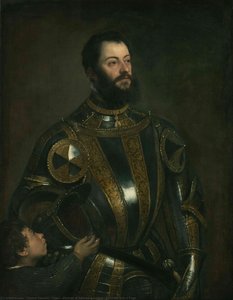
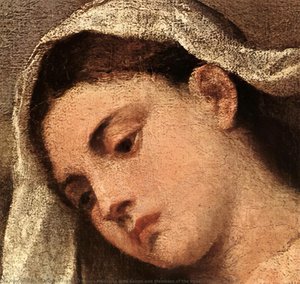
Titian’s “The Young Englishman,” painted in 1540, isn't merely a portrait; it’s an invitation into the contemplative heart of a Renaissance gentleman. Held within the hallowed halls of the Galleria Palatina at Palazzo Pitti in Florence, this oil on canvas masterpiece transcends its simple subject matter to become a profound meditation on youth, introspection, and the burgeoning artistic sensibilities of the era. The painting immediately captivates with its muted palette – deep browns, charcoal greys, and subtle creams—a deliberate choice that draws the eye inward, mirroring the subject’s own gaze.
At first glance, the figure appears strikingly formal, clad in a dark, almost severe outfit accented by a delicate lace collar. However, it's within the details – the slightly downturned eyes, the subtle furrow of his brow, and the overall posture of quiet contemplation—that the painting’s true power resides. Titian masterfully employs sfumato, that characteristic hazy blurring technique perfected during the High Renaissance, to soften edges and create an atmosphere of veiled mystery. The background, deliberately indistinct, serves not as a distraction but as a canvas for the subject's internal world, amplifying his sense of solitude and thoughtful reflection.
A Master’s Technique: The Language of Color and Light
Titian was renowned for his revolutionary approach to color, moving away from the flat, monochrome palettes favored by earlier generations. In “The Young Englishman,” he demonstrates this brilliantly, layering translucent washes of pigment to achieve a remarkable sense of depth and luminosity. Notice how the light catches the folds of his clothing, creating subtle highlights that seem to shimmer with an inner radiance. The use of chiaroscuro—the dramatic contrast between light and shadow—further enhances the three-dimensionality of the figure, imbuing him with a palpable presence.
The brushwork itself is remarkably loose and expressive, characteristic of Titian’s mature style. He avoids meticulously detailed rendering, instead relying on broad strokes and subtle gradations to convey texture and form. This technique lends the portrait an immediacy and vitality that belies its age, as if the subject were caught in a fleeting moment of thought. The careful blending of colors creates a sense of atmospheric perspective, subtly receding into the background and drawing the viewer’s eye towards the central figure.
Historical Context: A Portrait of an Age
“The Young Englishman” was painted during a period of immense artistic and intellectual ferment in Florence. Titian, already a celebrated master, was at the height of his powers, influencing generations of artists with his innovative techniques and profound understanding of human psychology. The portrait reflects the humanist ideals that were shaping Renaissance culture—a renewed interest in classical antiquity, a celebration of human potential, and a focus on individual experience.
The painting’s subject remains somewhat enigmatic. While often identified as Henry Howard, Earl of Surrey, or perhaps Ippolito Riminaldi, the Italian diplomat, definitive proof is lacking. Regardless of his identity, “The Young Englishman” embodies the spirit of the era—a young man poised on the cusp of adulthood, grappling with questions of identity, purpose, and the complexities of the world around him.
A Timeless Reflection: Reproduction and Beyond
At OriginalUniqueArt.com, we are proud to offer meticulously crafted oil painting reproductions of “The Young Englishman,” capturing every nuance of Titian’s original masterpiece. Our skilled artisans employ the same techniques—loose brushwork, layered glazes, and a deep understanding of color theory—to recreate the painting with breathtaking accuracy. These reproductions provide art enthusiasts and collectors alike with an affordable way to own a piece of Renaissance history.
More than just a beautiful image, “The Young Englishman” is a powerful reminder of the enduring appeal of portraiture as a means of exploring the human condition. It’s a painting that invites contemplation, sparking our imaginations and reminding us of the timeless beauty and mystery of the individual spirit. Consider this reproduction not merely as decoration, but as a window into a bygone era—a testament to the genius of Titian and the enduring legacy of the Renaissance.
艺术家简介
提香:威尼斯文艺复兴的色彩大师
提香(Tiziano Vecellio),这位名字在艺术史上熠熠生辉的人物,是意大利文艺复兴时期最伟大的画家之一。他不仅是一位技艺精湛的艺术家,更是一位色彩革新者,深刻地影响了西方绘画的发展轨迹。他的作品充满了活力、情感和对人性的深刻洞察,至今仍深深打动着无数观众的心灵。
提香生于1488年或1490年左右,出生在多洛米蒂山脉脚下的皮耶韦迪卡多尔小镇。他的早年生活并不详尽,但可以确定的是,他怀揣着对艺术的无限热情,前往威尼斯求学。在那里,他先师从马赛克画家塞巴斯蒂亚诺·祖卡托,后又在金替莱·贝利尼和他的弟弟乔瓦尼·贝利尼的指导下学习绘画技巧。然而,真正塑造提香艺术风格的关键人物是乔尔吉奥内。这两位艺术家共同创作了许多作品,包括“德国商人行会”的外墙壁画,这些合作不仅提升了提香的技艺,也奠定了其独特的艺术风格的基础。
提香的艺术生涯并非一蹴而就,而是经历了一个不断发展和创新的过程。他的早期作品深受乔尔吉奥内影响,呈现出一种柔和、诗意的氛围。然而,随着时间的推移,他逐渐摆脱了这种风格的束缚,开始探索更加大胆和富有表现力的色彩运用。他不再满足于简单的模仿自然,而是试图通过色彩来表达情感、传递思想。例如,《圣母玛利亚与圣伊丽莎白相遇》这幅作品,就充分展现了他对色彩的精湛掌握和对人物内心世界的深刻洞察。提香对色彩的理解达到了前所未有的高度,他能够准确地把握不同颜色的相互作用,创造出令人惊叹的光影效果。
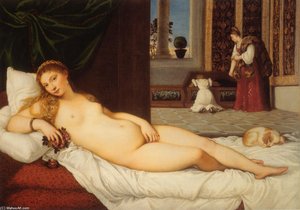
提香不仅是一位杰出的肖像画家,也是一位伟大的历史画、神话画和宗教画大师。他为威尼斯共和国的统治者、欧洲各国的君主以及教皇绘制了大量的肖像作品,这些肖像栩栩如生,充满了人物个性和魅力。他的历史画和宗教画则以其宏大的场面、深刻的思想内涵和精湛的绘画技巧而著称。《乌尔比诺的维纳斯》是提香最著名的作品之一,它不仅是一幅充满感官美感的裸体画作,更是一件具有象征意义的艺术品。这幅画以其大胆的构图、丰富的色彩和对人物情感的细腻刻画而闻名于世。
威尼斯绘画的领军人物与持久的影响
提香在威尼斯取得了巨大的成功,成为了当时最受尊敬和追捧的艺术家之一。他不仅为威尼斯共和国服务,还受到欧洲各国君主的青睐。他的作品被广泛收藏,影响了无数后世画家。彼得·保罗·鲁本斯、伦勃朗等艺术大师都深受提香的影响,并从他的作品中汲取灵感。提香的绘画风格对巴洛克艺术的发展产生了深远的影响,为西方绘画开创了新的时代。
提香于1576年去世,享年约88岁。他留下了大量的作品,这些作品不仅是意大利文艺复兴时期艺术的瑰宝,也是人类文明的共同财富。如今,他的作品散落在世界各地的博物馆和美术馆中,吸引着来自全球各地的观众前来欣赏。
进一步探索
- 博物馆与收藏: 参观帕多瓦圣托学校和威尼斯圣萨尔瓦多尔教堂,欣赏提香令人惊叹的壁画。
- 相关艺术家: 探索乔尔吉奥内对提香早期风格的影响,以及提香对鲁本斯、德拉克洛瓦等艺术家的影响。
- 历史背景: 深入了解意大利文艺复兴时期和威尼斯绘画的文化氛围,以便更好地理解提香的艺术成就。

提香
1490 - 1576 , 意大利
艺术家简介
- Artistic Movement Or Style: 文艺复兴时期, 威尼斯画派
- Artists Or Movements Influenced By This Artist:
- 西欧艺术家
- 晚期意大利文艺复兴
- Artists Who Influenced This Artist:
- 乔尔吉奥内
- 乔瓦尼·贝利尼
- Date Of Birth: 约1488/90年
- Date Of Death: 1576年8月27日
- Full Name: 蒂齐亚诺·维切利奥
- Nationality: 意大利人
- Notable Artworks:
- 《穿簇锦袖的男子》
- 《圣母来访》
- 《巴伐罗阁下肖像》
- Place Of Birth: 皮耶韦迪卡多尔,意大利
相关文章

The Enduring Legacy of Oil on Canvas: Technique, History & Aesthetic Impact
Explore the rich history & techniques of oil painting – from Renaissance masters to Impressionism. Discover pigments, layering methods, and why this timeless medium endures. Expert insights for artists & art enthusiasts.

Oil on Canvas: A Historical & Technical Exploration of a Timeless Artistic Medium
Explore the rich history & enduring techniques of oil painting on canvas. Discover the science behind its longevity, conservation practices, and contemporary relevance. Expert insights for art enthusiasts.

The Enduring Power of Painting: A Historical & Contemporary Exploration of Form and Emotion
Explore the rich history & enduring techniques of oil painting with OriginalUniqueArt. Discover masterpieces, learn about art collecting, and find authentic handmade reproductions crafted by skilled artists.
Titian: Innovation, Technique & the Venetian Renaissance Portrait Tradition
Explore the revolutionary techniques & enduring legacy of Titian, the master of Venetian Renaissance portraiture. Discover insights for collectors & appreciate his impact on art history.
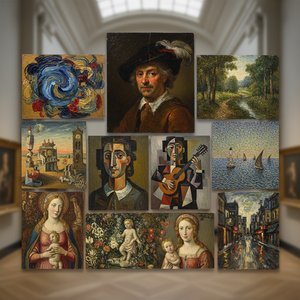
Oil on Board Masters: 10 Paintings That Redefined Art | OriginalUniqueArt
Explore 10 legendary 'Oil on Board' masterpieces by Van Gogh, Monet & more! Discover art history, iconic styles like Impressionism, and find museum-quality reproductions to elevate your home decor. Explore the full collection online at OriginalUniqueArt.com.