
 效果预览
效果预览
 分享
分享 分享
分享
 详情
详情

 下载
下载
 相似作品
相似作品 X射线
X射线 幻灯片播放
幻灯片播放 统计数据
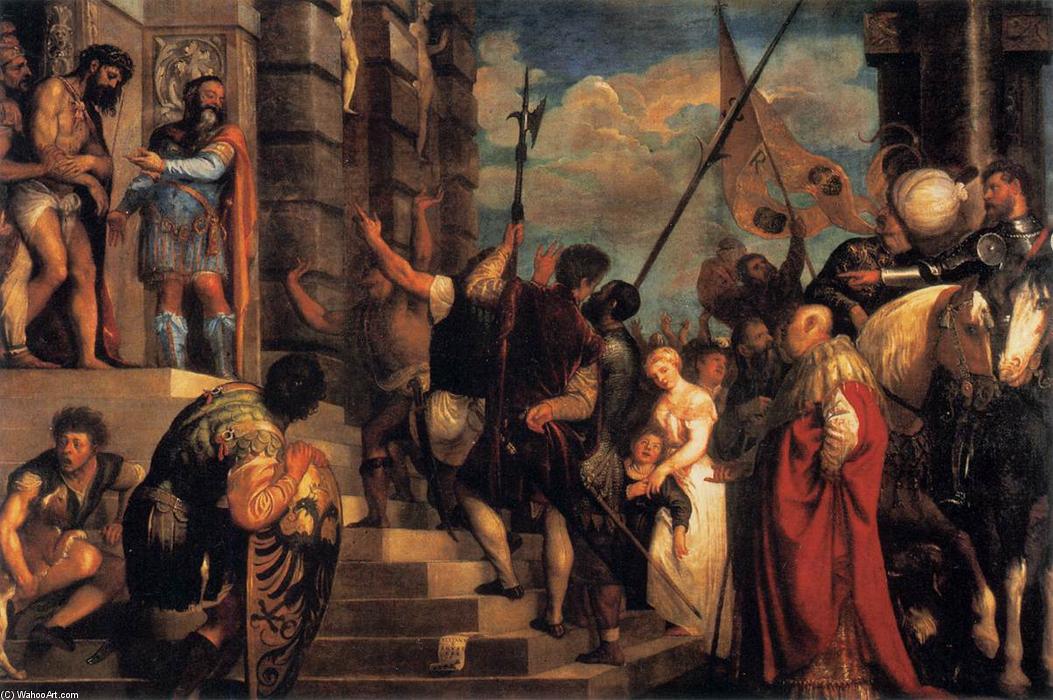
统计数据Ecce Homo
 Oil On Canvas
- WallArt
- Venetian Renaissance
 1543
1543 242.0 x 361.0 cm
 Kunsthistorisches Museum
 展开详情
展开详情
艺术微喷/版画
博物馆级艺术微喷或帆布版画,制作高效,并提供多种饰面选择。 ( 购买手绘画作 切换至数字图像销售渠道)




P118B $10

P118H $10

P118W $10

P438Z $10

P508JH $12

P508YH $12

P805H $10

P805Z $10

P919BZ $10

P919G $10

P919XJ $10

P959ZH $10

P968JZ $12

W106C $8

W218G $10

W218JH $8

W218Y $10

W307PJ $10

W316G $10

W316PJ $8

W316Y $10

W398PJ $8

W4111J $10

W500HY $15

W500JH $15

W692G $12

W849H $8

W940BG $15

W953PJ $8




从与原作比例一致的预设尺寸中进行选择。

您可以输入自定义尺寸,以适配特定的画框或空间。如果您选择的尺寸与原图比例不符,我们将对作品进行裁剪,或通过镜像填充/纯色填充边缘的方式来扩展图像。在开始制作之前,我们会向您发送一份数字效果图供您确认。
请注意,屏幕上的预览并不能反映实际的裁剪或扩展效果。只有效果图才能准确展示最终的构图。
虽然我们提供定制尺寸,但为了保持原图比例,我们建议您从预设列表中选择尺寸。


 玻璃选项仅适用于110厘米以下的尺寸。

Ecce Homo
艺术微喷/版画
复制品尺寸
-


最终总价
$ 80
The Lamentation – A Window into Venetian Soul
Titian’s “Ecce Homo,” a pivotal work from around 1543, isn't merely a depiction of the biblical moment when Pontius Pilate presents Jesus to a hostile crowd; it’s a profound meditation on grief, faith, and the unsettling beauty of suffering. This particular iteration, distinguished by its remarkably delicate color scheme – the deep blues of the cloak, the blush of the garment, and the saffron yellow of the veil – offers a glimpse into Titian's mastery of light and emotion, a hallmark of his Venetian style. The painting’s genesis is shrouded in some mystery; inventories suggest it may have been one of several works, including a wooden Madonna, that accompanied Charles V to the monastery of Yuste, hinting at its significance as a devotional object intended for private contemplation.
Titian's approach transcends simple narrative illustration. He doesn’t simply record an event; he imbues it with a palpable sense of sorrow and vulnerability. The composition itself is carefully orchestrated: Jesus, presented in a pose that simultaneously conveys humility and profound pain, dominates the scene. His hands, clasped together as if in prayer or supplication, are rendered with exquisite detail – every crease and line etched with an almost unbearable weight. The figures surrounding him—soldiers, onlookers—are sketched with swift, confident strokes, their expressions ranging from indifference to veiled hostility, further amplifying the central figure’s isolation.
A Masterclass in Venetian Color and Technique
Executed in oil on canvas, “Ecce Homo” exemplifies Titian's revolutionary use of color. He wasn’t simply applying pigment; he was manipulating light and shadow to create an illusion of depth and atmosphere. The blues are not uniform but layered with subtle variations, suggesting the folds of the cloak and the play of light on the fabric. The pink garment is treated with a delicate glazing technique, creating a luminous quality that seems to emanate from within. This masterful handling of color was revolutionary for its time, moving away from the flat, monochrome styles prevalent in Northern Europe.
Titian’s brushwork is equally remarkable. It's loose and expressive, yet remarkably controlled. He employs a technique known as “alla prima,” meaning he completed the painting in a single session, allowing for spontaneity and immediacy. Notice how he builds up layers of color with thin washes, creating a sense of transparency and luminosity. The details—the texture of the veil, the folds of the garments, the expressions on the faces—are rendered with astonishing precision, demonstrating Titian’s unparalleled skill as a portraitist and his deep understanding of human anatomy.
Historical Context and Symbolic Resonance
To understand “Ecce Homo,” it's crucial to consider its historical context. Painted in the 1540s during a period of religious upheaval and political instability, the image resonated deeply with viewers grappling with questions of faith, justice, and human responsibility. The scene itself—the presentation of a condemned man to a crowd—served as a potent metaphor for the complexities of power and the moral dilemmas faced by those in authority. The very title, “Behold the Man,” is laden with significance, challenging viewers to confront the humanity of Jesus and question their own complicity in his fate.
Furthermore, the inclusion of horses within the scene adds an intriguing layer of symbolism. While seemingly incongruous, they likely represent Roman authority and imperial power—a visual reminder of the forces that ultimately condemned Christ. The presence of these animals underscores the painting’s broader commentary on the intersection of faith, politics, and human nature.
A Timeless Appeal – Reproduction Possibilities
OriginalUniqueArt offers meticulously crafted hand-painted reproductions of “Ecce Homo,” allowing art lovers to experience Titian's masterpiece in stunning detail. Our skilled artisans replicate every nuance of color, texture, and brushwork, ensuring that the reproduction captures the emotional depth and artistic brilliance of the original. Whether you’re seeking a statement piece for your home or office, or a unique gift for an art enthusiast, our reproductions provide an authentic and captivating representation of this iconic work.
Explore our range of sizes and framing options to find the perfect “Ecce Homo” reproduction that complements your personal style. Each reproduction is created with archival-quality materials, guaranteeing its longevity and preserving the beauty of Titian’s vision for generations to come.
艺术家简介
提香:威尼斯文艺复兴的色彩大师
提香(Tiziano Vecellio),这位名字在艺术史上熠熠生辉的人物,是意大利文艺复兴时期最伟大的画家之一。他不仅是一位技艺精湛的艺术家,更是一位色彩革新者,深刻地影响了西方绘画的发展轨迹。他的作品充满了活力、情感和对人性的深刻洞察,至今仍深深打动着无数观众的心灵。
提香生于1488年或1490年左右,出生在多洛米蒂山脉脚下的皮耶韦迪卡多尔小镇。他的早年生活并不详尽,但可以确定的是,他怀揣着对艺术的无限热情,前往威尼斯求学。在那里,他先师从马赛克画家塞巴斯蒂亚诺·祖卡托,后又在金替莱·贝利尼和他的弟弟乔瓦尼·贝利尼的指导下学习绘画技巧。然而,真正塑造提香艺术风格的关键人物是乔尔吉奥内。这两位艺术家共同创作了许多作品,包括“德国商人行会”的外墙壁画,这些合作不仅提升了提香的技艺,也奠定了其独特的艺术风格的基础。
提香的艺术生涯并非一蹴而就,而是经历了一个不断发展和创新的过程。他的早期作品深受乔尔吉奥内影响,呈现出一种柔和、诗意的氛围。然而,随着时间的推移,他逐渐摆脱了这种风格的束缚,开始探索更加大胆和富有表现力的色彩运用。他不再满足于简单的模仿自然,而是试图通过色彩来表达情感、传递思想。例如,《圣母玛利亚与圣伊丽莎白相遇》这幅作品,就充分展现了他对色彩的精湛掌握和对人物内心世界的深刻洞察。提香对色彩的理解达到了前所未有的高度,他能够准确地把握不同颜色的相互作用,创造出令人惊叹的光影效果。
提香不仅是一位杰出的肖像画家,也是一位伟大的历史画、神话画和宗教画大师。他为威尼斯共和国的统治者、欧洲各国的君主以及教皇绘制了大量的肖像作品,这些肖像栩栩如生,充满了人物个性和魅力。他的历史画和宗教画则以其宏大的场面、深刻的思想内涵和精湛的绘画技巧而著称。《乌尔比诺的维纳斯》是提香最著名的作品之一,它不仅是一幅充满感官美感的裸体画作,更是一件具有象征意义的艺术品。这幅画以其大胆的构图、丰富的色彩和对人物情感的细腻刻画而闻名于世。
威尼斯绘画的领军人物与持久的影响
提香在威尼斯取得了巨大的成功,成为了当时最受尊敬和追捧的艺术家之一。他不仅为威尼斯共和国服务,还受到欧洲各国君主的青睐。他的作品被广泛收藏,影响了无数后世画家。彼得·保罗·鲁本斯、伦勃朗等艺术大师都深受提香的影响,并从他的作品中汲取灵感。提香的绘画风格对巴洛克艺术的发展产生了深远的影响,为西方绘画开创了新的时代。
提香于1576年去世,享年约88岁。他留下了大量的作品,这些作品不仅是意大利文艺复兴时期艺术的瑰宝,也是人类文明的共同财富。如今,他的作品散落在世界各地的博物馆和美术馆中,吸引着来自全球各地的观众前来欣赏。
进一步探索
- 博物馆与收藏: 参观帕多瓦圣托学校和威尼斯圣萨尔瓦多尔教堂,欣赏提香令人惊叹的壁画。
- 相关艺术家: 探索乔尔吉奥内对提香早期风格的影响,以及提香对鲁本斯、德拉克洛瓦等艺术家的影响。
- 历史背景: 深入了解意大利文艺复兴时期和威尼斯绘画的文化氛围,以便更好地理解提香的艺术成就。

提香
1490 - 1576 , 意大利
艺术家简介
- Artistic Movement Or Style: 文艺复兴时期, 威尼斯画派
- Artists Or Movements Influenced By This Artist:
- 西欧艺术家
- 晚期意大利文艺复兴
- Artists Who Influenced This Artist:
- 乔尔吉奥内
- 乔瓦尼·贝利尼
- Date Of Birth: 约1488/90年
- Date Of Death: 1576年8月27日
- Full Name: 蒂齐亚诺·维切利奥
- Nationality: 意大利人
- Notable Artworks:
- 《穿簇锦袖的男子》
- 《圣母来访》
- 《巴伐罗阁下肖像》
- Place Of Birth: 皮耶韦迪卡多尔,意大利
相关文章
佛罗伦萨文艺复兴大师:安杰利科25幅传世名作赏析 | OriginalUniqueArt
探索佛罗伦萨文艺复兴大师安杰利科的25幅传世名作!深入了解其宗教绘画、壁画艺术与天使般的风格。OriginalUniqueArt.com提供高清复制品及精选装饰画,为您的室内空间增添永恒之美。立即在线探索完整系列!

Mastering Color and Light: The Timeless Brilliance of Titian's Venetian Masterpieces
Explore the luminous mastery of Titian. Discover how the Venetian master revolutionized color and light through breathtaking Renaissance techniques, from Venus Anadyomene to profound allegories, and learn to bring this timeless brilliance into your private collection.
Titian: Innovation, Technique & the Venetian Renaissance Portrait Tradition
Explore the revolutionary techniques & enduring legacy of Titian, the master of Venetian Renaissance portraiture. Discover insights for collectors & appreciate his impact on art history.
Jacob Henricus Maris: A Master of Dutch Atmospheric Realism & the Intimate Landscape
Explore the captivating world of Jacob Henricus Maris, a leading figure of the Dutch Hague School. Discover his atmospheric landscapes, signature brushstrokes & lasting influence on 19th-century art. Learn more at OriginalUniqueArt.

埃尔·格列柯25幅杰作:探索艺术大师的信仰与火焰
探索埃尔·格列柯25幅杰作,领略这位西班牙画家巴洛克风格的宗教绘画魅力。从《圣塞巴斯蒂安》到《沉思者》,感受信仰与艺术的交融。OriginalUniqueArt.com提供高品质油画复制品,为您的家居装饰增添经典之美!探索完整系列作品。


