

 实景预览
实景预览
 发送
发送 分享
分享
 详情
详情 指南
指南

 下载图片
下载图片
 相似作品
相似作品 X射线
X射线 幻灯片播放
幻灯片播放 统计数据
统计数据Coutances
 Impressionism
 1895
1895 41.0 x 31.0 cm
 Ruskin Library
 阅读全文
阅读全文
艺术微喷/版画
博物馆级艺术微喷或帆布版画,制作高效,并提供多种饰面选择。 ( 订购此收藏品的纯手工复刻画作 切换至数字图像销售渠道)




































您可以从与原作比例一致的预设尺寸中进行选择。

您可以输入自定义尺寸,以适配特定的画框或空间。如果您选择的尺寸与原图比例不符,我们将对作品进行裁剪,或通过镜像填充/纯色填充边缘的方式来扩展图像。在开始制作之前,我们会向您发送一份数字效果图供您确认。
请注意,屏幕上的预览并不能反映实际的裁剪或扩展效果。只有效果图才能准确展示最终的构图。
虽然我们提供定制尺寸,但为了保持原图比例,我们建议您从预设列表中选择尺寸。


 玻璃选项仅适用于110厘米以下的尺寸。

Coutances
艺术微喷/版画
复刻品尺寸说明
-


总计金额
$ 80
艺术家简介
The Visionary Lines of Thomas Matthews Rooke
In the golden, twilight era of the Victorian age, few artists captured the intersection of architectural permanence and atmospheric fleetingness as delicately as Thomas Matthews Rooke. Born in London in 1842, Rooke emerged not merely as a painter, but as a meticulous chronicler of a changing world. His life and work were deeply woven into the very fabric of the British Arts and Crafts movement, serving as a bridge between the rigid precision of classical documentation and the emotive, light-drenched sensibilities of the burgeoning Impressionist movement. To look upon a Rooke watercolor is to witness a profound dialogue between the stone of antiquity and the ephemeral breath of the English landscape.
Rooke’s artistic identity was forged in the crucible of some of the most influential creative circles of the nineteenth century. His early professional years were defined by his role as a designer at Morris & Co., where he worked alongside luminaries such as William Morris and Edward Burne-Jones. This period was transformative, embedding within him a reverence for decorative integrity and the organic beauty found in historical motifs. Perhaps most significantly, Rooke’s career was profoundly shaped by his relationship with the great critic and polymath John Ruskin. Commissioned by Ruskin to document threatened architectural sites across England, Rooke embraced a mission of social and aesthetic responsibility, using his brush to preserve the memory of landscapes and structures facing the encroachment of industrial modernity.
A Mastery of Light and Architecture
The technical brilliance of Rooke lies in his remarkable ability to balance two seemingly contradictory impulses: the exacting detail required for architectural rendering and the fluid, atmospheric grace of watercolor. While his training allowed him to capture the structural nuances of Italian architecture and English landmarks with scientific clarity, he was never a mere draftsman. Under the influence of Ruskinian ideals, Rooke sought the "truth" in nature, which often led him toward a more luminous, almost spiritual application of color. His works, such as the evocative Coutances, demonstrate an ability to bathe town squares in muted, nostalgic tones that evoke a sense of time suspended.
His versatility extended far beyond the architectural; Rooke was equally adept at navigating the dramatic narratives of the Pre-Raphaelite tradition. His contributions to biblical and historical subjects, such as the intricate panels of Jeptha’s Vow, reveal a capacity for rich, symbolic storytelling. In these pieces, one finds a masterful use of light to heighten tension and emotion, proving that his technical skill was always at the service of a deeper, more poetic narrative. This duality—the ability to be both a precise observer of form and a romantic interpreter of mood—remains the hallmark of his enduring legacy.
Legacy and Historical Significance
Though often remembered in the shadow of giants like Morris or Burne-Jones, Thomas Matthews Rooke’s contribution to the visual history of the nineteenth century is indispensable. He was a vital participant in the movement to protect the aesthetic heritage of Britain, acting as an artistic sentinel for the Society for the Protection of Ancient Buildings. His work serves as a primary visual record of a period of intense transition, capturing the dignity of the old world even as the new world began to reshape it.
The significance of his life can be summarized through several key pillars of his career:
- Collaborative Excellence: His role as a studio assistant to Edward Burne-Jones and a designer for Morris & Co. placed him at the heart of the most important decorative movement of the era.
- Ruskinian Stewardship: Through his commissions for John Ruskin, he helped pioneer the concept of art as a tool for historical preservation and moral education.
- Stylistic Synthesis: He successfully merged the meticulousness of architectural drawing with the atmospheric innovations of late-century watercolor techniques.
- Generational Influence: As the father of the notable wood-engraver Noel Rooke, his artistic lineage continued to influence British printmaking and design well into the twentieth century.
Today, the works of Thomas Matthews Rooke stand as much more than historical artifacts; they are windows into a lost aesthetic sensibility, inviting modern viewers to rediscover the profound beauty found in the quiet details of the built environment and the soft, shifting light of the natural world.

thomas matthews rooke
1842 - 1942
快速概览
- Artistic Movement Or Style: Watercolor Painting
- Artists Or Movements Influenced By This Artist: ['Pre-Raphaelitism']
- Artists Who Influenced This Artist: ['John Ruskin']
- Date Of Birth: 1842
- Date Of Death: 1942
- Full Name: Thomas Matthews Rooke
- Nationality: British
- Notable Artworks:
- Jeptha’s Vow III
- Coutances
- The Dancing Girls
- Place Of Birth: England
相关文章
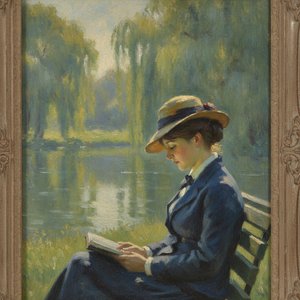
Capturing Contemplation: The Most Thoughtful Impressionist Masterpieces
Explore the profound emotional depth of Impressionist and Post-Impressionist masterpieces. From Renoir's tranquil landscapes to Van Gogh's vibrant soul, discover how these legendary artists captured the essence of contemplation through light, color, and texture.

Impressionistic Realism's Finest: 10 Masterpieces for Your Home | OriginalUniqueArt
Journey through Impressionistic Realism with 10 iconic masterpieces by Monet, Renoir & Van Gogh. Explore art history, techniques & find museum-quality reproductions for your home at OriginalUniqueArt.com. Discover all masterpieces online!
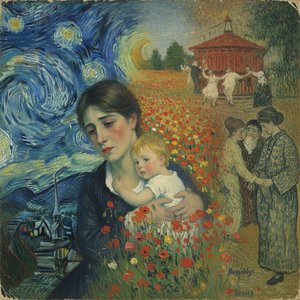
Capturing the Soul: The Most Emotionally Moving Impressionist and Post-Impressionist Masterpieces
Discover the profound emotional depth of Impressionist and Post-Impressionist masterpieces. Explore how legends like Monet, Van Gogh, and Gauguin captured light and soul through evocative landscapes and vibrant brushwork for a timeless connection to art history.
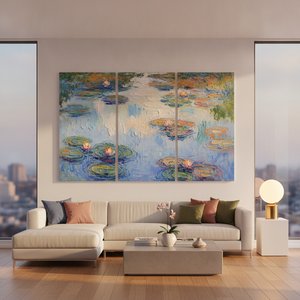
Modern Soul, Timeless Light: Bringing the Magic of Impressionist Masterpieces into Contemporary Interiors
Discover how to infuse contemporary spaces with the luminous magic of Impressionism. From Monet's light to Renoir's warmth, learn expert tips for styling hand-painted masterpieces and custom art reproductions in your modern home.

印象派风景画的十部巨作:定义艺术与家的和谐之境
探索印象派风景画的十部经典巨作!从莫奈到雷诺阿,揭秘大师们的技法与灵感。OriginalUniqueArt.com为您呈现高清油画复制和精选艺术品,点亮您的家居空间。立即发现更多艺术珍宝!