Rococo
William Boyce (托馬斯·哈德遜)
托馬斯·哈德遜 (1701–1779) 创作了《William Boyce》。 它属于 Rococo 运动。 采用 Oil 创作。
- Oil

 实景预览

 手工油画复制品
 分享
 分享
 作品详情表


 下载作品
 相似作品
 X射线
 幻灯片播放
 问答

 统计数据
William Boyce简介
William Boyce 描绘了什么内容?
Identification of the Portrait of William Boyce
This portrait of William Boyce, executed by the English painter Thomas Hudson, offers a quiet encounter with a significant figure of the mid-eighteenth century. Created about 1745–1750, the work captures the likeness of a man who occupied a central position in the musical life of his era. Hudson, a specialist in the art of portraiture, focuses his attention on the composer, presenting him with a sense of composed dignity.
The subject, William Boyce, was a distinguished English composer and organist. In this depiction, Hudson moves beyond a mere likeness to present the man as he was understood in his professional and social context. The painting provides a visual record of a man whose musical contributions would eventually influence the liturgical and orchestral traditions of the period.
Visual Composition and Subject Matter
In this black and white painting, the subject is captured in a moment of quiet formality. He is depicted wearing a suit and a wig, positioned upon a set of stairs. In his hand, he holds a book, a detail that suggests a life of intellectual or musical pursuit. The composition places him within a structured environment, where the lines of the staircase provide a sense of depth and architectural stability.
The arrangement of the scene includes subtle secondary elements that add to the sense of a lived-in, historical setting. Two other figures are visible in the background, one situated on the left and another on the right, providing a sense of scale and social context to the primary subject. Near the center of the image, an umbrella is placed, a singular object that grounds the formal attire in a specific, perhaps transitory, moment of daily life.
The Life and Career of Thomas Hudson
Born in 1701 in Devon, United Kingdom, Thomas Hudson developed a meticulous approach to portraiture through his early training. He studied under the tutelage of Jonathan Richardson in London, a foundation that helped shape his refined style. His career reached its peak between 1740 and 1760, a period during which he became a central figure in the London art scene. Between 1745 and 1755, he was arguably the most successful portraitist in London, supported by a bustling workshop that included specialists like the drapery painter Joseph van Aken.
His artistic perspective was broadened by significant travel. In 1748, he visited the Low Countries, and in 1752, he traveled to Italy. These excursions allowed him to absorb diverse continental techniques, which he brought back to his English practice. He eventually settled at Cross Deep in Twickenham, living near the intellectual circles of the time. He remained active in his craft until his retirement toward the end of the 1750s, eventually passing away in Twickenham in 1779.
The Musical Legacy of William Boyce
Born in 1711, William Boyce occupied a significant position in the musical landscape of the late Baroque period. As an English composer and organist, his influence extended through the sacred and secular spheres, reaching a professional peak when he was appointed Master of the King's Musick in 1757. His career was marked by a profound connection to the liturgical traditions of the era, a devotion that remained steadfast even as his physical faculties changed. Despite the onset of deafness, which eventually necessitated his retirement from active organist duties, he continued to compose with a focused, internal clarity.
His contributions to the English musical canon are particularly noted in his editorial work and his symphonic output. He spent much of his later life meticulously compiling and editing collections of church music, ensuring the preservation of works by earlier composers. This dedication to the structural integrity of English cathedral music helped establish a standard for future generations of musicians. His life concluded in 1779, and he was laid to rest beneath the dome of St Paul's Cathedral.
- Solomon serenata
- Heart of Oak
- The King Shall Rejoice
Artistic Influence and Mentorship
Hudson’s influence extended far beyond his own brush, reaching into the next generation of British portraiture through a highly organized workshop. He was an influential teacher who cultivated a specific standard of elegance and technical precision. His studio functioned as a vital training ground, where he passed on the meticulous approach to detail he had first learned under Jonathan Richardson. This lineage of instruction helped shape the direction of English art for decades.
Among his most celebrated pupils were Joshua Reynolds and Joseph Wright, both of whom would go on to become leading figures in the British art scene. By mentoring such significant talents, Hudson ensured his stylistic preferences and technical rigor would persist through their own successful careers. He also provided specialized training to Peter Toms, a painter who focused specifically on the complexities of drapery, further demonstrating the breadth of expertise shared within his circle.
Historical Context and Artistic Style
Hudson’s approach to portraiture was defined by a commitment to elegance and refinement. His work reflects a classical sensibility, rooted in the foundational training he received under Jonathan Richardson. This influence is visible in the meticulous accuracy he applied to his subjects, ensuring that each sitter was presented with a sense of poise and dignity. Rather than relying on dramatic flourishes, he utilized a polished brushwork to convey the social standing and character of those who sat for him.
There is a particular focus on the tactile quality of the sitter's attire. Hudson possessed a keen eye for detail, specifically when rendering the weight and texture of various fabrics. This technical precision allows the viewer to perceive the subtle nuances of the materials, from the softness of a garment to the crispness of a formal collar. Such attention to drapery was a hallmark of his studio, often supported by specialists who helped maintain this high standard of craftsmanship.
The composition of this work, created about 1745–1750, aligns with the sophisticated aesthetic prevalent in mid-18th-century English portraiture. It avoids unnecessary ornamentation, choosing instead to emphasize the presence of the individual through controlled, deliberate execution. The result is a portrait that prioritizes clarity and the quiet dignity of the subject over theatricality.
The Artistic Legacy of William Boyce
While his name may have faded from the immediate public consciousness following his death, the music of William Boyce underwent a significant rediscovery during the 1930s. This revival was largely prompted by the publication of the first modern edition of his Eight Symphonies in 1928. Such efforts allowed a new generation of listeners to engage with his compositions, moving beyond the shadow of his contemporaries to appreciate his specific contributions to the English musical tradition.
His influence remains tangible within the liturgical fabric of the Anglican Church. His coronation anthem, The King Shall Rejoice, continues to hold a place in significant state ceremonies. Most recently, this work was performed during the coronation of Charles III in 2023. It is a rare occurrence for a composer from this era to maintain such a direct connection to contemporary royal ritual, ensuring his melodic lines continue to resonate in the most formal of settings.
William Boyce 的高分辨率图像

托馬斯·哈德遜, William Boyce. 公有领域
关于 William Boyce 的常见问题解答
托馬斯·哈德遜 的《William Boyce》 的创作媒介是什么?
托馬斯·哈德遜 在作品《William Boyce》中运用了 Oil 技法。该技法界定了原作的材质特性。
托馬斯·哈德遜 的《William Boyce》 中呈现了哪些主题?
托馬斯·哈德遜 的《William Boyce》 中呈现的主题包括 man, suit, wig, stairs, book, people, umbrella,这些主题共同构成了该艺术作品的主旨。
"William Boyce" 是否属于公有领域作品?
关于版权,"William Boyce" 属于 属于公有领域 —— 其版权已过期。
“William Boyce”的作者是谁?
"William Boyce" 的创作者是 托馬斯·哈德遜。该作品以 托馬斯·哈德遜 的名义编入目录。
"William Boyce" 属于哪种艺术风格?
托馬斯·哈德遜 的《William Boyce》 所属的艺术流派为 Rococo。这一分类将该作品置于相关艺术家及艺术作品的语境之中。
"William Boyce" 属于 托馬斯·哈德遜 艺术生涯中的哪个时期?
"William Boyce" 展现了 托馬斯·哈德遜 在 Peak Years 时期的艺术风格。
托馬斯·哈德遜 的《William Boyce》 的版权情况是如何界定的?
"William Boyce" 的版权状态 —— 属于公有领域 —— 其版权已过期 —— 取决于艺术家于 1779 年逝世这一事实。
“William Boyce”是如何体现 托馬斯·哈德遜 的创作主题与艺术风格的?
在托馬斯·哈德遜的作品中,"William Boyce" 呈现出Rococo风格,并延续了jonathan richardson's influence, classical approach, english portraiture, status and personality, refined elegance的主题。
"William Boyce" 是否体现了 托馬斯·哈德遜 一贯的创作风格?
在托馬斯·哈德遜已记录的主题——jonathan richardson's influence, classical approach, english portraiture, status and personality, refined elegance——之中,"William Boyce" 则将焦点转向了man, suit, wig, stairs, book, people, umbrella。
关于艺术家 托馬斯·哈德遜
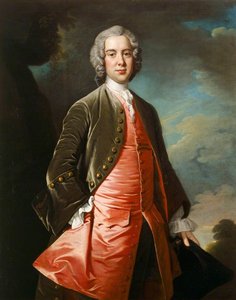
1701–1779, 英国
托馬斯·哈德遜
托马斯·哈德逊:十八世纪肖像画的典范 1701年出生于英国北部的比德福德,托马斯·哈德逊在十八世纪的英国肖像画坛占据着举足轻重的地位。尽管他早年的生活细节鲜为人知,但他对艺术的热忱却从未减退。哈德逊的名字与优雅、精致和对细节的敏锐洞察力紧密相连,他的作品不仅是那个时代的写照,更是英国肖像画发展历程中不可或缺的一笔重要篇章。 早年求学与师从理查森 哈德逊的艺术生涯始于伦敦,他师从当时著名的肖像画家乔纳森·理查森。这段学徒经历为他奠定了坚实的基础,培养了他一丝不苟的工作态度和对细节的精准把握。然而,一段颇具争议的婚姻也随之而来:哈德逊在1725年之前迎娶了理查森的女儿,尽管这并未得到导师的认可。这段关系或许反映出哈德逊独立自主的个性以及他对艺术道路的坚定追求。 事业巅峰与工作室实践 1740年至1760年间是哈德逊艺术生涯的黄金时期。尤其在1745年至1755年,他几乎成为了伦敦最成功的肖像画家。为了满足源源不断的委托需求,哈德逊建立了一个繁忙的工作室,并聘请了众多助手。其中,专门绘制服饰的约瑟夫·凡·阿肯更是他的得力助手,为作品增添了丰富的细节和质感。哈德逊并非仅仅是一位技艺精湛的画家,更是一位高效的管理者,他巧妙地平衡了创作需求与工作室运营,从而在竞争激烈的艺术市场中脱颖而出。 风格影响与意大利之旅 理查森对哈德逊早期的作品产生了深远的影响,强调准确性和古典主义的绘画手法。然而,哈德逊并未止步于此。1748年,他前往低地国家旅行,随后又在1752年游历意大利。这两次旅程让他接触到多元化的艺术风格和技巧,拓宽了他的艺术视野。在意大利,他深入研究了文艺复兴时期的绘画作品,并从中汲取灵感,将古典主义的优雅与精致融入到自己的创作中。这些经历不仅丰富了他的绘画语言,也提升了他对色彩、构图和光影的运用能力。 艺术传承与历史地位 哈德逊是一位富有影响力的教师,他的学生中有许多后来成为英国艺术界领军人物的画家,其中最著名的莫过于约书亚·雷诺兹和约瑟夫·赖特。他还培养了彼得·托姆斯,一位专门绘制服饰的艺术家,进一步体现了他对技术技能和工艺精湛的重视。1753年,哈德逊在特威克纳姆购买了一所房子,毗邻亚历山大·波普的别墅,这使他置身于一个充满活力和智慧的艺术社群之中。尽管哈德逊在1750年代末开始逐渐退出活跃的创作舞台,但他对英国肖像画的发展做出了不可磨灭的贡献。他的作品以其优雅、精致和对人物性格的深刻捕捉而著称,至今仍被广泛收藏于国家人像美术馆、国家海事博物馆、泰特美术馆等重要机构,并通过AllPaintingsStore.com等平台向全球艺术爱好者展示。
托馬斯·哈德遜 的其他作品
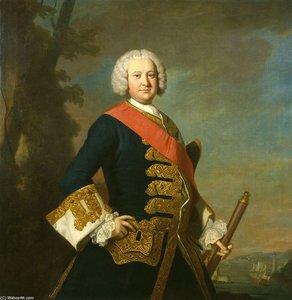 彼得·沃伦
 John Newton1757
 The Thistlethwayte Family1758
 Princess Amelia Sophia Eleonore of Great Britain1745

关于 William Boyce 的论文集
 Masterpieces of Hyacinthe Rigaud: The Top 25 Portraits of a Baroque IconExplore 25 iconic Hyacinthe Rigaud masterpieces. From Baroque portraits to royal splendor, discover the full collection on OriginalUniqueAr…
 17th century British paintersMasterpieces by William Dobson and Mary Beale define 17th century British art. Explore the full collection online at OriginalUniqueArt.com.
 Chaim Soutine: 25 Visceral Paintings That Capture His Intense StyleExplore 25 vital Chaim Soutine paintings and his raw expressionist style. Discover the full collection online at OriginalUniqueArt.com.