
 实景预览
实景预览
 分享
分享 分享
分享
 详情
详情 指南
指南

 下载作品
下载作品
 相似作品
相似作品 X射线
X射线 幻灯片播放
幻灯片播放 问答
问答 统计数据
统计数据Dawn over Teignmouth

- 31.0 x 55.0 cm


 展开全文
展开全文
艺术微喷/版画
博物馆级艺术微喷或帆布版画,制作高效,并提供多种饰面选择。 ( 订购纯手工绘制画作 切换至数字图像销售渠道)




































您可以从与原作比例一致的预设尺寸中进行选择。

请输入您所需的宽度和高度,以适配您的画框或墙面。由于印刷品只能进行裁剪,无法超出原图尺寸,因此若比例不一致,画面的一部分将会被裁切。在正式印刷之前,我们会为您发送一份数字效果图供您确认。本页面显示的图片并非最终裁剪后的效果——只有效果图才能展示真实的裁剪情况。


 玻璃选项仅适用于110厘米以下的尺寸。

Dawn over Teignmouth
艺术微喷/版画
复刻品尺寸
-


最终结算价
¥ 543
艺术家简介
The Atmospheric Legacy of Thomas Armstrong
In the golden age of Victorian British art, few figures bridged the gap between the rigorous traditions of the past and the burgeoning modernism of the future as gracefully as Thomas Armstrong. Born in Manchester in 1832, Armstrong’s early life was steeped in a unique blend of musicality and visual discipline. The son of the celebrated musician Amos Ebenezer Armstrong, his childhood was shaped by the rhythmic precision of classical music—a sensibility that would later manifest in the lyrical cadence of his brushstrokes. His formal artistic training began at the Manchester Fine Art Academy under Robert Crozier, but it was his departure for Paris in 1853 that truly ignited his creative spirit. Immersed in the vibrant atmosphere of the Académie Suisse and later studying under the profound influence of Ary Scheffer, Armstrong absorbed the stylistic nuances of the Renaissance masters while simultaneously witnessing the dawn of a new, more emotive era of painting.
Armstrong’s time in Paris placed him at the heart of an extraordinary artistic circle. He moved within the same orbit as the "Paris Gang," including luminaries such as James Abbott McNeill Whistler and George du Maurier. This period of intense cross-pollination allowed him to integrate the structural integrity of classical training with the experimental textures that were beginning to define European landscape painting. His work became a profound dialogue between the disciplined eye of the academic and the wandering, soulful heart of the Barbizon movement.
A Mastery of Light and Landscape
The true essence of Armstrong’s genius lies in his ability to capture the ephemeral. As a pioneer of the Barbizon landscape style in Britain, he moved away from the rigid, topographical accuracy of earlier eras toward a more atmospheric and emotive representation of nature. His canvases are characterized by a masterful use of atmospheric perspective, where distant horizons dissolve into soft, muted tones, creating a sense of infinite depth and quietude. In works such as “Dawn over Teignmouth,” one can witness his ability to manipulate light; the painting does not merely depict a coastal scene but evokes the very feeling of the morning mist lifting off the water, inviting the viewer into a moment of profound tranquility.
His technique was never merely about imitation, but about capturing the essence of rural life and natural phenomena. Through a palette of subdued earth tones and delicate highlights, he achieved a sense of realism that felt deeply poetic. This mastery extended beyond the easel into the realm of decorative arts. Armstrong possessed a rare talent for large-scale commissions, adorning grand architectural spaces with murals that blended mythological grandeur with pastoral serenity. His collaborations with influential figures like William Morris demonstrated his commitment to the Arts and and Crafts Movement, proving that fine art could be seamlessly integrated into the very fabric of living spaces.
A Visionary of Artistic Education
Beyond his contributions to the canvas, Thomas Armstrong’s historical significance is cemented by his transformative role as an administrator and educator. His appointment as Director for Art at the South Kensington Museum in 1881 marked a watershed moment for British arts education. He understood that for art to flourish, it required not just talent, but a structured environment of learning and accessibility. Through his leadership, he helped shape the pedagogical foundations that would influence generations of British artists, ensuring that the museum served as both a sanctuary for existing masterpieces and a laboratory for new creative thought.
The legacy of Armstrong is one of profound duality: he was both a keeper of tradition and a herald of change. His life’s work remains a testament to the power of landscape to stir the human soul and the importance of institutional stewardship in preserving the flame of creativity. Today, when we look upon his serene vistas and lush, Pre-Raphaelite-inspired compositions like “Woman with Lilies,” we are not just viewing historical artifacts, but experiencing the enduring, rhythmic beauty of a master who saw the world through a lens of both light and profound grace.

Thomas Armstrong
1832 - 1911
艺术家简介
- Full Name: Thomas Henry Wait Armstrong
- Nationality: British
- Date Of Birth: 1832
- Date Of Death: 1911
- Place Of Birth: Peterborough, England
- Notable Artworks:
- Dawn over Teignmouth
- Woman with Lilies
- Artistic Movement Or Style: Romanticism
- Artists Who Influenced This Artist:
- Hugh Allen
- Ralph Vaughan Williams
- Artists Or Movements Influenced By This Artist: ['Walter Copland Perry']
相关文章

Evocations of Place: A Historical Journey Through Landscape Art
Explore the rich history of landscape art with OriginalUniqueArt. Discover renowned artists, movements like Impressionism & Romanticism, and expert guidance for collecting timeless pieces. Find your perfect serene escape today!

Impressionistic Landscapes: 10 Masterpieces That Changed Art & Decor
Journey into the heart of Impressionism! Explore 10 masterpieces by Monet, Renoir & Degas that revolutionized landscape art. Discover their stories, techniques & find museum-quality reproductions to elevate your home decor on OriginalUniqueArt.com.

浪漫主义画派的十部巨作:定义风景画的艺术传奇
探索浪漫主义风景画的巅峰!本文精选十部经典名作,带您领略莫奈、库尔贝等大师的艺术魅力。感受色彩与光影的诗意,重温自然风光的震撼。OriginalUniqueArt.com为您提供博物馆级别的艺术复制品和个性化家居装饰方案。尽在OriginalUniqueArt.com!

印象派风景画的十部巨作:定义艺术与家的和谐之境
探索印象派风景画的十部经典巨作!从莫奈到雷诺阿,揭秘大师们的技法与灵感。OriginalUniqueArt.com为您呈现高清油画复制和精选艺术品,点亮您的家居空间。立即发现更多艺术珍宝!
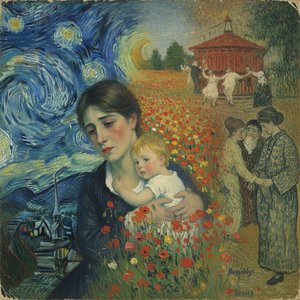
Capturing the Soul: The Most Emotionally Moving Impressionist and Post-Impressionist Masterpieces
Discover the profound emotional depth of Impressionist and Post-Impressionist masterpieces. Explore how legends like Monet, Van Gogh, and Gauguin captured light and soul through evocative landscapes and vibrant brushwork for a timeless connection to art history.