
 效果预览
效果预览
 购买印刷品
购买印刷品 分享
分享 分享
分享
 详情
详情

 下载
下载
 相似作品
相似作品 X射线
X射线 幻灯片播放
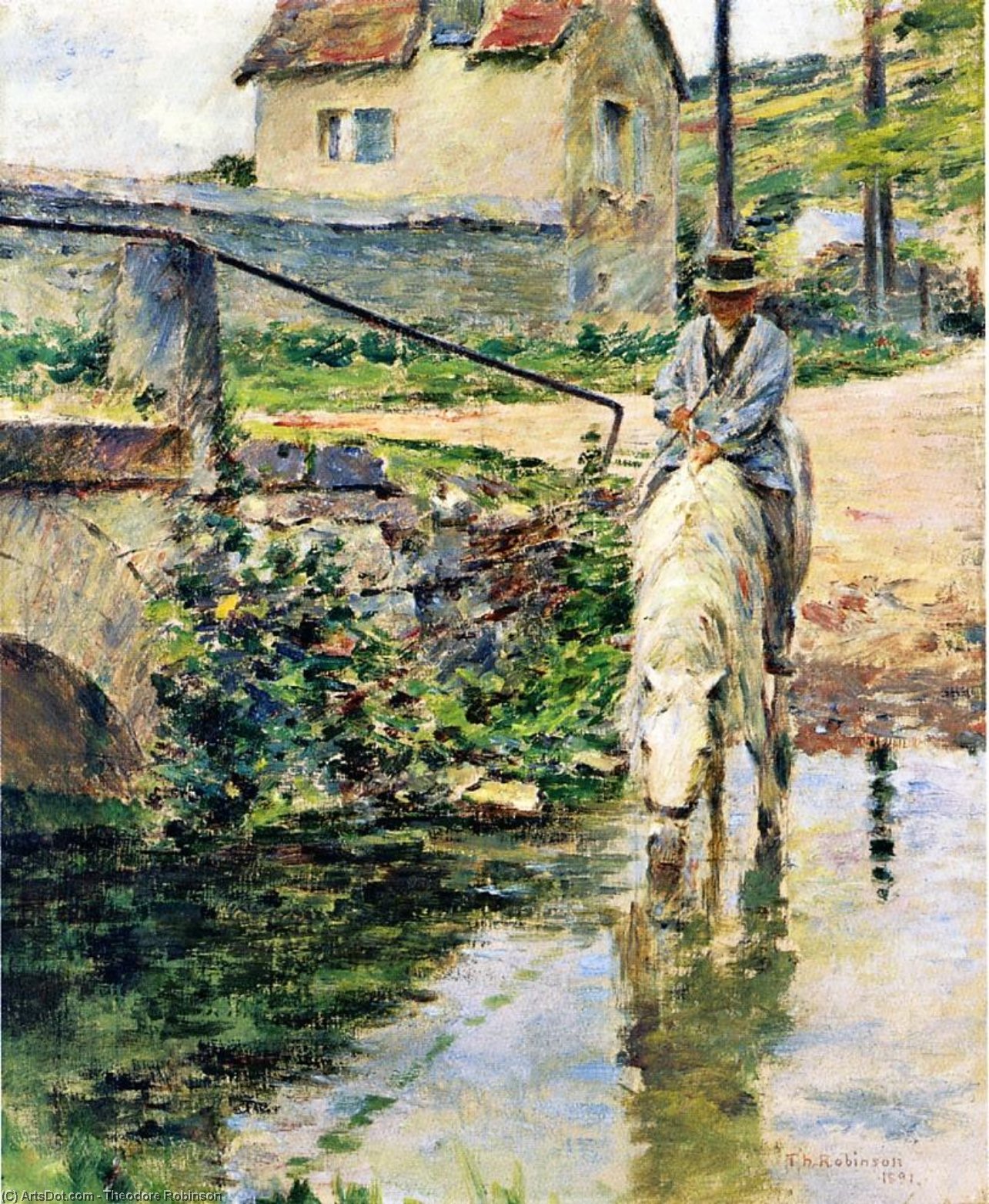
幻灯片播放The Watering Place


 展开详情
展开详情
购买高分辨率增强版数字图像,其品质远超在线预览。
每一份文件都由我们的内部专家使用先进工具与专业的后期润色技术精心打造。我们确保每一张图像都具备卓越的清晰度、精准的色彩还原度以及细腻的细节表现。
最终文件将在 72 小时内通过电子邮件交付,并针对专业、编辑及印刷用途进行了优化。其品质与顶级设计工作室、出版社和画廊所信赖的标准完全一致。
每份数字图像订单均包含
专业数字图像交付,品质保障
选择 OriginalUniqueArt.com,您获得的不仅仅是一张图像——您收到的是经过专业级增强、精雕细琢的数字艺术作品,并享有满意保证。以下是您的订单中自动包含的所有内容:

邮件快速送达
您的高分辨率数字图像文件将在下单后 72 小时内通过电子邮件发送给您 —— 即可立即使用。

AI 增强型数字文件
您的艺术品经过专业优化,结合先进的 AI 技术与人工修饰,确保呈现极致的细节、清晰度与色彩准确度。

终身免费重发服务
不小心删除了文件或找不到了?没关系——我们将随时为您免费重发。

无需进口费用,始终如一
即刻拥有您的艺术作品,无需支付任何关税、税费或运费——数字下载始终免税。

色彩精准保证
我们通过专业工具与色彩管理技术,确保您的数字图像尽可能真实地还原原作色彩。

60天满意保证
如果您对所购买的数字图像不满意,我们将在60天内为您进行修改或退还100%的款项——无需任何解释。

100% 退款保证
如果不满意?在收到数字文件后的60天内,我们为您提供全额退款——无需任何理由。

批量订单优惠
购买 3 张图片可享 10% 折扣 - 购买 5 张可享 15% 折扣 - 购买 10+ 张可享 20% 折扣。非常适合创意项目、画廊和机构使用。
藏品详情
The Watering Place: A Vision of Rural Tranquility by Theodore Robinson
Theodore Robinson’s “The Watering Place,” painted in 1891, isn't merely a depiction of a rural scene; it’s an immersion into a carefully constructed world of quiet contemplation and the profound beauty of the natural world. This oil on canvas, currently residing within the Baltimore Museum of Art, offers a glimpse into the heart of American Impressionism – a movement Robinson helped pioneer by embracing the shimmering light and broken color techniques he encountered during his transformative years in France.
At first glance, the painting presents a deceptively simple tableau: a man on horseback traversing a dirt road leading to a modest farmhouse nestled amidst rolling hills. A second horse stands patiently nearby, suggesting a moment of respite or perhaps the anticipation of another journey. However, beneath this surface tranquility lies a complex layering of artistic influences and personal reflection. Robinson’s early training in traditional academic styles is evident in the meticulous rendering of the landscape – the precise detail of the foliage, the subtle gradations of color in the sky, and the carefully constructed perspective of the buildings. Yet, he skillfully infuses this foundation with the Impressionistic principles he absorbed from Monet and other French masters, particularly their focus on capturing fleeting moments of light and atmosphere.
Impressionist Techniques and a Harmonious Palette
Robinson’s masterful use of brushstrokes is immediately striking. Rather than striving for sharp outlines or photographic realism, he employs loose, expressive strokes that create a sense of movement and immediacy. Notice how the sunlight seems to dance across the fields, rendered with delicate washes of color – pale blues and greens mingling with hints of gold and ochre. This technique isn’t simply about replicating what the eye sees; it's about conveying the *feeling* of being present in that moment, experiencing the warmth of the sun and the freshness of the air.
The composition itself is carefully balanced, drawing the viewer’s eye along the winding road towards the distant farmhouse. The muted color palette – dominated by earthy tones and soft pastels – contributes to a sense of serenity and timelessness. Robinson's deliberate choice of colors evokes a feeling of nostalgia, as if recalling a simpler, more harmonious time. The painting is not about grand drama or heroic figures; it’s about the quiet dignity of rural life and the restorative power of nature.
A Reflection of Robinson’s Journey
Understanding “The Watering Place” requires considering Theodore Robinson's own personal journey as an artist. Born in Vermont, he spent his early years moving across the United States before embarking on a pivotal trip to Europe in 1884. It was during this time that he became deeply influenced by Impressionism and developed a close friendship with Claude Monet at Giverny. Robinson’s work began to reflect these new influences, shifting from more traditional landscapes to paintings characterized by vibrant color, broken brushstrokes, and an emphasis on capturing the ephemeral qualities of light and atmosphere.
The painting can be interpreted as a distillation of Robinson's experiences – a longing for the tranquility he found in nature after years of restless travel. The man on horseback represents a journey, both literal and metaphorical, while the watering place itself symbolizes a moment of respite and renewal. It’s a scene imbued with a sense of peace and contentment, suggesting that true beauty can be found in the simplest of things.
Collecting a Legacy: Reproductions and Beyond
Today, “The Watering Place” stands as a testament to Robinson's artistic vision and his significant contribution to American art. High-quality reproductions, such as those available at OriginalUniqueArt.com, allow art lovers to experience the painting’s beauty and tranquility in their own homes. These meticulously crafted prints capture the essence of Robinson's original work, offering a tangible connection to this remarkable piece of American artistic heritage. For those seeking to delve deeper into Robinson’s life and work, resources like the Baltimore Museum of Art’s website (Wikipedia) and online artist databases provide valuable insights.
艺术家简介
光影先驱:西奥多·罗宾逊的艺术人生
西奥多·罗宾逊,这个名字或许不如莫奈或雷诺阿那样广为人知,但他却在美国艺术史中占据着举足轻重的地位。1852年出生于美国佛蒙特州的乡村,他的人生是一段执着的艺术追寻之旅,最终将欧洲印象派与独特的美国气质完美融合。尽管他英年早逝,年仅四十四岁,但他的遗产却深刻地影响了一代美国画家,成为将法国那迷人的光影和色彩带到新大陆的关键人物。罗宾逊的早期生活充满了变动;三岁时全家搬到了威斯康星州,1874年前往纽约市学习艺术,并在国家设计学院和艺术学生联盟接受了传统的绘画训练,为他日后在海外获得的经验奠定了坚实的基础。这段求学时期也伴随着现实的压力;罗宾逊经常通过教学来补贴生计,但由于长期患有哮喘,这项工作让他倍感疲惫。
从现实主义到吉维尼的诱惑
罗宾逊最初的艺术倾向偏向于现实主义,反映了当时流行的审美趣味。他喜欢描绘宁静的家庭生活和农业场景,细致入微地刻画人物日常活动中的细节。然而,1884年,他前往法国进行了一次长期的旅行,这成为了他艺术生涯的一个转折点。他定居在吉维尼,与克劳德·莫奈结下了深厚的友谊,并亲身体验了印象派的精髓。这不仅仅是风格上的模仿,而是对光线、色彩和氛围捕捉方式的一次彻底革新。莫奈的指导对他帮助巨大,鼓励罗宾逊拥抱一种更加自发的创作方法,专注于捕捉瞬息万变的光影效果,而非精确的再现。这种影响在他的作品中显而易见,例如《吉维尼1》、《吉维尼2》和《吉维尼3》,阳光透过树木洒落,营造出一种超越单纯描绘的空灵意境。他并非简单地复制莫奈,而是通过自己的美国视角来过滤印象派的美学,保留了一种结构感和形式感,使他的作品与法国同行的风格有所区别。
沟通世界的桥梁:分享艺术 vision
罗宾逊的意义不仅仅在于他个人的绘画作品;他还是一位重要的纽带,连接着欧洲前卫艺术与新兴的美国艺术界。他在吉维尼的位置使他成为了一个美国艺术家群体的中心人物,能够将他新获得的知识和热情与同行的画家分享,例如朱利安·奥尔登·韦尔和约翰·亨利·特瓦奇曼。他成为印象派的热情倡导者,不遗余力地向那些寻求指导的人展示其技巧和原理。这在当时美国艺术界仍然以学院派传统为主导的时期尤为重要。他的影响显而易见于许多访问吉维尼的艺术家的作品中,帮助建立了一种既借鉴法国创新又具有独特美国风格的美国印象派流派。他带回来的不仅仅是技巧,更是一种看待和回应周围世界的方式。
晚年与持久遗产
1892年回到美国后,罗宾逊试图将他的印象派 vision 应用于祖国的风景画创作中。他在康涅狄格州科斯考布与韦尔和特瓦奇曼一起工作,这是一个繁荣的艺术群体,并在纽约州运河沿岸绘画,最终定居在佛蒙特州,希望在家乡重现吉维尼般的环境。然而,他的健康状况持续恶化,经济困难也日益加剧。他最后的几年充满了孤独和挣扎,最终于1896年去世。讽刺的是,许多他的画作在他生前未能售出,直到去世后才逐渐获得认可。今天,西奥多·罗宾逊的作品被各大博物馆收藏,包括大都会艺术博物馆,这证明了他的持久艺术价值。他保存完好的日记,保存在弗里克艺术参考图书馆中,为我们提供了关于他的创作过程和思想生活的宝贵见解。
持久的印象
西奥多·罗宾逊对美国艺术的贡献不仅在于他绘画作品的美丽,还在于他在变革中的作用。他是文化之间的桥梁,是一位充满激情的创新倡导者,也是一位塑造了美国印象派进程的天才艺术家。他的作品体现了一种观察与诠释、现实主义与抽象、欧洲影响和美国身份之间微妙的平衡。他证明了拥抱印象派的激进创新并不意味着牺牲一个人的艺术声音或文化遗产是可能的。他的画作继续以其明亮的光质和生动的氛围吸引着观众,提醒我们艺术具有改变我们对周围世界感知的力量。《I》罗宾逊的遗产证明了光、色彩和追求艺术真理的永恒魅力。《I》
- Notable Works: 吉维尼1, 吉维尼2, 吉维尼3, 《溃败》(1892)
- Influences: 克劳德·莫奈,约翰·拉法格,卡洛斯-杜兰,让-莱昂·热罗姆
- Artistic Movement: 美国印象派

西奥多·罗宾逊
1852 - 1896 , 美国
基本信息
- 代表作品:
- 吉维尼 1
- 吉维尼 2
- 吉维尼 3
- 溃败
- 出生地: 美国佛蒙特州艾拉斯堡
- 出生日期: 1852年
- 受罗宾逊影响的艺术家/运动: ['美国印象派']
- 国籍: 美国
- 姓名: 西奥多·罗宾逊
- 影响罗宾逊的艺术家: ['克劳德·莫奈']
- 艺术运动或风格: 印象派
- 逝世日期: 1896年

