

 效果预览
效果预览
 分享
分享 分享
分享
 详情
详情

 下载
下载
 相似作品
相似作品 X射线
X射线 幻灯片播放
幻灯片播放 统计数据
统计数据Luxor temple


 展开详情
展开详情
手工油画复制品
由我们的艺术家按需定制,为您提供您所选尺寸及画框的布面手工油画。 ( 切换至版画销售渠道 切换至数字图像销售渠道)




































从与原作比例一致的预设尺寸中进行选择。

您可以输入自定义尺寸,以适配特定的画框或空间。如果所选尺寸与原图比例不符,我们将通过裁剪作品或添加手绘元素来扩展画面。数字样稿将在制作开始前发送给您确认。
请注意,屏幕预览无法准确反映实际的裁剪或扩展效果,只有样稿才能真实呈现最终的构图。
虽然我们提供定制尺寸服务,但为了保留原作比例,建议您从预设列表中选择尺寸。
下单后,OriginalUniqueArt.com 团队将通过电子邮件联系客户获取具体要求,并提供效果预览图。


 玻璃选项仅适用于110厘米以下的尺寸。

Luxor temple
复制材质
复制品尺寸
-


最终总价
$ 300
艺术家简介
The Pioneer of Aerial Perspectives: Theodor Kofler and the Dawn of Modern Photography
Theodor Kofler, born in Innsbruck, Austria, in 1877, wasn’t merely a photographer; he was a visionary who fundamentally altered our understanding of ancient landscapes. His life story is inextricably linked to his groundbreaking work – the first documented aerial photographs of the Egyptian pyramids and other iconic sites, achievements that cemented his place as a pivotal figure in the history of photography and aviation. Kofler's journey began not with a formal artistic education but through a series of experiences that shaped his unique perspective and ultimately propelled him to capture images previously unattainable.
Early life instilled in Kofler a sense of adventure and a connection to the mountainous landscapes of Tyrol. He joined the Tyrolean Standschützen regiment at 18, an experience that fostered discipline and a keen eye for detail – qualities he would later apply to his photographic endeavors. However, it was a desire to escape the constraints of European society and a fascination with Egypt’s ancient wonders that led him to embark on a transformative journey in 1903. Leaving Austria behind, he arrived in Cairo, quickly establishing himself as a photographer working alongside established figures like Edelstein and Paul. This early period provided invaluable experience and honed his technical skills, laying the groundwork for his future innovations.
The Revolutionary Flight: Capturing Pyramids from Above
Kofler’s most celebrated achievement unfolded in 1914, during the tumultuous years of World War I. Recognizing the limitations of ground-based photography, he secured a place aboard a British aircraft piloted by Marc Bonnier and Louis Olivier (Karnak). This daring venture marked a watershed moment – the first documented aerial photographs of the pyramids. The resulting images, now considered priceless historical artifacts, offered an unprecedented perspective on these monumental structures, revealing their scale, grandeur, and intricate relationship to the surrounding desert landscape. These weren’t simply snapshots; they were meticulously composed studies that captured the essence of ancient Egypt in a way previously unimaginable.
The photographic process itself was fraught with challenges. The aircraft's limited maneuverability demanded careful planning and precise timing. Kofler had to adapt his techniques to capture sharp, stable images despite the movement of the plane. He utilized a relatively primitive camera for the time, relying on careful positioning and exposure control to achieve the desired results. Despite these difficulties, he produced a remarkable series of photographs that would forever change how we visualize these ancient wonders.
A Prisoner of War and Continued Documentation
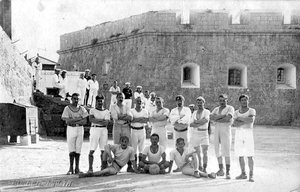
Following the outbreak of war in 1914, Kofler found himself unexpectedly embroiled in the conflict. He was deported to Malta as part of a group of Austrian prisoners, where he continued his photographic work documenting the conditions of his fellow detainees. These images, offering a starkly honest portrayal of wartime realities, stand as poignant testaments to the human cost of conflict. Later, he was transferred to Palestine and then South Africa before finally settling in Kenya. Throughout these periods of displacement, Kofler remained dedicated to his craft, documenting various aspects of life and landscapes.
Despite facing numerous hardships, Kofler’s commitment to photography never wavered. He continued to refine his techniques and expand his subject matter, eventually returning to Egypt after the war. He established a successful photographic studio in Cairo, working for both press agencies and private clients, capturing images of everyday life, architectural marvels, and the vibrant culture of the city.
Legacy and Enduring Significance
Theodor Kofler’s legacy extends far beyond his pioneering aerial photographs. He was a true innovator who pushed the boundaries of photographic technology and artistic expression. His work demonstrated the potential of photography to reveal hidden perspectives and capture fleeting moments in time. His images of the pyramids remain iconic symbols of ancient Egypt, captivating audiences worldwide and inspiring generations of photographers and artists. Kofler’s story is a testament to the power of curiosity, determination, and a willingness to embrace new challenges – qualities that continue to resonate today.
Furthermore, his work highlights an important intersection between art, technology, and history. Kofler's success hinged on his ability to adapt to rapidly evolving technologies—the nascent field of aviation—and translate those advancements into compelling visual narratives. He wasn’t just a photographer; he was a pioneer who helped shape the way we perceive and understand our world.
theodor kofler
1877 - 1957 , Austria
艺术家简介
- Artistic Movement Or Style: Aerial photography
- Date Of Birth: July 27, 1877
- Date Of Death: October 1957
- Full Name: Theodor Kofler
- Nationality: Austrian
- Notable Artworks:
- Pyramids from airplane
- Egyptian landscapes
- Place Of Birth: Innsbruck, Austria