De Stijl · 1923
Composition (特奥·范杜斯堡, 1923)
特奥·范杜斯堡 (1883–1931) 创作了《Composition》。 创作于 1923 年。 它属于 De Stijl 运动。 由 Oil On Canvas 创作。 尺寸为 41 × 33 cm。
- 1923
- Oil On Canvas
- 41 × 33 cm

 实景预览

 手工油画复制品
 分享
 分享
 指南


 下载作品
 相似作品
 X射线
 幻灯片播放
 问答

 统计数据
Composition:核心信息
Composition 描绘了什么内容?
Identification of Composition by Theo van Doesburg
The canvas known as Composition emerges from the mind of Theo van Doesburg, a work that captures a specific moment in 1923. This piece exists as a precise arrangement of form and color, born from a period of intense creative focus. The artist, Theo van Doesburg, brings a sense of equilibrium to the surface, translating abstract thought into a tangible presence. It is a work that demands attention through its structural clarity and its commitment to the principles of the De Stijl movement.
The history of this object is tied to a specific circle of thinkers and patrons. Antony Kok commissioned the work, setting it on its path through the hands of those who shaped the modern era. From there, the painting finds its way into the hands of Bart de Ligt (1883–1938), who becomes its first owner. This transition marks the beginning of a long lineage of stewardship, as the work moves from the artist's studio into a private collection where its presence remains constant.
Every line and color choice within Composition reflects the artist's pursuit of a universal visual language. As we observe the work, we see the direct result of a vision that seeks to strip away the unnecessary to find a fundamental truth. The painting remains a vital part of the history of abstraction, holding the weight of its 1923 origins in every carefully placed rectangle and primary hue.
Visual Composition and Geometric Elements
The canvas unfolds as a precise grid of rectangles, where vertical and horizontal lines intersect to dictate the movement of the eye. There is a profound sense of equilibrium achieved through this arrangement, as non-representational forms find their place within a structured, rhythmic order. The eye moves across the surface, guided by the intersections of these straight lines, finding balance in the way the shapes occupy the space. It is a study in pure geometry, where the subject matter is stripped of any external reference, leaving only the essence of form and relation.
Color acts as the primary force within this structured environment. The palette relies on the fundamental strength of red, yellow, and blue, which anchor the composition. These primary hues interact with a supporting cast of black, white, and grey, creating a tension between the boldest tones and the more neutral shades. The colors appear solid and flat, avoiding any blending or shading, which emphasizes the stark, clean nature of the geometric arrangement. Each rectangle holds its own weight, contributing to a visual language that seeks a universal harmony through simplicity.
Provenance and History of the Object
The history of this work begins in the creative atmosphere of Paris, where it finds its way from the artist's studio into the hands of Bart de Ligt. This acquisition likely occurs in late 1923, marking the start of a long and steady lineage. De Ligt, a man deeply connected to the avant-garde circles of the time, holds the piece within his personal collection until his passing in 1938.
From that moment, the painting enters a quiet, private chapter. It remains within the same family, passing through the hands of descendants for nearly a century. This continuity preserves the work's integrity, keeping it sheltered within a single domestic line since 1923. The colors and forms remain as they were when they first left the artist's side, held in a state of careful preservation through the decades.
Documented Interpretations and Artistic Debates
The canvas captures a moment of profound transition, acting as a key work within the artist's entire oeuvre. It reveals a growing complexity within his purist style, where the rigid logic of geometry begins to dance with a more nuanced sense of equilibrium. One senses the tension between the absolute and the evolving, as the lines and colors find a new, sophisticated rhythm. This evolution suggests a mind moving beyond simple shapes toward a more intricate visual language.
A deep connection between the realm of architecture and the act of painting pulses through the work. The composition feels less like a mere arrangement of pigment and more like a blueprint for a structured reality. This link is no accident; the artist himself articulated the concept behind its creation in the magazine Architectura on 17th July 1923. The painting exists as a bridge, where the spatial logic of built environments meets the spiritual pursuit of pure abstraction.
Related Works by the Same Artist
The evolution of this geometric language unfolds through several other pieces that trace the artist's shifting focus. One can look back to Composition XX from 1920 to see the early movements of these shapes. Nearby in the timeline, the 1923 work Study for a Composition offers a glimpse into the creative process behind these structured arrangements. These works exist as part of a continuous search for balance and order within the frame.
As the years progress, the compositions grow more complex and dynamic. The 1925 Counter composition XIV introduces a different energy to the grid. Later, the Simultaneous Counter-Composition from 1929–1930 pushes the boundaries of the aesthetic even further. Each piece captures a specific moment in a lifelong pursuit of a new visual language, moving from the rigid to the more fluid and experimental.
高分辨率 Composition
特奥·范杜斯堡, Composition (1923). 公有领域
关于 Composition 的常见问题
特奥·范杜斯堡 的《Composition》 的创作年份是哪一年?
特奥·范杜斯堡 的《Composition》创作于1923年。
特奥·范杜斯堡 的《Composition》 采用了什么技法?
特奥·范杜斯堡 的《Composition》 的媒介为 Oil On Canvas。复制品旨在呈现该技法的视觉效果。
原件 特奥·范杜斯堡 的《Composition》 的尺寸是多少?
特奥·范杜斯堡 的《Composition》 的记录尺寸为 41 x 33 cm。您也可以按比例定制其他尺寸的复制品。
特奥·范杜斯堡 的《Composition》 描绘了什么内容?
特奥·范杜斯堡 的《Composition》 中呈现的主题包括 red, blue, yellow, black, white, rectangles, lines,这些主题共同构成了该艺术作品的主旨。
特奥·范杜斯堡 的《Composition》 是否属于公有领域?
特奥·范杜斯堡 的《Composition》 属于 属于公有领域 —— 其版权已过期。此版权状态决定了该作品图像的复制方式。
"Composition" 的作者是谁?
"Composition" 由 特奥·范杜斯堡 创作。本页面的信息旨在介绍 特奥·范杜斯堡 的原作。
特奥·范杜斯堡 的《Composition》 属于哪种艺术流派?
特奥·范杜斯堡 的《Composition》 属于 De Stijl 流派,该流派为这件作品提供了风格背景。
《Composition》属于 特奥·范杜斯堡 艺术生涯中的哪个时期?
"Composition" 展现了 特奥·范杜斯堡 在 Mature Period 时期的艺术风格。
特奥·范杜斯堡 创作《Composition》时是多少岁?
当"Composition"于1923创作时,出生于1883的特奥·范杜斯堡正值40岁。
关于艺术家 特奥·范杜斯堡

1883–1931, 荷蘭
特奥·范杜斯堡
抽象建筑师:几何和谐中的一生 西奥·凡·杜斯堡,原名克里斯蒂安·埃米尔·玛丽·库珀,1883年生于荷兰乌特勒支,绝非仅仅是一位画家;他是一位彻底变革现代艺术基础的革命力量。他的旅程始于印象派和后印象派逐渐消逝的回声之中,最初的作品风格与文森特·梵高的作品相似——在主题和情感强度方面都颇为接近。然而,这段早期的阶段只是一个关键的序幕,是定义他持久遗产的彻底转变所必需的垫脚石。1913年,他偶然接触到瓦西里·康定斯基的《回顾》,这一事件在他心中激起了深刻的顿悟:真正的艺术表达不在于复制外部世界,而在于通过纯粹的抽象来引导内在的精神现实。正是这种信念催生了新造型主义(Neoplasticism),更广为人知的名称是风格派(De Stijl)——他创立并坚定捍卫的运动,成为其最热忱的倡导者。 开创新的视觉语言:风格派的原则 风格派不仅仅是一种艺术风格;它是一份全面的哲学宣言,被转化为可视形式。凡·杜斯堡坚信,艺术应该被简化到其最基本要素——直线、直角以及红色、黄色和蓝色的原色,再加上黑色、白色和灰色。这种朴素的调色板并非源于局限性,而是源于对普遍性的渴望——一种信念,即这些基本形式与潜在的宇宙秩序产生共鸣。他设想了一种*整体*艺术作品,超越画布,涵盖建筑、设计甚至日常物品。合作至关重要;凡·杜斯堡与J.J.P. Oud和赫里特·里特维尔等建筑师密切合作,设计彩色玻璃窗、家具以及体现风格派原则的整个室内空间。他的合作还延伸到皮埃·蒙德里安等艺术家,他们共同创立了有影响力的杂志《风格派》,这是一个传播他们的思想并吸引志同道合的创意人士的平台。然而,尽管他们拥有共同的起源,凡·杜斯堡和蒙德里安在关于新造型主义的严格性方面产生了紧张关系。1926年,凡·杜斯堡推出了“元素主义”,倡导使用对角线和更具动态性的构图——这一转变最终导致运动内部的分裂,揭示了他不安分的精神以及对艺术演变的持续追求。 超越绘画:多方面的艺术视野 虽然作为一名画家而闻名,但凡·杜斯堡的艺术追求却非常多样化。他是一位多产的作家、诗人兼评论家,用他的笔阐明风格派的理论基础并挑战传统的艺术观念。他在20世纪20年代初与达达主义的接触进一步拓宽了他的艺术视野,导致了融入拼贴和排版等实验性作品。这一时期他还曾在包豪斯教学,在那里他与新一代艺术家和设计师分享了自己的想法。他不满足于仅仅停留在传统艺术形式的范围内;凡·杜斯堡积极寻求将艺术融入日常生活,相信它有能力改变社会。他为室内空间和家具设计的作品不仅仅是美学练习,而是试图创造和谐的生活空间,反映风格派的原则。一个典型的例子是他与索菲·泰伯-阿尔普和乔治·凡通格鲁合作设计艺术家住宅,展示了一种整体性的艺术创作方法——一种尝试以他的理想形象构建世界的方法。 遗产和持久影响:现代主义先驱 西奥·凡·杜斯堡的生命在1931年不幸地过早结束,年仅47岁,但他对现代艺术的影响仍然深远。风格派虽然作为一个有凝聚力的运动相对短暂,但它对随后的艺术发展产生了巨大的影响,包括包豪斯设计、极简主义和构成主义。他对几何抽象、纯粹色彩和功能主义的强调至今仍在激励着艺术家和设计师。他的作品提醒我们,艺术不仅仅是关于表现,而是关于探索基本形式和思想。凡·杜斯堡的遗产超越了他的绘画和设计;它在于他对艺术创新的坚定承诺以及他对抽象变革力量的信念。他设想的一个统一、和谐的世界——通过风格派的语言表达出来——继续激励着那些寻求创造更美丽更有意义的环境的人们。 主要作品与持久影响 《同时构图 XXII 研究》(1922):新造型主义的典型例子,展示了该运动标志性的几何形式和有限的调色板。 《半值构图》(1928):展示了凡·杜斯堡在新造型主义美学框架内探索音阶变化的过程。 《舞者》(1917-1918):代表了他作品的一个过渡阶段,融合了具象元素和新兴的抽象趋势。 与《风格派》杂志合作:一个传播该运动思想并促进艺术家和知识分子之间对话的关键平台。 元素主义(1926):凡·杜斯堡试图向新造型主义注入活力,引入对角线和更流畅的构图方法。 凡·杜斯堡的影响可以在现代设计的无数方面看到——从建筑和家具到平面设计和排版。他仍然是艺术史上的一位重要人物,是一位敢于挑战传统并设想20世纪及以后一种新的视觉语言的真正先驱——他的遗产铭刻在直线和原色之中。他不仅仅创造了艺术作品,而是构建了一种全新的看待世界的方式。 他的思想至今仍在激励着我们去探索抽象的可能性,并重新思考艺术与生活之间的关系。
特奥·范杜斯堡 的其他作品
 Counter composition XV1925
 Rhythm of a Russian Dance
 Troelstra1910
 Study for Composition VIII (The Cow)1918
关于 Composition 的论文集
 The Geometry of Balance: Decoding Equilibrium and Rhythm in Mondrian’s Neo-PlasticismMaster the logic of Mondrian's Neo-Plasticism through expert analysis of balance and rhythm. Decode the geometry of modern art today.
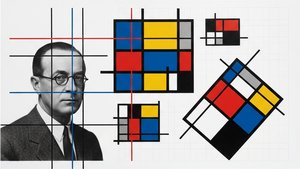 Theo van Doesburg: Pioneering De Stijl & the Evolution of Neo-PlasticismExplore the revolutionary De Stijl movement & Neo-Plasticism with our expert guide. Discover Piet Mondrian, Theo van Doesburg, and the last…
 Dutch artworks of the 1910sDutch modernism in the 1910s features the iconic works of Piet Mondrian, Kees van Dongen, and Isaac Israëls. Find museum-quality art on Ori…