
 实景预览
实景预览
 分享
分享 分享
分享
 详情
详情 指南
指南

 下载作品
下载作品
 相似作品
相似作品 X射线
X射线 幻灯片播放
幻灯片播放 Q&A
Q&A 统计数据
统计数据Landscape VII

- 24.0 x 34.0 cm


 展开全文
展开全文
艺术微喷/版画
博物馆级艺术微喷或帆布版画,制作高效,并提供多种饰面选择。 ( 订购纯手工绘制画作 切换至数字图像销售渠道)




P118B ¥10

P118H ¥10

P118W ¥10

P438Z ¥10

P508JH ¥12

P508YH ¥12

P805H ¥10

P805Z ¥10

P919BZ ¥10

P919G ¥10

P919XJ ¥10

P959ZH ¥10

P968JZ ¥12

W106C ¥8

W218G ¥10

W218JH ¥8

W218Y ¥10

W307PJ ¥10

W316G ¥10

W316PJ ¥8

W316Y ¥10

W398PJ ¥8

W4111J ¥10

W500HY ¥15

W500JH ¥15

W692G ¥12

W849H ¥8

W940BG ¥15

W953PJ ¥8




您可以从与原作比例一致的预设尺寸中进行选择。

请输入您所需的宽度和高度,以适配您的画框或墙面。由于印刷品只能进行裁剪,无法超出原图尺寸,因此若比例不一致,画面的一部分将会被裁切。在正式印刷之前,我们会为您发送一份数字效果图供您确认。本页面显示的图片并非最终裁剪后的效果——只有效果图才能展示真实的裁剪情况。


 玻璃选项仅适用于110厘米以下的尺寸。

Landscape VII
艺术微喷/版画
复刻品尺寸
-


最终结算价
¥ 538
A Dreamscape of Brazilian Serenity
In the quiet corners of art history, few works capture the essence of pastoral tranquility as tenderly as Tarsila do Amaral’s Landscape VII. Created in 1971, toward the twilight of the artist's illustrious career, this piece serves as a window into a world where time seems to slow down. The painting presents a breathtakingly serene landscape, depicting a small, nestled village cradled by rolling hills and the gentle presence of water. It is an invitation to step away from the chaos of modernity and enter a realm of soft light and rhythmic simplicity. Through her masterful use of pastel shades—delicate pinks, ethereal blues, and lush greens—Amaral crafts a dreamlike atmosphere that feels both intimately familiar and otherworldly.
The composition is a masterclass in balanced, horizontal layering. The viewer’s eye is led through a series of soft bands: a verdant foreground suggesting cool water or thick vegetation, a central stage featuring quaint architecture and a striking rock formation, and finally, a background of pink-hued hills that melt into the horizon. There is a charming, almost naive quality to the perspective; by eschewing harsh linear recession in favor of a flatter, more two-dimensional arrangement, the artist emphasizes the decorative beauty of the scene. This approach allows the shapes—the rounded contours of the hills and the organic forms of the trees—to dance across the canvas with a rhythmic, folk-art grace.
Technique and the Texture of Memory
To behold Landscape VII is to witness the tactile power of oil on canvas. Amaral employs a technique characterized by visible, expressive brushstrokes that lend the work a vibrant, living energy. The application of paint is particularly noteworthy in the central rock formation and the surfaces of the buildings, where thick impasto creates a physical texture you can almost feel with your eyes. This ruggedness provides a beautiful counterpoint to the soft, diffused lighting that permeates the scene, suggesting the gentle glow of an overcast afternoon. Every stroke feels intentional, contributing to a surface that is as much about the physical presence of the medium as it is about the subject matter itself.
For the discerning collector or interior designer, this piece offers a unique opportunity to introduce a sense of calm and sophisticated nostalgia into a space. The artwork does not merely decorate a wall; it transforms an environment. Its soft palette and organic shapes make it an ideal centerpiece for rooms designed for relaxation, such as a master suite or a quiet reading nook. Because the style leans toward the Antropofagia movement's roots while embracing a more mature, simplified aesthetic, it bridges the gap between avant-garde history and timeless decorative elegance.
A Legacy of Peace and Identity
Beyond its visual splendor, Landscape VII carries a profound symbolic weight. As a pivotal figure in Brazilian Modernism, Tarsila do Amaral spent her life distilling the soul of her nation into bold, innovative forms. In this later work, that mission evolves into an exploration of harmony and peace. The village scene acts as a symbol of a life lived in equilibrium with nature, where human habitation and the earth exist in a seamless, unconflicted embrace. It evokes a sense of nostalgia for a simpler era, making it deeply resonant for anyone seeking to surround themselves with art that promotes emotional well-being.
Owning a high-quality reproduction of this masterpiece allows one to possess a fragment of Brazilian cultural identity. Whether you are an art historian captivated by her evolution from Cubist influences to folk-inspired simplicity, or a decorator looking for a piece that breathes tranquility into a contemporary setting, Landscape VII stands as a testament to the enduring power of the landscape to soothe the human spirit. It is more than a painting; it is a quiet sanctuary captured in pigment.
常见问题与解答
哪里可以买到 塔西拉·杜·阿马拉 的《Landscape VII》 的版画?
您可以在塔西拉·杜·阿马拉 的《Landscape VII》的艺术版画页面直接订购其版画:采用棉质帆布或档案级画布纸制作的艺术版画。
对于Wellness Center,建议将"Landscape VII"打印成多大的尺寸?
在Wellness Center中,建议将"Landscape VII"打印为Small的大小。
塔西拉·杜·阿马拉 的《Landscape VII》 的创作媒介和创作日期是什么?
塔西拉·杜·阿马拉 的《Landscape VII》 的创作媒介为 Oil,创作于 1971 年。
艺术家简介
巴西的远见者:塔西拉·杜·阿马拉尔的生命与艺术
在20世纪初巴西艺术那绚烂夺目的织锦中,塔西拉·杜·阿马拉尔(Tarsila do Amaral)无疑是一位举足轻重的核心人物。作为一名画家,她凭借大胆的色彩与创新的精神,敢于将民族身份的精髓浓缩于画布之上。1886年9月1日,塔西拉出生于圣保罗州卡皮瓦里一个富庶的咖啡种植家族,这种优渥的成长环境为她提供了那个时代女性罕见的机遇。这份特权让她得以追求艺术训练,最初在佩德罗·亚历山德里诺·博尔赫斯(Pedro Alexandrino Borges)的指导下学习,随后于1920年踏上了改变命运的巴黎之旅。正是在朱利安学院(Académie Julian)以及后来的现代学院(Académie Moderne)的围墙之内,她邂逅了重塑艺术世界的先锋浪潮——立体主义、未来主义与表现主义——这些影响深刻地塑造了她的艺术轨迹。费尔南德·莱热(Fernand Léger)、阿尔伯特·格莱兹(Albert Gleizes)和安德烈·洛特(André Lhote)的悉心教导对她产生了尤为深远的影响,鼓励她将欧洲现代主义与鲜明的巴西感性进行融合。通过艺术锻造民族认同
回到巴西的20世纪20年代初期,塔西拉成为了定义独特巴西现代主义传统的关键力量。她并非仅仅是在引进欧洲风格,而是在积极寻求创造一种能够与国家灵魂对话的艺术,以此反映其地貌、人民以及文化的复杂性。这一追求促使她与一群志同道合的艺术家和知识分子展开合作——包括阿妮塔·马尔法蒂(Anita Malfatti)、梅诺蒂·德尔·皮奇亚(Menotti Del Picchia)、马里奥·德·安德拉德(Mário de Andrade)以及奥斯瓦尔德·德·安德拉德(Oswald de Andrade)——他们共同被称为“五人小组”(Grupo dos Cinco)。他们齐心协力挑战传统的艺术规范,引领了一场旨在摆脱学院派束缚并拥抱全新视觉语言的运动。塔西拉的贡献在通过绘画阐述这一愿景方面尤为显著,她的作品常常以梦幻般的质感和鲜艳的色调描绘巴西生活的场景。《Abaporu》的力量与食人主义运动
或许没有任何一件作品能比《Abaporu》(1928)更强有力地体现塔西拉的艺术哲学。这幅标志性的画作描绘了一个拥有巨大脚掌的孤独身影,坐落在超现实的景观之中,它成为了巴西最具影响力的文化运动之一——“食人主义”(Antropofagia)的催化剂。受奥斯瓦尔德·德·安德拉德同名宣言的启发,食人主义主张巴西艺术家应当“吞噬”外来影响,并将其转化为属于自身独特的成果。《Abaporu》在视觉上捕捉到了这一概念,代表了对殖民式模仿的拒绝以及对文化杂糅性的拥抱。画中的意象——深扎于土地的巨大双足、那令人费解的神情——与一个在独立后努力寻找自我身份的国家产生了深刻共鸣。这不仅仅是一件艺术品,更是一份艺术主权的宣言。除了《Abaporu》,诸如《黑人女性》(A Negra, 1923)和《贫民窟之丘》(Morro da Favela)等作品也展示了她对社会主题的关注,通过描绘边缘化群体来挑战当时盛行的社会规范。传承与持久的影响力
在漫长而多产的艺术生涯中,塔西拉·杜·阿马拉尔通过多样化的作品集持续探索着巴西身份的复杂性。她的绘画以大胆的色彩、简化的形式和梦幻般的氛围为特征,经常将现实主义元素与超现实主义及抽象主义相融合。她从不畏惧实验,在保持核心愿景的同时不断演进自己的风格。她的影响力超越了绘画领域,激励了数代巴西艺术家,并塑造了国家的文化版图。如今,塔西拉·杜·阿马拉尔的作品被世界各地的著名收藏机构所珍藏,包括巴西中央银行价值博物馆(Museu de Valores do Banco Central do Brasil)和南里奥格兰德州艺术博物馆(Museu de Arte do Rio Grande do Sul)。她的艺术凭借其充满活力的能量、诗意的意象以及对“何为巴西人”的深刻探索,持续吸引着全球观众。她于1973年1月17日逝世,留下了一位拉丁美洲最重要的现代主义艺术家之名——一位敢于描绘民族灵魂的远见者。
塔西拉·杜·阿马拉
1886 - 1973 , 巴西
艺术家简介
- Artistic Movement Or Style: 巴西现代主义
- Artists Or Movements Influenced By This Artist: ['食人主义运动']
- Artists Who Influenced This Artist:
- 费南德·莱热
- 阿尔伯特·格莱兹
- 安德烈·洛特
- Date Of Birth: 1886年9月1日
- Date Of Death: 1973年1月17日
- Full Name: 塔西拉·杜·阿马拉
- Nationality: 巴西
- Notable Artworks:
- Abaporu
- A Negra
- Morro da favela
- Urutu Snake
- Landscape VII
- Place Of Birth: 巴西,圣保罗
相关文章

柔光与细腻:粉彩艺术的技法、历史与情感共鸣
探索粉彩艺术的迷人世界!深入了解其历史、技法与情感共鸣。从文艺复兴到当代,精通粉彩绘画技巧,感受色彩的细腻魅力。OriginalUniqueArt提供专业艺术咨询与定制服务。

Evocations of Place: A Historical Journey Through Landscape Art
Explore the rich history of landscape art with OriginalUniqueArt. Discover renowned artists, movements like Impressionism & Romanticism, and expert guidance for collecting timeless pieces. Find your perfect serene escape today!

康斯塔布尔大师之作:25幅传世风景画赏析 | OriginalUniqueArt
探索康斯塔布尔的25幅传世杰作!沉浸于英国田园风光,感受浪漫主义绘画大师的光影与色彩。高清油画复制、艺术品购买尽在OriginalUniqueArt.com,为您的家居增添经典之美。立即在线探索完整系列!
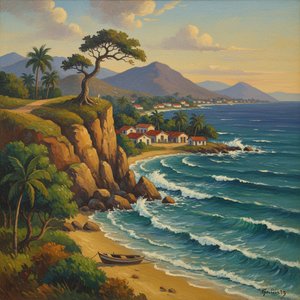
Benedito Calixto: A Brazilian Modernist's Landscape of Memory & National Identity
Explore the captivating world of Benedito Calixto, a pivotal Brazilian Modernist painter. Discover his iconic landscapes, the story behind the famous Bandeirante portrait, and his lasting impact on Brazilian national identity. Learn more at OriginalUniqueArt.

浪漫主义画派的十部巨作:定义风景画的艺术传奇
探索浪漫主义风景画的巅峰!本文精选十部经典名作,带您领略莫奈、库尔贝等大师的艺术魅力。感受色彩与光影的诗意,重温自然风光的震撼。OriginalUniqueArt.com为您提供博物馆级别的艺术复制品和个性化家居装饰方案。尽在OriginalUniqueArt.com!