
 效果预览
效果预览
 购买印刷品
购买印刷品 分享
分享 分享
分享
 详情
详情

 下载
下载
 相似作品
相似作品 X射线
X射线 幻灯片播放
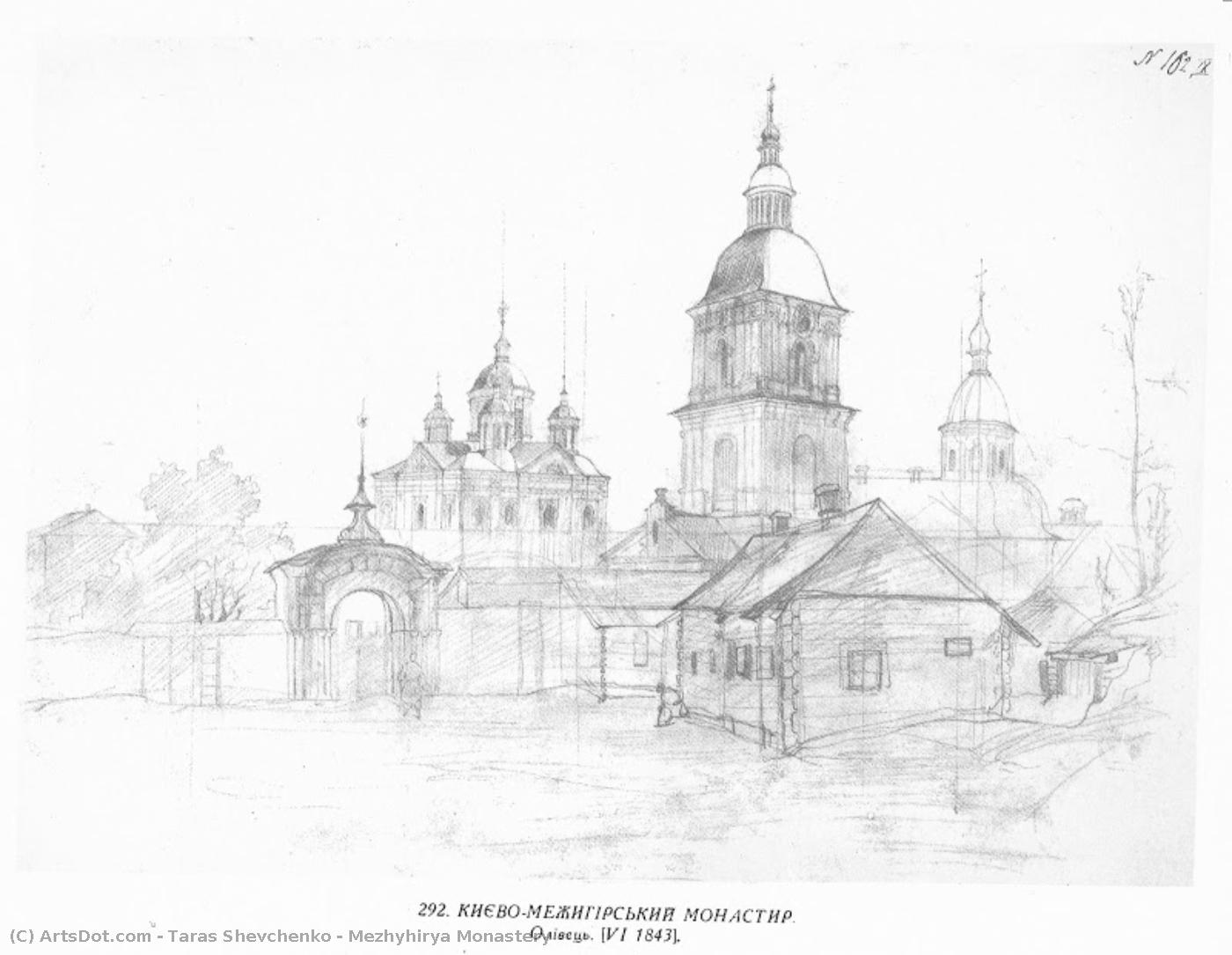
幻灯片播放Mezhyhirya Monastery


 展开详情
展开详情




































从与原作比例一致的预设尺寸中进行选择。

您可以输入自定义尺寸,以适配特定的画框或空间。如果所选尺寸与原图比例不符,我们将通过裁剪作品或添加手绘元素来扩展画面。数字样稿将在制作开始前发送给您确认。
请注意,屏幕预览无法准确反映实际的裁剪或扩展效果,只有样稿才能真实呈现最终的构图。
虽然我们提供定制尺寸服务,但为了保留原作比例,建议您从预设列表中选择尺寸。
下单后,OriginalUniqueArt.com 团队将通过电子邮件联系客户获取具体要求,并提供效果预览图。


 玻璃选项仅适用于110厘米以下的尺寸。

Mezhyhirya Monastery
复制材质
复制品尺寸
-


最终总价
$ 300
艺术家简介
A Life Etched in Poetry and Paint: The World of Taras Shevchenko
Taras Hryhorovych Shevchenko, a name synonymous with Ukrainian identity and resilience, was more than just an artist or a poet—he was the embodiment of a nation’s yearning for freedom. Born into serfdom in 1814 in the humble village of Moryntsi, Ukraine, his early life was steeped in hardship, yet illuminated by an innate artistic talent that would ultimately transcend his circumstances and ignite a cultural awakening. The weight of oppression bore down on young Taras; he lost his mother at seven and his father eight years later, experiences that indelibly marked his sensibility and fueled the poignant social commentary woven throughout his life’s work. His initial exposure to art came through apprenticeships with local icon painters, laying the foundation for a technical skill that would blossom under formal training. This early period wasn't merely about mastering technique; it was an immersion into Ukrainian folklore, religious imagery, and the visual language of his people—elements that would become cornerstones of his artistic expression.From Serfdom to St. Petersburg: The Flowering of a Genius
Shevchenko’s path took a pivotal turn when he was sent to Kyiv for education, first at the Grammar School and then the Theological Seminary. However, these institutions proved ill-suited to his artistic spirit. Fate intervened through the patronage of several individuals who recognized his exceptional talent. This led to his liberation from serfdom in 1838—a watershed moment achieved through a lottery where the prize was a portrait by Karl Bryullov. This freedom unlocked access to the prestigious Imperial Academy of Arts in St. Petersburg, where he studied under Karl Brück. Here, Shevchenko wasn’t simply absorbing artistic techniques; he was engaging with the broader European art scene, encountering Romanticism and Realism, styles that would subtly influence his own developing aesthetic. His work began to blend traditional Ukrainian themes with a modern sensibility, foreshadowing the unique voice he would soon project through both brushstrokes and verse. During this period, he honed his skills in painting, etching, and drawing, demonstrating a remarkable versatility that set him apart.The Poet of Ukraine: *Kobzar* and the Voice of a Nation
While Shevchenko excelled as an artist, it was through poetry that he truly captured the soul of Ukraine. The publication of *Kobzar* in 1840 marked a turning point not only in his career but also in Ukrainian literature itself. This collection wasn’t merely a compilation of poems; it was a declaration of national identity, a lament for past injustices, and a call for future liberation. The verses resonated deeply with the Ukrainian peasantry, articulating their struggles under serfdom and igniting a sense of collective consciousness. *Kobzar* became a symbol of resistance and hope, circulating widely despite censorship attempts by the Tsarist regime. Beyond *Kobzar*, Shevchenko’s artistic output continued to reflect his deep connection to Ukraine—paintings depicting rural life, historical events, and portraits that captured the spirit of his people. Works like “Architectural project of private house. Main facade” and "Cathedral of the Annunciation in Nizhny Novgorod" demonstrate a range beyond purely nationalistic themes, showcasing his architectural interests and technical skill. His monochrome illustration, “The Death of Bohdan Khmelnytsky,” stands as a powerful example of his mastery of realism and etching, depicting a pivotal moment in Ukrainian history with profound emotional depth.Exile, Resilience, and Enduring Legacy
Shevchenko’s outspoken criticism of the Tsarist regime and involvement with the Petrashevsky Circle—a group advocating for political reform—led to his arrest in 1847 and a decade-long exile to Central Asia. This period was marked by immense hardship; he was forbidden from writing or painting, subjected to harsh conditions, and constantly monitored. Yet, even in the face of such oppression, Shevchenko’s spirit remained unbroken. He continued to sketch secretly, documenting his surroundings and preserving his artistic vision. His exile became a symbol of Ukrainian suffering under Russian rule, further solidifying his status as a national hero. Upon his premature release due to failing health, he returned to St. Petersburg only to succumb to illness in 1861 at the age of 47. His death was mourned throughout Ukraine and beyond. Today, Taras Shevchenko is revered as a foundational figure in Ukrainian literature and art. Numerous museums and memorials—including the Taras Shevchenko National Museum in Kyiv and the Tereshchenko Museum—are dedicated to preserving his legacy. His works continue to inspire generations of artists, writers, and activists, ensuring that his voice—a voice forged in hardship and fueled by a deep love for Ukraine—will resonate for centuries to come. The recent creation of a Taras Shevchenko AI chatbot is a testament to the enduring power of his ideas and the ongoing commitment to sharing his work with new audiences.
Taras Hryhorovych Shevchenko
1814 - 1861 , Ukraine
艺术家简介
- Artistic Movement Or Style: Romanticism
- Artists Or Movements Influenced By This Artist:
- Ukrainian literature
- Modern Ukrainian language
- Artists Who Influenced This Artist: ['Karl Brück']
- Date Of Birth: March 9, 1814
- Date Of Death: March 10, 1861
- Full Name: Taras Hryhorovych Shevchenko
- Nationality: Ukrainian
- Notable Artworks:
- The Death of Bohdan Khmelnytsky
- Architectural project...
- Cathedral of the Annunciation
- Place Of Birth: Moryntsi, Ukraine

