切换至版画销售渠道
 展开全文
展开全文







































 对于任何边长超过 105 厘米(约 41 英寸)的艺术品或复制品,画框将以拆解后的组件形式发货。此方法可确保安全送达并防止运输过程中的损坏。


The Radiance of Art Deco Glamour
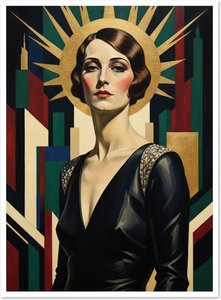
In the pantheon of twentieth-century portraiture, few names evoke as much immediate intrigue and sophisticated allure as Tamara de Lempicka. Her 1927 masterpiece, La belle Rafaela, stands as a definitive testament to the height of the Art Deco movement, capturing a moment of profound elegance and stylized sensuality. The painting presents a reclining female figure, draped in a pose that is simultaneously relaxed and commanding. As she rests upon a luxurious surface, her body creates a striking diagonal composition that guides the viewer's eye through a landscape of polished curves and sharp, architectural lines. This is not merely a portrait; it is an invitation into a world of opulence, where the boundaries between human softness and geometric precision blur into a singular, breathtaking vision of modern beauty.
The technical execution of La belle Rafaela reveals Lempicka’s unparalleled mastery of form and light. Utilizing the medium of oil painting, the artist achieves a finish so smooth and lustrous that it mimics the polished surfaces of chrome and enamel characteristic of the era. The color palette is a rich, decadent symphony of warm tones—deep reds, burnished golds, and earthy browns—which imbue the canvas with an almost tactile warmth. Through a dramatic use of chiaroscuro, Lempicka sculpts the subject's flesh, using deep shadows to define the musculature and brilliant highlights to accentuate the idealized contours of her skin. This interplay of light and shadow does more than create depth; it breathes life into the geometric shapes, transforming a flat canvas into a three-dimensional stage of sculptural grace.
A Symbol of Modernity and Self-Assurance
Beyond its aesthetic splendor, the artwork serves as a powerful symbol of the changing social tides of the 1920s. Emerging from the shadows of the Russian Revolution and finding her creative soul in the vibrant heart of Paris, Lempicka infused her work with the spirit of the "New Woman." The subject of La belle Rafaela does not shy away from the viewer's gaze; instead, she exudes a sense of self-assuredness and agency. Her pose, while reclining, is far from passive. There is an inherent strength in her silhouette, a reflection of the era's burgeoning independence and the breaking of traditional Victorian constraints. The streamlined forms and simplified shapes reflect a world moving toward speed, industry, and a streamlined future, making this piece a historical landmark of modern identity.
For the discerning collector or interior designer, La belle Rafaela offers more than just visual impact; it provides an emotional anchor for a sophisticated space. The painting possesses a unique ability to command attention while maintaining an air of timeless class. Whether placed in a contemporary gallery setting or used as a focal point in a luxurious residential suite, its bold geometry and warm, inviting tones can elevate the atmosphere of any room. It is a piece that speaks of heritage, luxury, and the enduring power of the human form, making it an exquisite choice for those looking to surround themselves with art that is both historically significant and aesthetically transcendent.
常见问题与解答
"La belle Rafaela" 是 Art Deco 运动中著名的艺术作品吗?
坦玛拉·德·兰皮卡 (Tǎn Mǎ Lā · Dé Lán Pí Kǎ) 的《La belle Rafaela》 被归类为 Iconic,并属于 Art Deco 流派。
“La belle Rafaela”这一Art Deco背后蕴含着怎样的国族渊源?
通过创作者的出生地,《La belle Rafaela》将Art Deco运动与波兰紧密联系在了一起。
坦玛拉·德·兰皮卡 (Tǎn Mǎ Lā · Dé Lán Pí Kǎ) 的作品《La belle Rafaela》是否属于公有领域?其原因是什么?
坦玛拉·德·兰皮卡 (Tǎn Mǎ Lā · Dé Lán Pí Kǎ) 的《La belle Rafaela》 已进入 仍受版权保护。版权保护期自艺术家逝世之日起计算,该艺术家于 1980 年逝世。
 实景预览
实景预览
 分享
分享 分享
分享
 详情
详情 指南
指南

 下载作品
下载作品
 相似作品
相似作品 X射线
X射线 幻灯片播放
幻灯片播放 问答
问答 统计数据
统计数据