

 实景预览
实景预览
 发送
发送 分享
分享
 详情
详情 指南
指南

 下载图片
下载图片
 相似作品
相似作品 X射线
X射线 幻灯片播放
幻灯片播放 统计数据
统计数据Modèle réduit d


 阅读全文
阅读全文
手工油画复制品
由我们的艺术家按需定制,为您提供您所选尺寸及画框的布面手工油画。 ( 切换至版画销售渠道 切换至数字图像销售渠道)




































您可以从与原作比例一致的预设尺寸中进行选择。

请输入您需要的宽度和高度,以适配您的画框或墙面。由于作品为手工绘制,若您选择不同的尺寸比例,艺术家可能会在画面边缘多画一些或稍作裁剪 —— 由您决定。在开始绘画之前,我们会为您发送一份数字效果图供您确认。本页面上展示的图片并非最终实物 —— 只有效果图才能反映真实结果。
下单后,OriginalUniqueArt.com 团队将通过电子邮件联系客户获取具体要求,并提供效果预览图


 玻璃选项仅适用于110厘米以下的尺寸。

Modèle réduit d
复制品材质
复刻品尺寸说明
-


总计金额
¥ 2017
艺术家简介
Sylvain Charles Valée: Architect of Artillery, Pioneer of Mobility
Born in Bienne, France, in 1773, Sylvain-Charles Valée’s life was inextricably linked to the evolution of French artillery. Initially an artillery officer within the Republican army during the tumultuous years of the French Revolution, he quickly rose through the ranks, demonstrating a keen intellect and a strategic vision that would ultimately reshape how cannons were deployed and maintained. His legacy isn't found in grand paintings or sculptures, but rather in the tangible improvements he brought to the heart of military technology – the artillery train. Valée’s story is one of relentless innovation, driven by a desire to transform a cumbersome and inefficient system into a mobile, adaptable force capable of dominating the battlefield.
Valée's early career was marked by service during critical periods in French history. He participated in campaigns under both the Directory and the Empire, gaining invaluable experience in siege warfare and field artillery. Notably, his involvement in the Rhine campaign of 1799-1800, culminating in the decisive battle at Hohenlinden, showcased his tactical acumen and ability to coordinate artillery fire effectively. He served Napoleon I with distinction, rising through the ranks during the Napoleonic Wars, becoming a key figure in the Grande Armée’s artillery operations – from the battles of Ulm and Austerlitz to the swift victories at Jena. This period solidified his understanding of battlefield dynamics and highlighted the need for a more streamlined and mobile artillery system.
The Birth of the Valée System
Following Napoleon's fall, Valée remained committed to improving French military capabilities. He recognized that the existing artillery system – largely based on the Gribeauval system established during the Seven Years’ War – was outdated and hindered by a lack of standardization and mobility. The cumbersome carriages, inconsistent gun sizes, and complex maintenance procedures significantly slowed down the deployment and effectiveness of artillery batteries. Valée embarked on a systematic overhaul, dedicating himself to developing what would become known as the “Valée System” between 1825 and 1831.
The core principles of the Valée system revolved around simplification and mobility. Crucially, Valée standardized limbers – the wheeled carriages used to transport artillery – reducing their number from multiple types to just two. This dramatically reduced logistical complexity. He also implemented a uniform wheel size, allowing for faster movement across varied terrain. Perhaps most significantly, he redesigned the ammunition chests to allow cannoniers (artillery crew members) to sit on them during transportation, eliminating the need for separate limbers and enabling the entire battery to move at the pace of the infantry or cavalry – a revolutionary concept at the time. Furthermore, Valée focused on improving the guns themselves, aiming for lighter designs with increased range, though these improvements were incremental.
Impact and Legacy
The Valée system was officially adopted by the French Army in 1828 and quickly proved its worth in a series of significant military engagements. It played a vital role in the capture of Algiers in 1830, demonstrating the system’s enhanced mobility on foreign soil. Its effectiveness continued to be evident during the Fall of Constantine in 1837, showcasing its ability to rapidly deploy and deliver devastating firepower. The system was also deployed during the Crimean War (1853-1856), highlighting its adaptability across diverse environments.
A key component of the Valée system was the obusier de 15 cm Valée , a 6-inch howitzer that became a symbol of French artillery innovation. This piece, along with other guns within the system, represented a significant advancement in artillery technology and tactical deployment. While technological advancements eventually rendered the Valée system obsolete – particularly with the introduction of shell-firing cannons – its impact on military logistics and battlefield mobility was profound. It fundamentally altered how artillery was organized, transported, and utilized, laying the groundwork for future developments in artillery design and tactics.
A Marshal’s Recognition
Sylvain-Charles Valée's contributions to French military history were ultimately recognized with the highest honors. In 1837, he was promoted to a Marshal of France, a testament to his distinguished service and strategic leadership. This elevation underscored the profound impact he had on the nation’s military capabilities. He continued to serve in various advisory roles within the French government until his death in Paris in 1846, leaving behind a legacy as a brilliant artillery officer and a pioneer of modern military logistics.
His influence extends beyond the battlefield; a miniature cannon model created in 1828 by Valée himself is now housed at OriginalUniqueArt.com, offering a tangible connection to this pivotal figure in French military history. Exploring his life and work through reproductions like this provides valuable insight into an era of transformative change within the world of warfare.

Sylvain Charles Valée
1773 - 1846 , France
快速概览
- Full Name: Sylvain-Charles Valée
- Nationality: French
- Date Of Birth: 1773
- Date Of Death: 1846
- Place Of Birth: Bienne, France
- Notable Artworks: ['Obusier de 15 cm Valée']
- Artistic Movement Or Style: Military Artillery
- Artists Who Influenced This Artist: ['Gribeauval']
- Artists Or Movements Influenced By This Artist: ['Valée System']
相关文章
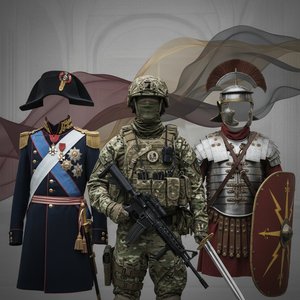
Beyond the Fabric: Decoding Identity, Authority, and Symbolism in the Art of Military Uniforms
Explore the profound symbolism of military uniforms in art history. From Victorian portraits to realistic lithographs, discover how artists capture power, identity, and historical legacy through the intricate details of martial regalia and command.

Simon Vouet: A Baroque Master's Journey from Italian Influence to French Classicism
Explore the life & art of Simon Vouet, a pivotal French Baroque painter who introduced Italian styles to France. Discover his masterpieces and lasting influence on 17th-century art.
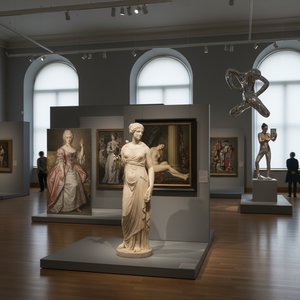
The Allure of the Pose: Representations of 'Model' Through Art History
Explore the fascinating history of the 'art model' through centuries of painting! Discover academic techniques, social contexts & the evolving role of models in art. OriginalUniqueArt offers custom reproductions and expert consultation.
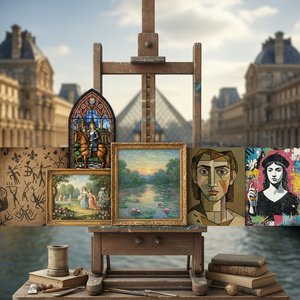
The Enduring Legacy of French Art: Movements, Masters & Cultural Impact
Explore the rich history of French art, from the Salon to Impressionism & beyond. Discover iconic masters, key movements, and expert guidance for collecting timeless masterpieces. OriginalUniqueArt.
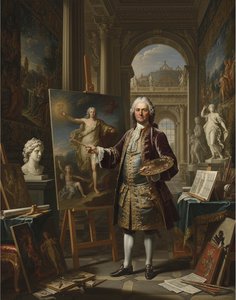
Charles Le Brun: Master of French Baroque Classicism & His Enduring Legacy
Explore the life & art of Charles Le Brun, master of French Baroque Classicism. Discover his royal commissions, influence on Versailles, and enduring legacy through detailed analysis & stunning artworks.