切换至版画销售渠道
 展开全文
展开全文







































 对于任何边长超过 105 厘米(约 41 英寸)的艺术品或复制品,画框将以拆解后的组件形式发货。此方法可确保安全送达并防止运输过程中的损坏。


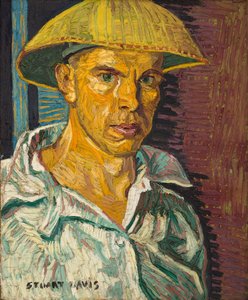
A Dynamic Vision of Modern Life: Exploring Stuart Davis’s *Tropes de Teens* (1956)
- Abstracted Energy and Post-War America: Painted in 1956, *Tropes de Teens* is a vibrant explosion of color and form emblematic of Stuart Davis’s pioneering role in American Modernism. Emerging from the influence of Cubism and Expressionism, this artwork doesn't depict reality as we see it, but rather captures its feeling – the energy, excitement, and underlying tensions of post-war America. The large scale (115 x 153 cm) commands attention, drawing the viewer into a tightly packed composition that feels both exhilarating and slightly unsettling.
- Deconstructing Form & Embracing Jazz: Davis was deeply influenced by jazz music, and this is reflected in the rhythmic interplay of shapes and colors within *Tropes de Teens*. The fragmented figures, constructed from geometric forms – rectangles, triangles, and circles – are not portraits but rather “tropes,” or recurring motifs representing youthful energy. The flattened perspective and overlapping planes recall Cubist principles, while the bold color palette and expressive brushwork align with Expressionist ideals. This fusion creates a uniquely American aesthetic, distinct from its European predecessors.
Decoding the Visual Language: Symbolism & Technique
- Eyes as Witnesses: The prominent, stylized eyes scattered throughout the composition are particularly striking. They suggest a sense of observation, perhaps even judgment, adding a layer of psychological complexity to the work. Are these the eyes of society scrutinizing youth culture? Or do they represent an internal gaze, reflecting self-awareness and anxiety?
- The Power of Red: The strategic use of red – a color often associated with passion, danger, or vitality – further intensifies the emotional impact. It draws the eye and creates focal points within the chaotic arrangement. Combined with the stark black background, it amplifies the drama and sense of urgency.
- Acrylic Application & Textured Surfaces: Executed in acrylic on canvas, Davis employs visible brushwork to create a tactile quality. The layering of colors and energetic strokes contribute to the artwork’s dynamic texture, inviting closer inspection and enhancing its visual appeal. This technique adds depth despite the flattened perspective.
Stuart Davis & His Legacy
- From Ashcan School to American Modernism: Stuart Davis’s artistic journey began with the realism of the Ashcan School, as evidenced by his early watercolors exhibited at the groundbreaking 1913 Armory Show. However, he quickly moved towards abstraction, developing a distinctive style that celebrated modern life and embraced the energy of jazz music.
- A Proto-Pop Vision: Davis’s work foreshadowed elements of Pop Art with its incorporation of commercial imagery and bold graphic forms. He was a key figure in establishing an authentically American artistic voice, independent from European trends.
常见问题与解答
"Tropes de Teens" 有艺术版画出售吗?
若想订购 斯图尔特·戴维斯 的《Tropes de Teens》 的版画,只需前往其 艺术版画 页面进行订购即可:采用棉质帆布或档案级画布纸制作的艺术版画。
斯图尔特·戴维斯 还有哪些别名?
斯图尔特·戴维斯 也被称为 爱德华·斯图尔特·戴维斯, 斯图瓦特·戴维斯, 戴维斯, 爱德华·怀亚特·戴维斯。
是否有面向学生的 斯图尔特·戴维斯 的《Tropes de Teens》 详情页?
"Tropes de Teens" 的指南请参阅作品的 指南 页面 —— 这是一份可打印的信息单,包含了该作品的说明、署名以及详细信息表(艺术家、日期、媒介、原尺寸、馆藏)。
 实景预览
实景预览
 分享
分享 分享
分享
 详情
详情 指南
指南

 下载作品
下载作品
 相似作品
相似作品 X射线
X射线 幻灯片播放
幻灯片播放 问答
问答 统计数据
统计数据