Neo-Romantic Landscape · 1944
Ardrossan (斯蒂芬·博恩, 1944)
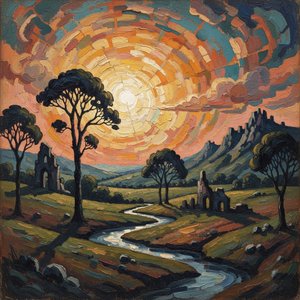
斯蒂芬·博恩 (1904–1958) 创作了《Ardrossan》。 创作于 1944 年。 它属于 Neo-Romantic Landscape 运动。 由 Oil On Canvas 创作。 现藏于利物浦, 英国的沃克艺术馆。 尺寸为 51 × 61 cm。
- 1944
- Oil On Canvas
- 51 × 61 cm
- 沃克艺术馆, 利物浦

 实景预览

 手工油画复制品
 分享
 分享
 详情页


 下载作品
 相似作品
 X射线
 幻灯片播放
 问答

 统计数据
Ardrossan简介
Ardrossan 描绘了什么内容?
A Moment Frozen in Time: The Essence of Ardrossan
Stephen Bone’s Ardrossan isn't merely a depiction of a coastal town; it’s a carefully constructed evocation of memory, atmosphere, and the quiet dignity of a bygone era. Painted in 1944, during the tumultuous years of World War II, the canvas captures a specific moment – a fleeting glimpse of a bustling harbor scene rendered with a deliberate restraint that speaks volumes about the artist's sensibility. The painting immediately draws the viewer into its monochrome world, a carefully calibrated palette of grays and blacks that feels both familiar and profoundly melancholic. It’s a visual poem to the resilience of place and the enduring power of observation.
- Historical Context: Bone's work during this period is deeply intertwined with his role as an Admiralty war artist, documenting naval activities and coastal defenses. This experience undoubtedly informed his approach to capturing the essence of Ardrossan – a town vital to maritime trade and strategically positioned along the Firth of Clyde.
- The Artist’s Vision: Bone was known for his ability to distill complex landscapes into their most essential elements, prioritizing mood and atmosphere over photographic realism. He sought not just to represent Ardrossan, but to convey a feeling – a sense of timelessness and quiet contemplation.
The Language of Line and Tone
Bone’s masterful use of line is immediately striking. Strong, confident strokes delineate the buildings lining the waterfront, creating a sense of solidity and permanence despite the cloudy sky above. These lines aren't rigid or geometric; they possess a subtle fluidity, suggesting movement and life within the town. The boats in the harbor are rendered with varying degrees of detail, their forms subtly suggested through carefully placed lines, contributing to the overall depth and spatial awareness of the composition. Crucially, the artist employs a sophisticated understanding of tonal variation – light and shadow are used not just for visual interest but also to create a palpable sense of atmosphere. The darker tones in the foreground anchor the scene, while the lighter shades receding into the distance evoke a feeling of atmospheric perspective, drawing the eye deeper into the image.
The painting’s monochromatic palette is particularly effective in conveying a mood of nostalgia and understated drama. It's reminiscent of vintage photographs, lending the work an almost documentary quality while simultaneously elevating it to the realm of art.Symbolism and Emotional Resonance
Beyond its technical merits, Ardrossan is rich in symbolic resonance. The cloudy sky, a dominant feature of the composition, can be interpreted as a metaphor for uncertainty and hardship – reflecting the anxieties of wartime Britain. The harbor itself, with its bustling activity, represents both connection and isolation, highlighting the town’s role as a vital link between land and sea. The presence of the boats suggests trade, industry, and perhaps even a longing for distant horizons. There's an underlying sense of quiet dignity in the scene, a suggestion that life continues despite the challenges of the time.
The painting’s emotional impact is profoundly subtle yet undeniably powerful – it invites contemplation and evokes a feeling of wistful remembrance.A Window into the Past: Technical Details
Painted in oil on canvas, Ardrossan demonstrates Bone's mastery of layering and blending techniques. The visible brushstrokes add texture and depth to the scene, creating a sense of immediacy and authenticity. The careful attention to detail – from the reflections shimmering on the water to the subtle variations in tone – speaks to the artist’s meticulous approach. The dimensions of 51 x 61 cm suggest a scale that is intimate yet expansive, allowing for both detailed observation and a broader appreciation of the scene.
哪家博物馆收藏有 Ardrossan?
沃克艺术馆
利物浦, 英国
沃克艺术馆的历史 艺术收藏的渊源可以追溯到1819年,当时利物浦皇家学会(Liverpool Royal Institution)购入了37幅画作。这一最初的积累,为随后数十年间不断壮大的艺术馆奠定了坚实的基础。作为一座被列为二级*保护建筑(Grade II* listed)的艺术殿堂,沃克艺术馆目前是利物浦国家博物馆(National Museums Liverpool)集团的重要成员。 1877年9月6日,在第15代德比伯爵爱德华·亨利·斯坦利(Edward Henry Stanley)的主持下,这座画廊正式揭开了它的面纱。为了纪念其创始人兼慷慨赞助人安德鲁·巴克利·沃克爵士(Sir Andrew Barclay Walker,1824–1893),这座建筑被正式命名为沃克艺术馆。时至今日,它依然是英国利物浦文化版图中不可或缺的重要篇章。维多利亚时代的圣殿建筑 沃克艺术馆是一座宏伟的维多利亚时代建筑,坐落于英格兰利物浦的 威廉·布朗 街。这座建筑由埃文·詹姆斯·霍尔(Evan James Hall)倾力设计,作为一座二级保护建筑(Grade II* listed),其卓越的历史价值与建筑艺术地位得到了广泛认可。画廊地理位置优越,紧邻皇后大道隧道(Queensway Tunnel)的入口。 这座画廊的宏伟身姿,深刻映射出十九世纪时期城市发展的雄心壮志。其建筑设计为艺术品的保存提供了一个严谨而有序的环境,内部空间布局精妙,旨在为观众呈现从 文艺复兴 时期杰作到现代英国艺术品的多元化收藏体验。建筑的宏大规模,既是为了承载馆内厚重的艺术底蕴,也是为了顺应公众在长廊间流转的律动。前拉斐尔派与文艺复兴藏品 沃克艺术馆珍藏了一系列非凡的前拉斐尔派绘画作品。这些杰作,包括但丁·加布里埃尔·罗塞蒂与约翰·埃弗里特·米莱斯的作品,都致力于探索复杂的象征主义与心理深度。这些艺术家试图回归早期文艺复兴时期的纯真,强调解剖学的准确性以及情感的强度。在他们的画布上,郁郁葱葱、细节丰富的自然景观与人物交织在一起,散发出一种超凡脱俗的忧郁气息。 此外,馆藏还为人们展示了文艺复兴时期的创新成果。通过这些定义了现代表现主义黎明时期的作品,观众可以观察到透视法的发展以及人类神韵的展现。这其中既包括波提切利的神话寓言,也包括列奥纳多·达·芬奇《圣母报喜》中那神圣而朦胧的氛围。这些作品代表了欧洲艺术史上一个重要的智识与精神探索时期。 《但丁之梦》,1872年 - 但丁·加布里埃尔·罗塞蒂 《伊莎贝拉》,1849年 - 爵士·约翰·埃弗里特·米莱斯 常设馆藏的杰作 沃克艺术馆的馆藏珍品跨越了文艺复兴时期至十七世纪的漫长岁月。在馆藏的早期篇章中,西蒙内·马蒂尼于1342年创作的画作《在圣殿中发现基督》,便见证了这座艺术殿堂最初的辉煌。而荷兰黄金时代的艺术魅力,则通过伦勃朗·凡·莱因的多件传世之作得以生动呈现,其中包括《艺术家青年肖像》(约1631年)、《订婚》(约1640年)以及《戴贝雷帽与金链的自画像》(约1630年)。这些杰作与小汉斯·霍尔拜因于1537年绘制的《亨利八世》肖像并列陈列,共同构成了艺术史的壮丽长卷。 随着时代更迭,后世的艺术运动也在常设展区中找到了属于自己的位置。在这些艺术珍宝中,但丁·加布里埃尔·罗塞蒂于1872年创作的《但丁之梦》无疑是整个艺术群像的核心。而十九世纪的艺术风貌,则通过保罗·塞尚的《谋杀》(1870年)以及约翰·威廉·沃特豪斯的《回声与纳西瑟斯》(约1903年)得到了深刻的诠释。现代与英国艺术作品 这批藏品通过对风景与人物视角不断演变的描绘,追溯了英国身份认同的演进历程。乔治·斯塔布斯为这种演变奠定了基于解剖精准度与敏锐观察的基础。他的杰作包括林肯郡之牛(1790年)、被狮子惊吓的马(1770年)以及骑手与莫莉·长腿(1762年)。这些画作不仅体现了艺术家对自然世界的赤诚投入,更展现了对动物肌肉结构的深刻研究。 向二十世纪的过渡,在现代主义者与当代艺术家的身影中留下了鲜明的印记。大卫·邦伯格于1934年创作的库恩卡,通过一幅山地景观,以其深受立体主义影响的几何简化手法,展开了一场关于孤独的冥想。此外,沃克艺术馆还收藏了如卢西安·弗洛伊德与大卫·霍克尼等二十世纪艺术巨匠的作品,展现了现代英国艺术的广博深度。 维多利亚时代晚期的场景,则为我们窥见那个旧时代的城市与社会生活提供了窗口。查尔斯·特雷弗·普雷斯科特的威廉·布朗街的斯塔布尔喷泉(1899年),描绘了利物浦一个宁静的瞬间,画面中人物从中央的雕像与喷泉旁缓缓走过。这件作品精准地捕捉到了世纪之交时,这座城市特有的生活气息。参观利物浦沃克艺术馆 沃克艺术馆坐落于英国利物浦 William Brown 街,地理位置优越,紧邻皇后大道隧道(Queensway Tunnel)的入口。对于驾车前往的访客,最近的停车场位于皇后广场(Queen Square)。此外,在 William Brown 街以及世界博物馆(World Museum)后方的亨特街(Hunter Street)也设有收费停车位。 画廊每日开放时间为上午10时至下午5时。作为 利物浦国家博物馆群 旗下的艺术殿堂,这里向公众免费开放。虽然无需支付门票,但我们非常欢迎访客通过捐赠来支持艺术机构的持续运营。步入馆内,您将邂逅多件传世杰作,其中包括: 《纳西索斯与回声》,1903年 - 约翰·威廉·沃特豪斯 《订婚》,1640年 - 伦勃朗·凡·莱恩 《伊莎贝拉》,1849年 - 爵士·约翰·埃弗里特·米莱


Ardrossan 的高分辨率图像

Protected by copyright: these files are for personal reference, not a licence to republish.
斯蒂芬·博恩, Ardrossan (1944), 沃克艺术馆.
关于 Ardrossan 的常见问题解答
斯蒂芬·博恩 的《Ardrossan》 的实际尺寸是多少?
"Ardrossan" 原作尺寸为 51 x 61 cm。在选择复制品尺寸时,参考原作尺寸会非常有帮助。
“Ardrossan”的主题是什么?
关于艺术家 斯蒂芬·博恩

1904–1958, 英国
斯蒂芬·博恩
史蒂芬·博恩:生命与艺术 早年生活与教育 出生:英国,奇斯威克 (1904年) 逝世:1958年 史蒂芬·博恩(Stephen Bone)出身于艺术世家,其父是著名艺术家缪尔黑德·博恩爵士(Sir Muirhead Bone),其母是作家格特鲁德·海伦娜·多德(Gertrude Helena Dodd)。这种深厚的家庭艺术底蕴对其早期的艺术启蒙产生了极其深远的影响。 他在贝德尔斯学校接受了基础教育,随后于1922年进入著名的斯莱德美术学院(Slade School of Fine Art)深造。 然而,面对学院派严谨而刻板的教学方式,他逐渐感到幻灭,并于1924年毅然决定离开学院,转而投身于书籍插画创作的领域。 早期职业生涯与艺术蜕变 博恩最初凭借其卓越的木刻插画才华赢得了声誉,他为自己的母亲及其他作家创作了大量作品。1925年,他在巴黎国际博览会上凭借精湛的木刻技艺荣获金奖。 1926年,他与罗德尼·约瑟夫·伯恩(Rodney Joseph Burn)及罗宾·古斯里(Robin Guthrie)在古皮尔画廊(Goupil Gallery)共同展出,这标志着他在艺术界获得了重要的认可。 1928年,他为皮卡迪利圆环地铁站创作了一幅壁画,展现了其多变的艺术风格与不断扩张的艺术视野。 1929年,他与艺术家玛丽·阿德希德(Mary Adshead)结为连理,这段婚姻开启了他遍布英国与欧洲的漫长旅程。这些旅行对他艺术风格的形成至关重要,使他练就了标志性的明亮风景画风格——无论天气如何变幻,他始终坚持进行写生(en plein air),捕捉自然界最真实的瞬间。 1930年代:风景画创作与展览盛况 在20世纪30年代,博恩的作品频繁出现在各大顶尖画廊,包括美术学会(Fine Art Society)、勒费弗画廊(Lefevre Gallery)以及雷德芬画廊(Redfern Gallery)。 1936年,他在牛津的莱曼画廊(Ryman Gallery)展出了由41幅作品组成的系列画作,描绘了英国各郡的风光,充分展现了他致力于捕捉英国风景灵魂的艺术追求。 此外,他还在1936年至1937年间于斯德哥尔摩举办展览,进一步提升了他的国际知名度。 战争艺术家与二战贡献 第二次世界大战爆发后,博恩加入了民防伪装机构并担任军官。 1943年,他被战争艺术家咨询委员会任命为全职受薪艺术家,专门负责海军事务题材的创作。这一职责此前由他的父亲缪尔黑德·博恩承担,但在他们的儿子加文不幸去世后,史蒂芬接过了这一艺术使命。 二战重要作品:他创作了大量描绘海岸设施与海军舰艇的作品,其中甚至包括在潜艇内部捕捉到的珍贵场景。 1944年,博恩亲历并记录了诺曼底登陆,绘制了卡昂(Caen)和库瑟勒(Courseulles)的战争画面;他还记录了对荷兰瓦赫宁恩岛(Walcheren Island)的进攻过程。 1944年末,他前往挪威,记录了“提尔比茨”号(Tirpitz)战舰沉没后的残骸,并描绘了缴获的海军基地以及战俘的大规模墓地。 战后生涯与艺术遗产 战争结束后,博恩发现自己的艺术风格在当时已略显过时。尽管他从未停止画笔,但在作品展览方面却面临着重重困难。 于是,他转向了艺术评论领域,为《曼彻斯特卫报》撰稿,并为《格拉斯哥先驱报》创作幽默随笔。 博恩还参与了BBC的电视与广播工作,并与妻子合作创作儿童读物;两人还共同在达丁顿(Dartington)组织了一门壁画绘画课程。 1957年,他被任命为霍恩西艺术学院(Hornsey College of Art)院长。 逝世:1958年9月15日,史蒂芬·博恩因癌症在伦敦圣巴塞洛缪医院去世。 史蒂芬·博恩的作品为20世纪中叶的英国留下了珍贵的视觉记录,既涵盖了英国风景的宁静之美,也铭刻了战争时期的残酷现实。
斯蒂芬·博恩 的其他作品
 Bow Gun, HMS 'Southern Star'1943
 Stormy Evening1926
 Arisaig1940
 Royal Air Force Air Sea Rescue Launches, Stornoway The Fish Quay Beyond1943
关于 Ardrossan 的论文集
 Stephen Bone: A Reassessment of Colour, Form & the British Neo-Romantic Landscape TraditionExplore the vibrant world of Stephen Bone (1904-1958), a key figure in British Neo-Romanticism. Discover his captivating landscapes, impact…
 The Language of Light and Form: Emotional Resonance in Abstract LandscapesExplore the emotional depth of abstract landscapes through Kandinsky and Gauguin. Discover the power of color and form today.
 Spontaneity and Matter: Distinguishing CoBrA from Art InformelMaster the differences between CoBrA and Art Informel with our expert guide. Learn to identify these post-war movements today.