

 效果预览
效果预览
 分享
分享 分享
分享
 详情
详情

 下载
下载
 相似作品
相似作品 X射线
X射线 幻灯片播放
幻灯片播放 统计数据
统计数据Woman with Cake
 Surrealism
 61.0 x 91.0 cm
 展开详情
展开详情
艺术微喷/版画
博物馆级艺术微喷或帆布版画,制作高效,并提供多种饰面选择。 ( 购买手绘画作 切换至数字图像销售渠道)




































从与原作比例一致的预设尺寸中进行选择。

您可以输入自定义尺寸,以适配特定的画框或空间。如果您选择的尺寸与原图比例不符,我们将对作品进行裁剪,或通过镜像填充/纯色填充边缘的方式来扩展图像。在开始制作之前,我们会向您发送一份数字效果图供您确认。
请注意,屏幕上的预览并不能反映实际的裁剪或扩展效果。只有效果图才能准确展示最终的构图。
虽然我们提供定制尺寸,但为了保持原图比例,我们建议您从预设列表中选择尺寸。


 玻璃选项仅适用于110厘米以下的尺寸。

Woman with Cake
艺术微喷/版画
复制品尺寸
-


最终总价
$ 80
Composition and Symbolism
The composition of the painting features a woman standing to the right of a cake, which is placed on a table to the left. Two vases are present in the scene, one near the center and the other towards the right side of the painting. A potted plant is also visible at the top-right corner. The overall arrangement suggests that the artwork may be related to a celebration or gathering involving food and decorations. Key elements of the painting include the woman's expression, the cake, and the vases. The woman's face is serene, and her eyes seem to be gazing at something in the distance. The cake, which appears to be the central focus of the painting, is decorated with intricate designs. The vases, which are placed strategically in the scene, add a touch of elegance to the overall composition.Artist and Style
Stanley Lench was a talented artist known for his oil paintings. His style is characterized by attention to detail and a deep understanding of color and composition. Other notable works by Stanley Lench include Horace Brodsky, Indian Woman, and Cathy with a Cat. These paintings can be found on the OriginalUniqueArt.com website, which offers high-quality, hand-made oil painting reproductions.- View more paintings by Stanley Lench on OriginalUniqueArt.com
- Learn more about the Bethlem Museum of the Mind and its collection
- Discover the Standard Return Policy offered by OriginalUniqueArt.com
The "Woman with Cake" painting is a beautiful example of Stanley Lench's skill as an artist. With its captivating composition and attention to detail, it is a must-see for art enthusiasts. Whether you are interested in purchasing a hand-made oil painting reproduction or simply learning more about the artist and his style, OriginalUniqueArt.com is the perfect resource.
艺术家简介
A Quiet Visionary: The Soulful World of Stanley Lench
The art world often gravitates toward the loud, the avant-garde, and the provocatively complex, yet there exists a profound power in the understated. Stanley Lench (1934–2000) was a master of this quietude. Though born in the industrial heart of Leeds, West Yorkshire, his artistic spirit found its most resonant expression within the traditions of American folk art. His journey was not one of academic posturing but of deep, sincere observation. Lench possessed the rare ability to look at the mundane—a simple piece of fruit, a serene face, or a sweeping landscape—and reveal the spiritual weight held within the everyday. His work serves as a bridge between the rugged landscapes of his English roots and the idealized, romanticized vistas of the American wilderness.
The foundations of Lench’s aesthetic were laid during his formative years in England, where the atmospheric light of Impressionist masters like Monet and Sisley left an indelible mark on his perception. He learned to appreciate how tonal harmony and a soft, misty perspective could transform a scene into a memory. As his style matured, he found a spiritual kinship with the legacy of the Hudson River School. Much like those nineteenth-century painters who sought to capture the divine grandeur of nature, Lench utilized his canvases to inspire contemplation. However, where the Hudson River artists often pursued epic scale, Lench focused on the intimate, bringing that same sense of reverence down to the level of a kitchen table or a backyard garden.
Technique and the Beauty of Imperfection
What distinguishes a Lench painting is its palpable honesty. Eschewing formal, rigid training in favor of a self-taught, intuitive approach, he developed a technique that felt both spontaneous and deeply textured. His surfaces often bear the marks of impasto, where thick applications of oil paint create a physical landscape upon the canvas itself. This tactile quality lends his work an almost sculptural presence, making the swirling colors in pieces like 'Butterflies' feel as though they are caught in a moment of kinetic energy. His palette was frequently muted, relying on earthy tones and soft transitions that evoke a sense of nostalgia and peace.
There is a certain childlike sincerity in his brushwork that avoids the trap of mere sentimentality. Instead, it achieves a state of naivety—a deliberate stripping away of artifice to reach a core truth. In works such as 'Still Life (verso)', the objects are not merely rendered; they are celebrated. His ability to balance composition through subtle elements—a strategically placed vase or the soft glow of light on a ceramic surface—demonstrates a sophisticated understanding of visual weight, even within a folk-art framework. This mastery allowed him to navigate between different modes of expression, from the abstract dynamism of his more experimental works to the tender, narrative clarity of his portraits.
Legacy and Emotional Resonance
The significance of Stanley Lench lies in his ability to capture the ephemeral. His subjects often touched upon universal themes of faith, family, and tradition, making his art accessible yet deeply moving. Whether he was painting a portrait of an ordinary person or a quiet domestic scene like 'Woman with Cake', there is always an underlying sense of story—a feeling that the moment captured is part of a much larger, eternal cycle of life. His work does not demand attention through shock; it earns it through a persistent, gentle beauty that lingers in the mind long after the viewer has turned away.
Today, Lench’s contributions to the folk art canon are recognized through collections such as those held at the Bethlem Museum of the Mind. His ability to weave together the atmospheric sensibilities of Europe with the romantic traditions of America ensures his place as a unique figure in twentieth-century art. He remains a testament to the idea that art does not need to be loud to be heard, and that the most profound truths are often found in the simplest of observations.
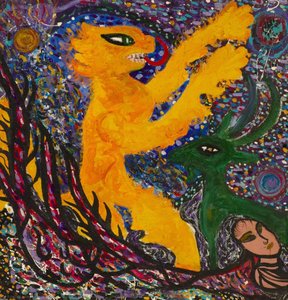
stanley lench
1934 - 2000
艺术家简介
- Artistic Movement Or Style: Naive Folk Art
- Artists Or Movements Influenced By This Artist: ['Hudson River School']
- Artists Who Influenced This Artist: ['Edward Hopper']
- Date Of Birth: 1934
- Date Of Death: 2000
- Full Name: Stanley Drinkware Lench
- Nationality: British
- Notable Artworks:
- Butterflies
- Still Life (verso)
- Place Of Birth: Leeds, England
相关文章

The Enduring Legacy of Oil on Canvas: Technique, History & Aesthetic Impact
Explore the rich history & techniques of oil painting – from Renaissance masters to Impressionism. Discover pigments, layering methods, and why this timeless medium endures. Expert insights for artists & art enthusiasts.

Oil on Canvas: A Historical & Technical Exploration of a Timeless Artistic Medium
Explore the rich history & enduring techniques of oil painting on canvas. Discover the science behind its longevity, conservation practices, and contemporary relevance. Expert insights for art enthusiasts.

The Enduring Power of Painting: A Historical & Contemporary Exploration of Form and Emotion
Explore the rich history & enduring techniques of oil painting with OriginalUniqueArt. Discover masterpieces, learn about art collecting, and find authentic handmade reproductions crafted by skilled artists.
The Timeless Charm of Oil on Board: Reimagining Texture and Light through the Impressionist Lens
Discover the profound intimacy of oil on panel. Explore how Impressionist masters used rigid supports to capture light, texture, and impasto depth through exquisite, handmade oil reproductions for discerning collectors.

画布上的流光溢彩:油画技法、历史沿革与当代实践
深入探索油画技法的历史沿革,从文艺复兴到卡拉瓦乔的革命性创新。了解多层涂布技术如何塑造色彩与光影,并洞悉当代油画实践中的传统与突破。OriginalUniqueArt为您提供专业的艺术品咨询和定制服务。