

 分享
分享 分享
分享
 详情
详情

 下载
下载
 相似作品
相似作品 幻灯片播放
幻灯片播放 统计数据
统计数据Alessandro Tartagni


 展开详情
展开详情
手工油画复制品
由我们的艺术家按需定制,为您提供您所选尺寸及画框的布面手工油画。 ( 切换至版画销售渠道 切换至数字图像销售渠道)




































从与原作比例一致的预设尺寸中进行选择。

您可以输入自定义尺寸,以适配特定的画框或空间。如果所选尺寸与原图比例不符,我们将通过裁剪作品或添加手绘元素来扩展画面。数字样稿将在制作开始前发送给您确认。
请注意,屏幕预览无法准确反映实际的裁剪或扩展效果,只有样稿才能真实呈现最终的构图。
虽然我们提供定制尺寸服务,但为了保留原作比例,建议您从预设列表中选择尺寸。
下单后,OriginalUniqueArt.com 团队将通过电子邮件联系客户获取具体要求,并提供效果预览图。


 玻璃选项仅适用于110厘米以下的尺寸。

Alessandro Tartagni
复制材质
复制品尺寸
-


最终总价
$ 300
艺术家简介
The Renaissance Polymath: The Life and Legacy of Sperandio Savelli
In the vibrant, sun-drenched landscape of the Italian Quattrocento, few figures embodied the versatile spirit of the Renaissance as completely as Sperandio Savelli. Born in Mantua around 1425, the son of a Roman goldsmith, Savelli was a true polymath whose creative reach extended far beyond the boundaries of a single medium. While history often remembers him through the delicate precision of his medals, his artistic soul breathed through sculpture, painting, architecture, and even the formidable craft of cannon founding. His journey from the workshops of Mantua to the prestigious courts of Ferrara and Venice traces the evolution of an artist who mastered the transition from the meticulous traditions of goldsmithing to the monumental grandeur of Renaissance sculpture.
Savelli’s early years were likely defined by the rhythmic tapping of hammer on precious metal, a training inherited from his father, Bartolommeo. This foundation in goldsmithing instilled in him an unparalleled attention to detail and a profound understanding of texture and relief—qualities that would later define his most celebrated works. By the mid-1440s, Savelli had established himself in Ferrara, a city then blossoming under the patronage of the Este family. It was here that his talent caught the eye of the ruling elite, particularly Borso d'Este and later Ercole d'Este. His ability to translate the intricate elegance of small-scale metalwork into the commanding presence of bronze and marble allowed him to navigate the complex social and political hierarchies of the Italian city-states with remarkable success.
Mastery in Miniature and Monumental Form
The true brilliance of Savelli lies in his ability to capture the human essence within the smallest of confines. As a medallist, he was a pioneer of psychological realism. His bronze medals were not merely commemorative tokens but miniature portraits that pulsed with life. In works such as the medal for Presciano de Ferrara or his depictions of the Gonzaga family, one observes a profound commitment to anatomical accuracy and character study. He utilized the interplay of light and shadow on raised surfaces to convey depth, much like the painters of his era used chiaroscuro. This dedication to truthfulness in form reflected the burgeoning humanist movement, which sought to celebrate the dignity and complexity of the individual.
Beyond the intimate scale of medals, Savelli’s sculptural achievements reached toward the monumental. His work on portrait busts, such as the evocative depiction of Bartolommeo Della Rovera, demonstrates a mastery of drapery and expression that suggests a deep familiarity with the anatomical studies popularized by masters like Andrea Mantegna. There is a palpable sense of spiritual solemnity in his larger works, achieved through a careful balance of serene facial expressions and the heavy, realistic folds of sculpted cloth. His versatility even allowed him to venture into the realm of terracotta, as seen in his tender religious sculptures, where he could evoke a sense of warmth and accessibility that contrasted with the cold permanence of bronze.
A Lasting Impression on the Renaissance Spirit
The historical significance of Sperandio Savelli extends far beyond the physical objects he left behind. He represented the ideal of the uomo universale—the universal man—whose technical skill was matched by intellectual curiosity. His career served as a bridge between the decorative precision of the late Gothic period and the profound humanism of the High Renaissance. By integrating the meticulousness of a goldsmith with the grand vision of an architect and sculptor, he helped redefine what it meant to capture the human experience in art.
As his influence spread through Northern Italy, from Mantua to Venice, Savelli’s legacy became woven into the very fabric of Renaissance identity. His ability to serve both the political needs of dukes through commemorative medals and the spiritual needs of the Church through religious sculpture ensured that his name would endure. Today, when we gaze upon the fine details of a Savelli medal or the stoic grace of his busts, we are not merely looking at relics of the past; we are witnessing the enduring triumph of an artist who saw the infinite potential within both the smallest grain of bronze and the largest block of marble.

sperandio savelli
1425 - 1504 , Italy
艺术家简介
- Artistic Movement Or Style: Renaissance
- Date Of Birth: 1425
- Full Name: Sperandio Savelli
- Nationality: Italian
- Notable Artworks:
- Bartolommeo Della Rovera Bust
- Cardinal Francesco Gonzaga Medal
- Place Of Birth: Mantua, Italy
相关文章

Bronze Age to Modern Masters: 10 Sculptures That Redefined Art | OriginalUniqueArt
Journey through art history with 10 legendary bronze sculptures – from Michelangelo's David to Rodin’s Thinker. Explore the stories, techniques & timeless beauty of these masterpieces. Find museum-quality reproductions & elevate your home decor on OriginalUniqueArt.com.
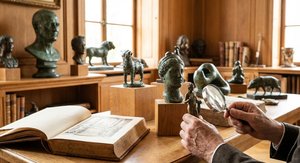
The Enduring Legacy of Bronze Sculpture: A Collector's Guide to Form & Cultural Significance
Explore the rich history & enduring appeal of bronze sculpture with expert insights for collectors at OriginalUniqueArt. Learn about casting techniques, iconic artists, and collecting tips to build a discerning art collection.

Bronze Sculptures That Defined Art History | OriginalUniqueArt
Journey through art history with our Top 10 bronze sculptures! Explore masterpieces by Rodin, Michelangelo & more. Discover stories behind iconic statues and find museum-quality reproductions for your home decor at OriginalUniqueArt.com.

青铜艺术的永恒遗产:历史、技艺与收藏家的鉴赏之道
探索青铜艺术的辉煌历史、精湛技艺与收藏价值。深入了解失蜡法铸造工艺,掌握青铜器鉴赏技巧,规避市场风险。OriginalUniqueArt.com为您提供专业的艺术咨询和定制服务。

The Enduring Legacy of Bronze: A Historical & Artistic Exploration for the Collector
Explore the rich history & enduring appeal of bronze sculpture with expert insights for collectors at OriginalUniqueArt. Learn about casting techniques, iconic artists, collecting tips & contemporary interpretations.