切换至版画销售渠道
 展开全文
展开全文







































 对于任何边长超过 105 厘米(约 41 英寸)的艺术品或复制品,画框将以拆解后的组件形式发货。此方法可确保安全送达并防止运输过程中的损坏。


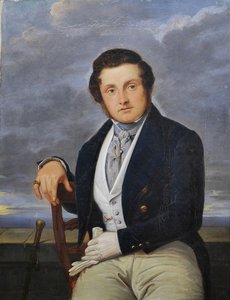
A Study in Dignity: The Timeless Presence of John Inglis
In the quiet, commanding presence of Sir John Watson Gordon’s 1854 portrait, John Inglis, one encounters more than just a likeness; one meets the very essence of mid-1ical British authority. This masterpiece of academic realism serves as a profound window into the mid-19th century, capturing a moment where social standing and personal character converge on canvas. The composition is masterfully centered, presenting Mr. Inglis in a three-quarter pose that suggests both accessibility and an impenetrable sense of decorum. As the viewer’s eye meets the subject, there is an immediate sense of being in the presence of a gentleman of substance, a man whose identity is inextricably linked to the professional and social stability of his era.
The technical brilliance of Gordon lies in his sophisticated use of light and shadow, a hallmark of his transition from Neoclassical precision toward a more atmospheric, tonal approach. A dramatic light source, positioned at the upper left, sweeps across the subject, carving his features out of the surrounding gloom. This chiaroscuro effect does more than provide depth; it breathes life into the textures of the era. One can almost feel the heavy, velvety weight of his dark coat and the subtle sheen of his footwear against the floor. The background, a textured tapestry of deep browns, blacks, and muted shadows, recedes into an enigmatic void, ensuring that every brushstroke dedicated to the subject's face and hands carries maximum emotional resonance.
For the discerning collector or interior designer, this portrait offers a profound sense of "quiet luxury." The color palette—dominated by somber, sophisticated tones of charcoal, ebony, and earth—provides a versatile anchor for grand, classical interiors or more contemporary, moody spaces. There is a rhythmic beauty in the way Gordon uses defined lines to trace the folds of fabric and the structural geometry of the surrounding furniture, contrasting these with the organic, soft modeling of human skin. It is a piece that does not shout for attention but rather commands it through its understated elegance.
Beyond the aesthetic allure, the painting carries a heavy symbolic weight. In an age of burgeoning industrial change, such portraits were vital assertions of permanence and legacy. To possess a reproduction of this work is to invite a sense of historical continuity and intellectual depth into a room. It evokes the atmosphere of a private library or a stately manor, offering an emotional anchor of stability and grace. Whether viewed as a triumph of oil technique or a soulful character study, John Inglis remains an enduring testament to the power of portraiture to immortalize the human spirit.
常见问题与解答
“John Inglis”的作者是谁,创作于何时?
"John Inglis" 由 约翰·沃森·戈登爵士 创作于 1854 年。
约翰·沃森·戈登爵士 的《John Inglis》 的亮度如何?
"John Inglis" 的色彩呈现出 Dark 的亮度。
对于 约翰·沃森·戈登爵士 的《John Inglis》 而言,情感表达与送礼场合是如何完美融合的?
凭借其Somber的情感基调,约翰·沃森·戈登爵士 的《John Inglis》是送给Corporate Gift的理想礼选。
 实景预览
实景预览
 分享
分享 分享
分享
 详情
详情 指南
指南

 下载作品
下载作品
 相似作品
相似作品 X射线
X射线 幻灯片播放
幻灯片播放 Q&A
Q&A 统计数据
统计数据