切换至版画销售渠道
 展开全文
展开全文







































 对于任何边长超过 105 厘米(约 41 英寸)的艺术品或复制品,画框将以拆解后的组件形式发货。此方法可确保安全送达并防止运输过程中的损坏。


A Moment Frozen in Time: Exploring Sir Augustus Wall Callcott’s “The Entrance to the Pool of London”
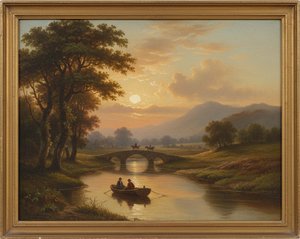
Sir Augustus Wall Callcott's "The Entrance to the Pool of London," completed in 1816, stands as a testament to Romantic landscape painting—a genre defined by its reverence for nature and its ability to evoke profound emotion. More than just a depiction of a riverside scene, this artwork embodies the spirit of its era, reflecting anxieties about industrialization alongside an enduring fascination with the sublime beauty of the English countryside. Callcott’s masterful use of tonal gradation and dramatic lighting elevates the painting beyond mere observation; it invites contemplation on the passage of time and the encroaching influence of progress upon traditional landscapes.Technical Brilliance: Impressionistic Touches Amidst Classical Form
Callcott employed a technique that skillfully blended elements of Romanticism with classical influences. While adhering to the conventions of academic portraiture—evident in the carefully constructed composition and balanced perspective—he infused his work with subtle impressionistic qualities. The artist meticulously layered thin washes of pigment, creating atmospheric haze and capturing fleeting effects of light on the water’s surface. This approach distinguishes “The Entrance to the Pool of London” from more rigid depictions of the period, demonstrating Callcott's innovative understanding of color theory and his dedication to conveying a sense of immediacy. The brushstrokes are visible yet controlled, contributing to the painting’s textural richness and enhancing its visual impact.Historical Context: Britain at the Crossroads
Painted during a pivotal moment in British history—the Industrial Revolution was rapidly transforming the nation's economy and society—Callcott’s landscape serves as a poignant counterpoint to the burgeoning factories and urban sprawl of the time. The Pool of London, once dominated by windmills and barges laden with goods, represented Britain’s maritime heritage and connection to the wider world. However, Callcott subtly conveys a feeling of melancholy, hinting at the inevitable loss of rural tranquility as industrial expansion pushed further into previously untouched territories. This duality—beauty juxtaposed against change—resonates powerfully within the artwork's narrative.Symbolism: Light and Shadow – Reflections of Inner Turmoil
The painting’s masterful use of light and shadow is laden with symbolic significance. The dominant illumination casts a cool, silvery glow upon the water, mirroring the stillness and serenity of the scene. Yet, darker patches delineate the shoreline and suggest hidden depths—representing anxieties about uncertainty and impending transformation. Callcott's deliberate manipulation of tonal values underscores the Romantic preoccupation with exploring psychological states alongside visual impressions. The light itself symbolizes hope and enlightenment, while the shadows embody fear and introspection – themes that extend beyond the confines of the landscape to engage viewers on a deeper emotional level.Emotional Resonance: Capturing the Sublime
Ultimately, “The Entrance to the Pool of London” succeeds in capturing the sublime—that elusive feeling of awe and terror experienced when confronted with overwhelming grandeur or beauty. Callcott’s depiction inspires contemplation about humanity's relationship with nature and its vulnerability before forces beyond our control. The painting lingers in the mind long after viewing, prompting reflection on themes of change, memory, and the enduring power of artistic vision. It remains a captivating example of Romantic landscape art—a timeless masterpiece that continues to resonate with audiences today.常见问题与解答
奥古斯塔斯·沃尔·卡尔科特爵士 的《Edward Whitaker Gray》 的色彩是鲜艳夺目还是柔和低调?
"Edward Whitaker Gray" 的色彩饱和度为 Muted。
哪些色调与主导色彩定义了“Edward Whitaker Gray”?
"Edward Whitaker Gray" 的色彩基调由以 Phthalo Green (#26201c) 为主的 Earthy 色系构成。
奥古斯塔斯·沃尔·卡尔科特爵士 的《Edward Whitaker Gray》 的技法与风格具有哪些特征?
在“Edward Whitaker Gray”中,Acrylic On Canvas技法与Romantic Landscape运动交相辉映。
 实景预览
实景预览
 分享
分享 分享
分享
 详情
详情 指南
指南

 下载作品
下载作品
 相似作品
相似作品 X射线
X射线 幻灯片播放
幻灯片播放 Q&A
Q&A 统计数据
统计数据