切换至版画销售渠道
 展开全文
展开全文







































 对于任何边长超过 105 厘米(约 41 英寸)的艺术品或复制品,画框将以拆解后的组件形式发货。此方法可确保安全送达并防止运输过程中的损坏。


A Portrait of Majesty: Sir Anthony van Dyck’s Self-Portrait
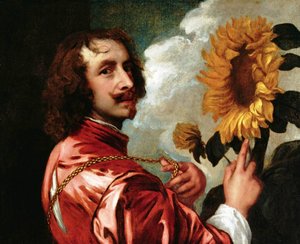
Sir Anthony van Dyck's 1622 self-portrait offers more than just a likeness; it’s a carefully constructed statement about the artist’s burgeoning reputation and his ambition to establish himself as a leading figure in the European art world. Housed within the Hermitage Museum’s collection, this oil on canvas presents a man of considerable presence – a Flemish Master at the courts of Europe, poised with an air of quiet confidence. The painting immediately draws the eye to Van Dyck's direct gaze; he isn’t merely posing for a portrait but engaging the viewer in a subtle exchange, inviting us into his world and subtly asserting his artistic authority.
The composition is remarkably balanced, utilizing classical principles of proportion and perspective. The dark, richly textured suit – a hallmark of Van Dyck's style – immediately establishes a sense of formality and status. The carefully arranged tie, the subtle sheen of his clothing, and the precise rendering of his hands on his hips all speak to an attention to detail that was characteristic of his work. The background, featuring a simple wall and column, serves not as a distraction but rather as a grounding element, directing our focus squarely onto the artist himself. The muted palette – dominated by deep browns, blacks, and subtle hints of red – contributes to the overall atmosphere of dignified restraint.
The Influence of Rubens and the Baroque Aesthetic
Van Dyck’s artistic journey was profoundly shaped by his early apprenticeship with Peter Paul Rubens at the court of Antwerp. Rubens' dynamic compositions, vibrant color palettes, and masterful use of light and shadow – particularly his dramatic chiaroscuro – left an indelible mark on Van Dyck’s technique. However, while he absorbed these influences, Van Dyck quickly developed a distinct style characterized by an unparalleled elegance and refinement. Unlike Rubens’ often exuberant energy, Van Dyck favored a more controlled and polished approach, emphasizing grace, composure, and a subtle sensuality.
This self-portrait exemplifies this shift. Note the meticulous attention to detail in rendering the textures of his clothing – the velvet, the fabric folds – and the delicate modeling of his face. The lighting is carefully considered, highlighting key features while maintaining an overall sense of atmospheric depth. This reflects a Baroque sensibility—a desire to capture not just the appearance but also the essence of the subject, imbuing it with psychological complexity.
A Window into a Courtier’s World
Painted in 1622, during a pivotal period in Van Dyck's career, this portrait offers a glimpse into the world of a courtier and artist. Van Dyck was rapidly gaining recognition for his portraits of European nobility, securing commissions that propelled him to prominence across England, Spain, and Italy. His work served as a powerful tool for projecting status and influence – a visual shorthand for wealth, power, and refinement.
The inclusion of the column in the background subtly references classical architecture, associating Van Dyck with the traditions of Roman art and philosophy. This was a deliberate strategy employed by many artists of the time to elevate their work and imbue it with a sense of timeless beauty and intellectual depth. Furthermore, considering that he later became the principal court painter for King Charles I of England, this self-portrait can be seen as a strategic assertion of his artistic capabilities and a demonstration of his ambition to secure a prestigious position within the English court.
Capturing the Essence: A Reproduction Opportunity
OriginalUniqueArt.com offers meticulously crafted hand-painted reproductions of Sir Anthony van Dyck’s “Self-Portrait.” Our skilled artisans replicate every nuance of Van Dyck's technique, from the subtle variations in color to the delicate modeling of his features. We use only archival-quality materials and employ time-honored painting methods to ensure that our reproductions faithfully capture the original’s beauty and atmosphere. This is more than just a print; it’s an authentic artistic experience—a chance to own a piece of art history and bring Van Dyck's masterful portrait into your home or office.
Explore the full details and dimensions of this exceptional artwork on our website, and discover how you can acquire a stunning reproduction that will grace your space for generations to come. View the Full Artwork
常见问题与解答
安东尼·范戴克 的《Self-Portrait》 的复制品推荐用于哪些场景?
安东尼·范戴克 的《Self-Portrait》 的建议用途为 Statement,同时也适用于其他场景。
是否有与“Self-Portrait”风格相似的作品?
与 安东尼·范戴克 的《Self-Portrait》 相似的作品已汇集在作品的 相似作品 页面中。
“Self-Portrait”是如何体现 安东尼·范戴克 的创作主题与艺术风格的?
"Self-Portrait" 与 安东尼·范戴克 的其他作品一样,都体现了 Baroque Portraiture 风格以及其一贯的主题:rubens’ dynamism, english court, aristocratic portraiture, royal patronage, baroque elegance, status symbols, van dyck’s signature style, refined portraits”。
 实景预览
实景预览
 分享
分享 分享
分享
 详情
详情 指南
指南

 下载作品
下载作品
 相似作品
相似作品 X射线
X射线 幻灯片播放
幻灯片播放 Q&A
Q&A 统计数据
统计数据