切换至版画销售渠道
 展开全文
展开全文







































 对于任何边长超过 105 厘米(约 41 英寸)的艺术品或复制品,画框将以拆解后的组件形式发货。此方法可确保安全送达并防止运输过程中的损坏。


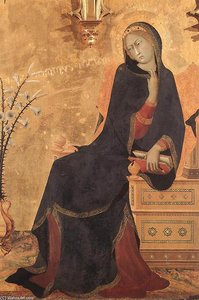
A Window into Siena’s Spiritual Heart: Exploring Simone Martini's Maestà
The fresco “Maestà,” executed by Simone Martini around 1315, isn’t merely a depiction of Mary enthroned; it’s an embodiment of Sienese artistic ideals during the High Medieval period—a testament to piety, elegance, and masterful craftsmanship that continues to captivate audiences centuries later. Created for the Benedictine Abbey of San Giorgio Maggiore in Siena, this monumental artwork represents more than just religious iconography; it embodies a profound reflection on divine majesty and human aspiration.Style and Technique: The Florentine Influence
Martini’s style distinguishes itself from its predecessors primarily through the undeniable influence of Giotto di Bondone, whose groundbreaking naturalism had begun to reshape artistic conventions in Florence. Martini skillfully blended Giotto's humanist approach with Byzantine traditions—particularly evident in the shimmering gold leaf covering the throne and radiating outwards, a technique borrowed directly from imperial iconography—creating an unparalleled visual experience. The meticulous attention to detail is breathtaking; every drapery folds, every facial expression conveys subtle emotion, demonstrating Martini’s mastery of disegno, or drawing, which prioritized accurate representation over stylized abstraction. This painstaking process involved layering thin glazes of pigment onto prepared plaster, resulting in a luminous surface that retains its vibrancy even today.Historical Context: Siena Amidst Papal Rivalry
The fresco's commission occurred during a turbulent period for Siena and the papacy. The city was embroiled in ongoing disputes with Rome over papal authority, fueled by economic tensions and political maneuvering. Artistic patronage served as a crucial tool for asserting prestige and demonstrating piety—a deliberate strategy employed by Benedictine monks to reaffirm their spiritual leadership. “Maestà” thus functioned as a powerful visual statement of Siena’s faith and artistic prowess, reflecting the broader cultural landscape of its time. It stands as one of the most important artworks from the Gothic period in Italy.Symbolism: Divine Majesty and Human Humility
The composition itself is laden with symbolic significance. Mary sits upon a throne adorned with jewels—symbols of royal dignity and divine grace—while angels surround her, representing God’s guardianship and beneficence. The Virgin's serene gaze directs the viewer upwards towards heaven, emphasizing the importance of contemplation and spiritual devotion. Beneath Mary are twelve figures representing the Apostles, symbolizing Christ’s universal mission to redeem humanity. Martini’s careful arrangement underscores the hierarchical order of creation—God at the apex, followed by angels and humans—reflecting medieval theological beliefs about God's dominion over all things.Emotional Impact: A Legacy of Beauty and Reverence
“Maestà” transcends its formal elements to evoke a profound sense of awe and reverence. The sheer beauty of the colors—particularly the radiant gold leaf—combined with Martini’s masterful rendering of human form creates an unforgettable visual impression. More than just aesthetically pleasing, the fresco speaks to the enduring power of faith and artistic excellence. It invites viewers to contemplate the divine mysteries and appreciate the sublime artistry that captures the essence of medieval spirituality—a legacy that continues to inspire artists and collectors alike.常见问题与解答
西蒙·马丁尼 的《Maestà (detail)》传达了怎样的情感?
“Maestà (detail)” 传达出一种 Calm 的情感。这种情感基调描述了作品给人的印象。
是否可以下载"Maestà (detail)"的高分辨率版本?
若想获取 西蒙·马丁尼 的《Maestà (detail)》 的数字版文件,请前往其 高分辨率数字图像 页面进行 高分辨率数字图像下载。
西蒙·马丁尼 的《Maestà (detail)》中的主导色调是什么?
“Maestà (detail)”呈现出Amber to Saffron色调。
 实景预览
实景预览
 分享
分享 分享
分享
 详情
详情 指南
指南

 下载作品
下载作品
 相似作品
相似作品 X射线
X射线 幻灯片播放
幻灯片播放 问答
问答 统计数据
统计数据